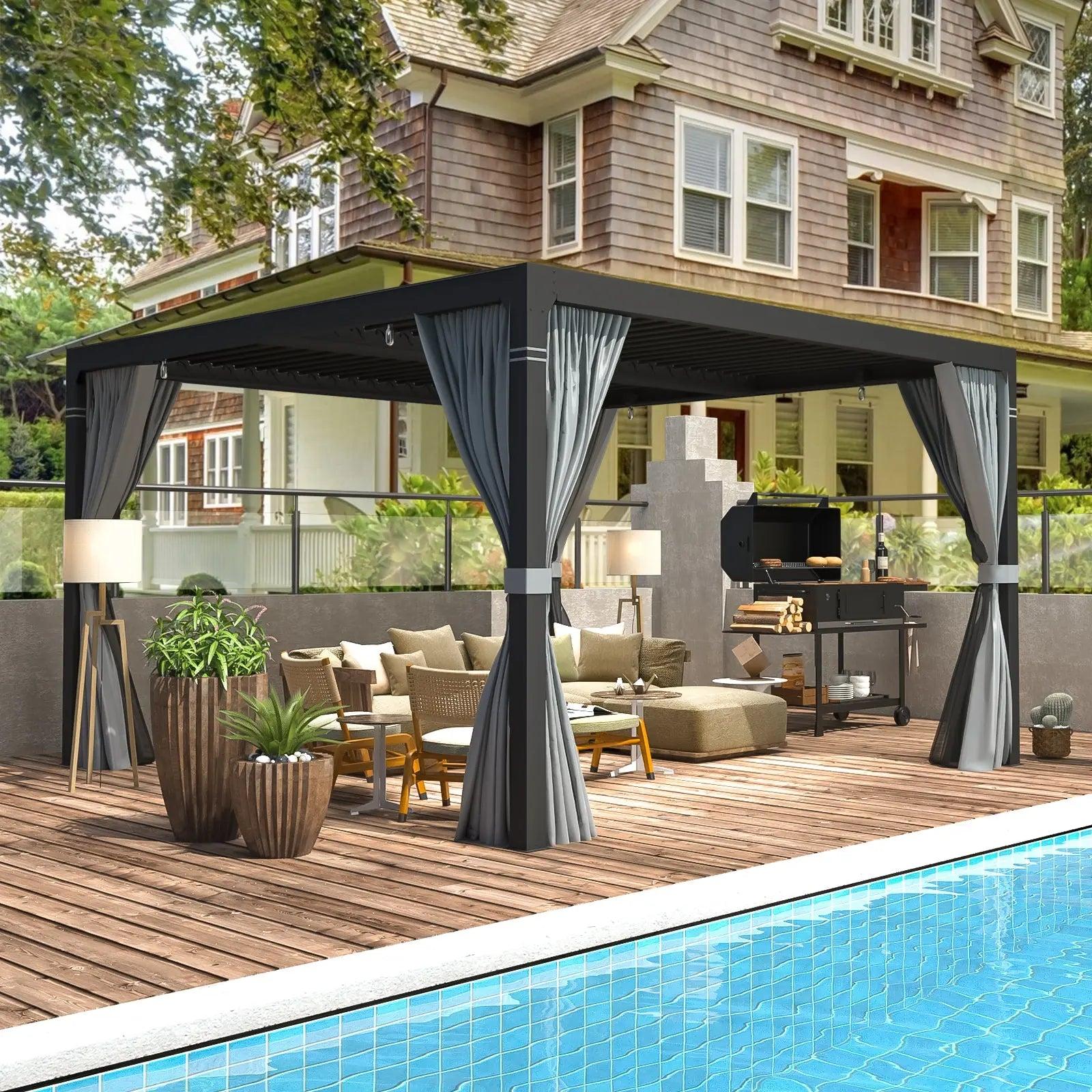
EROMMY Louvered Pergola with Adjustable Rainproof Roof
From $999.99
Aluminum | Manual louvers | 10×10 – 12×24 ft
A pergola kit gives you the posts, beams and hardware for one structure, cut and drilled, so you assemble it instead of designing and cutting it. For most patios, start with a manual louvered kit around 10×12: it’s the lowest-priced roof that opens for sun and closes against rain. If you want the look of wood, or already have lumber and only need brackets, those kits are here too.
At 10×12, a typical fabric canopy kit costs about $400, a manual louvered kit about $1,800, a cedar or wood kit about $5,300 and a motorized louvered kit about $13,000. The kit price leaves out the part owners find hardest, which is fixing it to the ground, and pergola cost adds up the whole bill.
Updated Oct 22, 2026
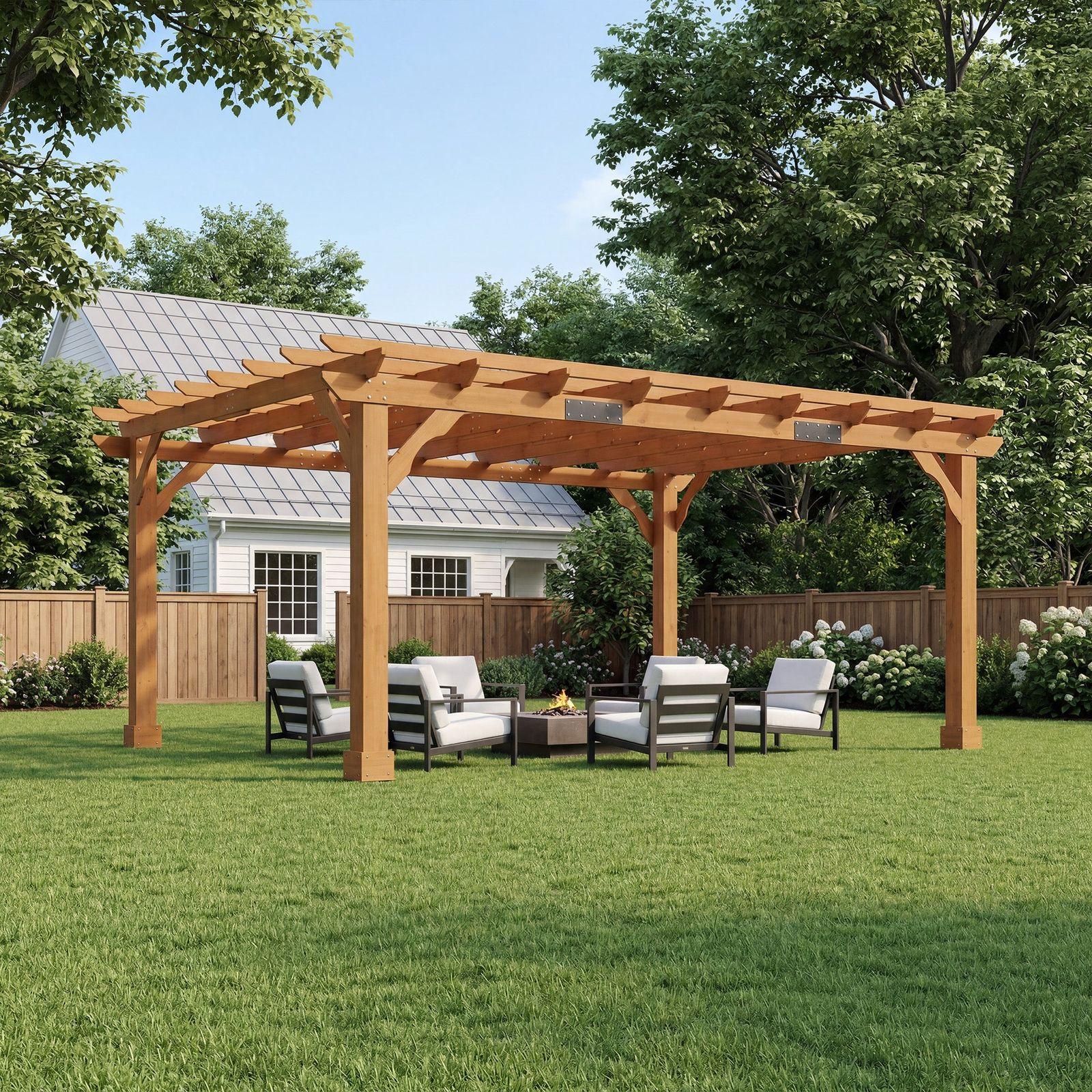
Showing 1–6 of 113 pergolas
From $999.99
Aluminum | Manual louvers | 10×10 – 12×24 ft
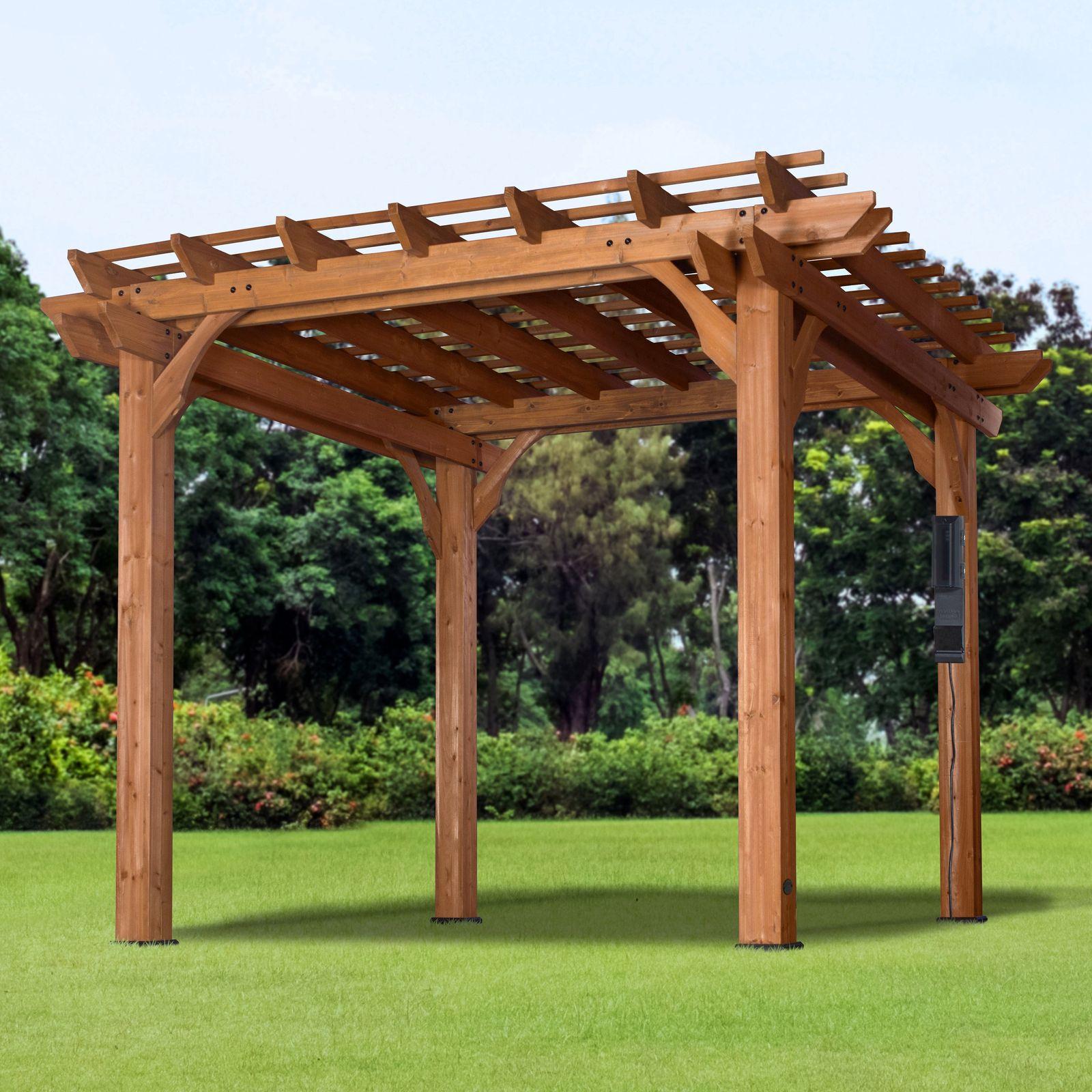
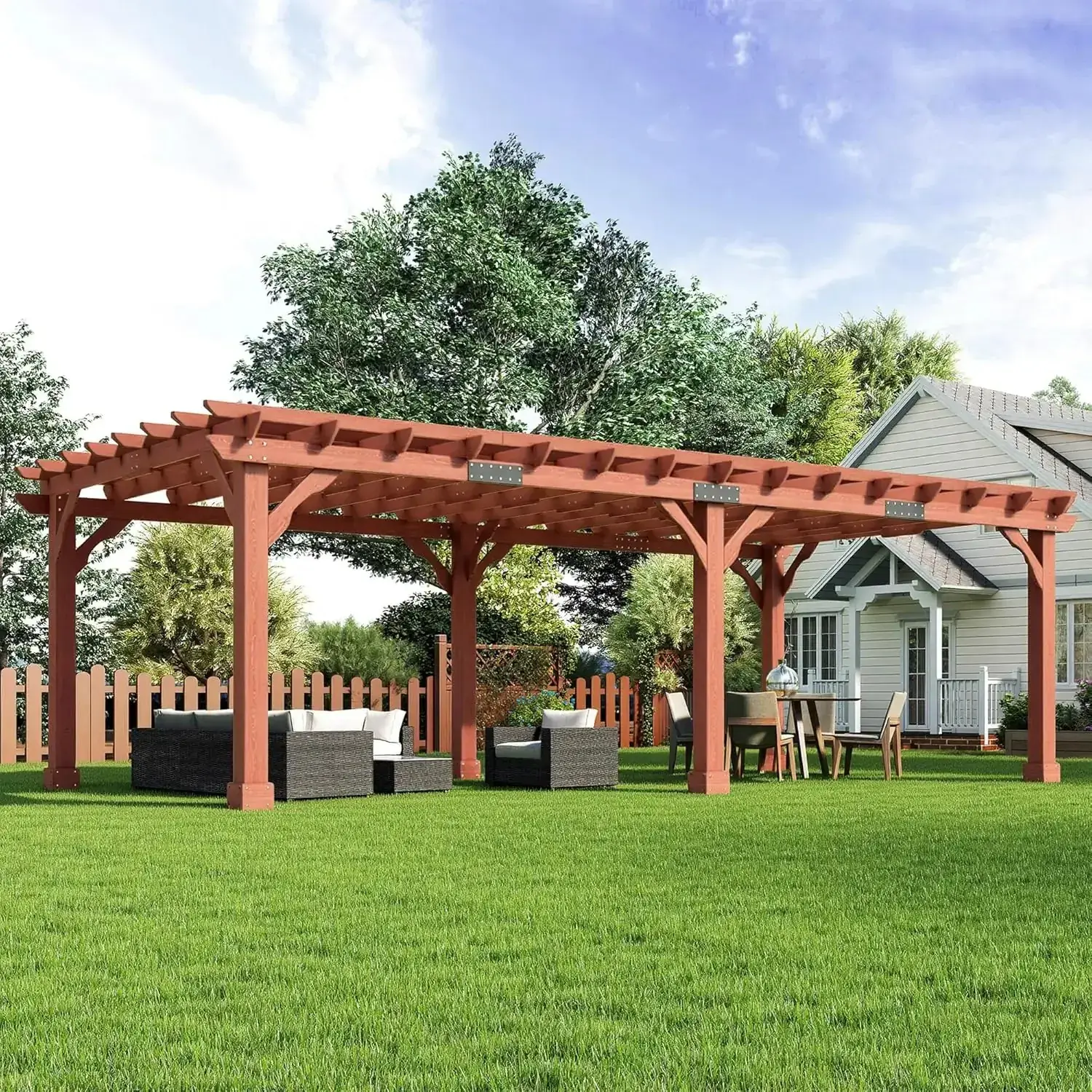
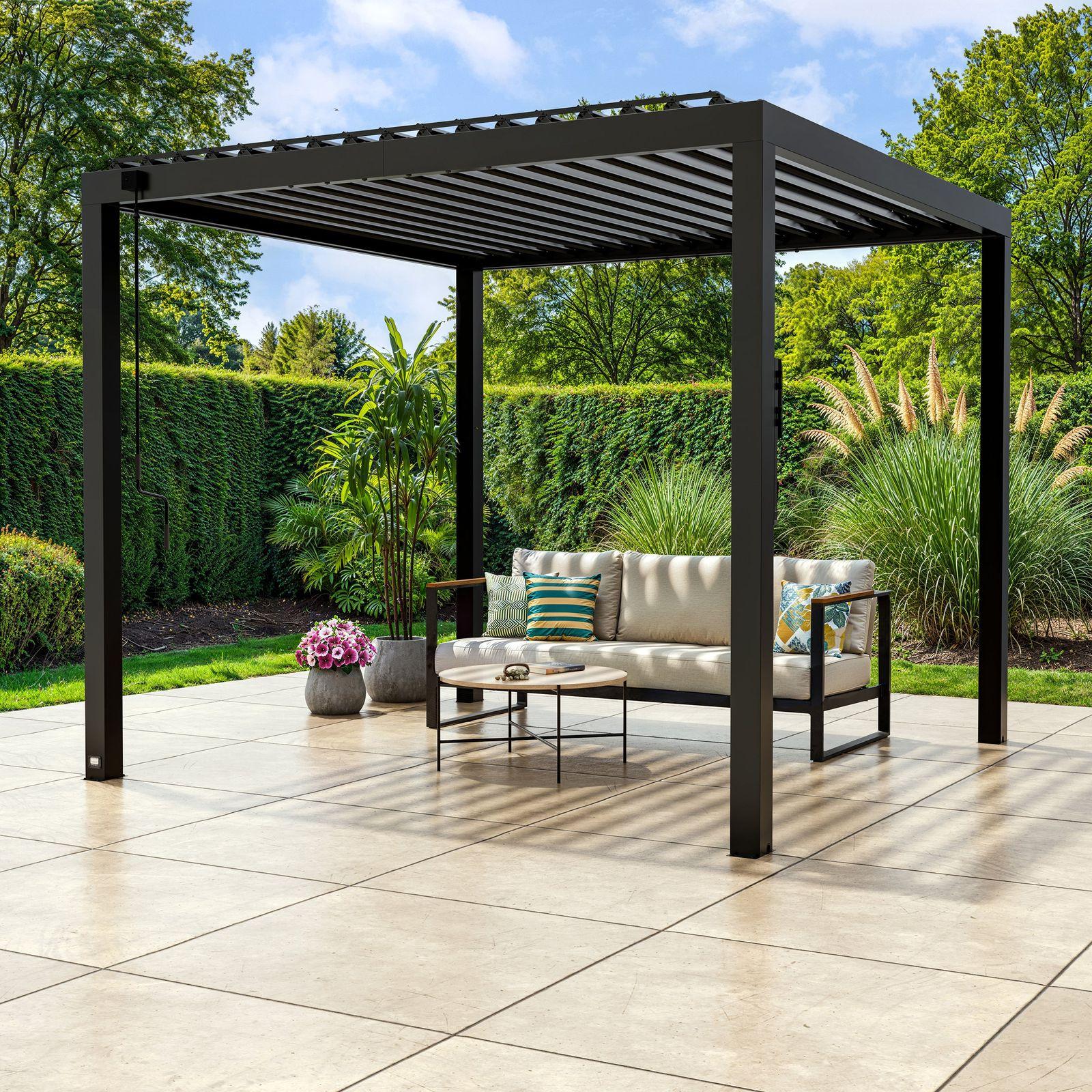
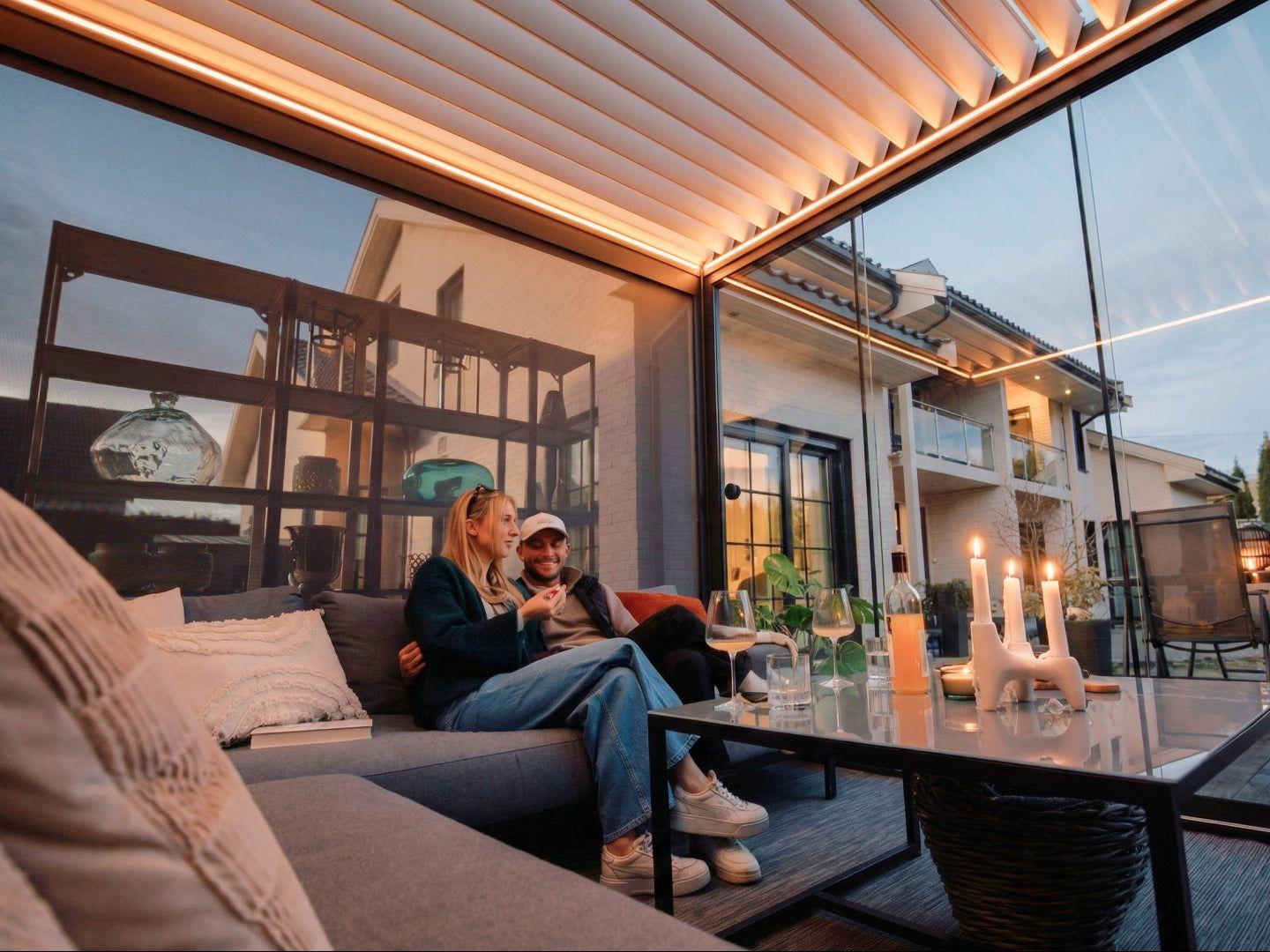
From $7,990
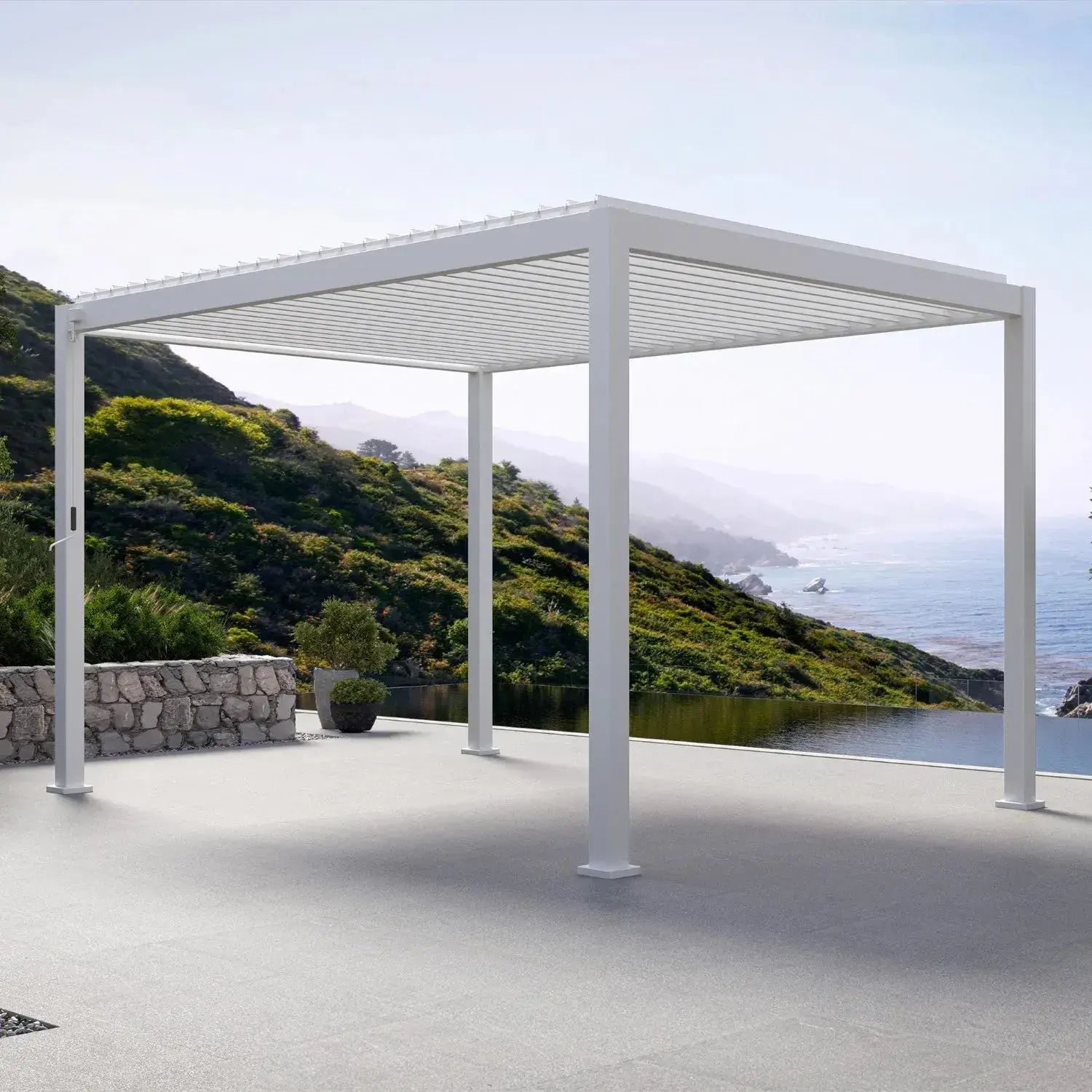
Aluminum | Motorized louvers | 10×10 – 13×19 ft
Freestanding or wall-mounted
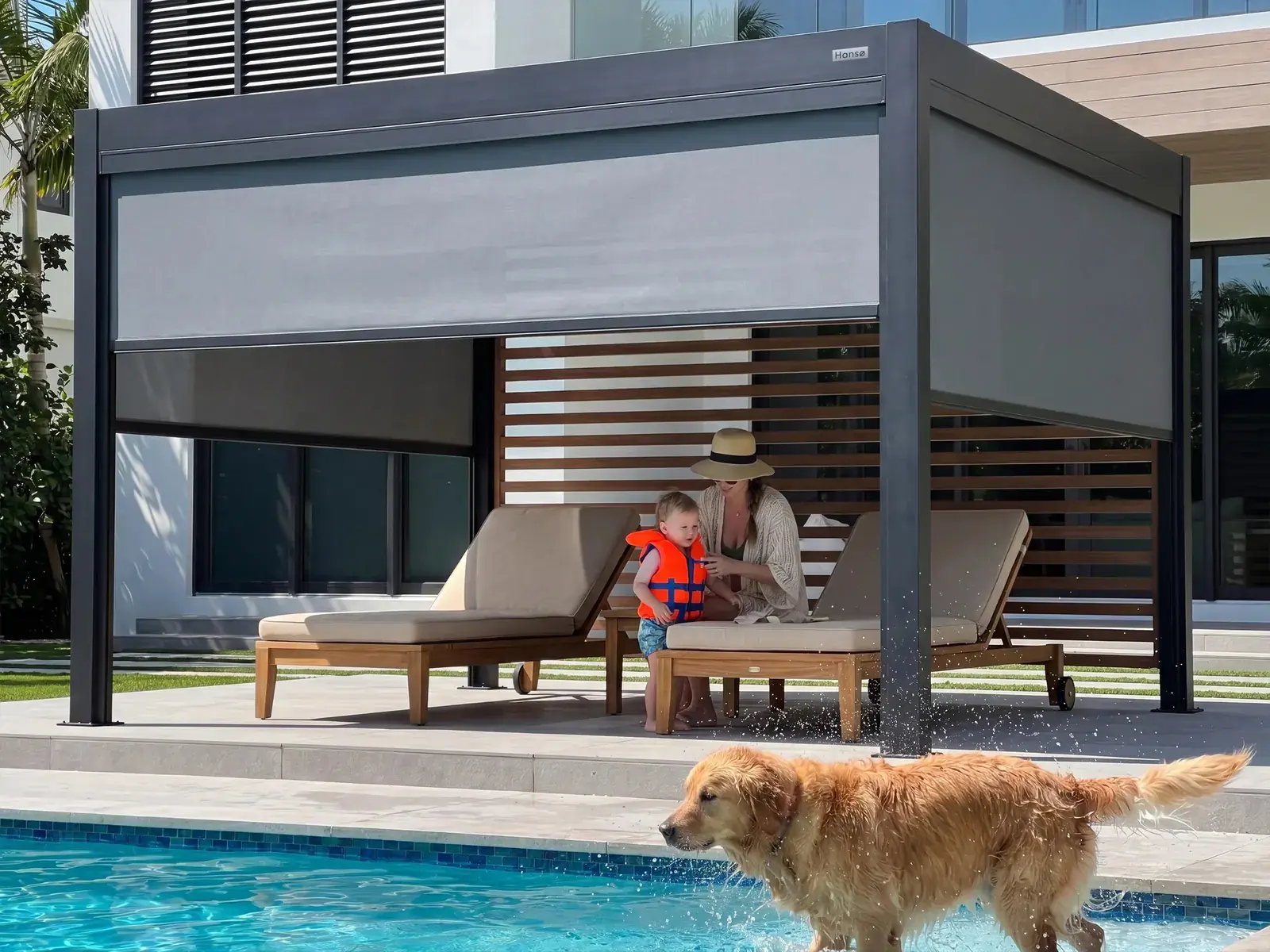
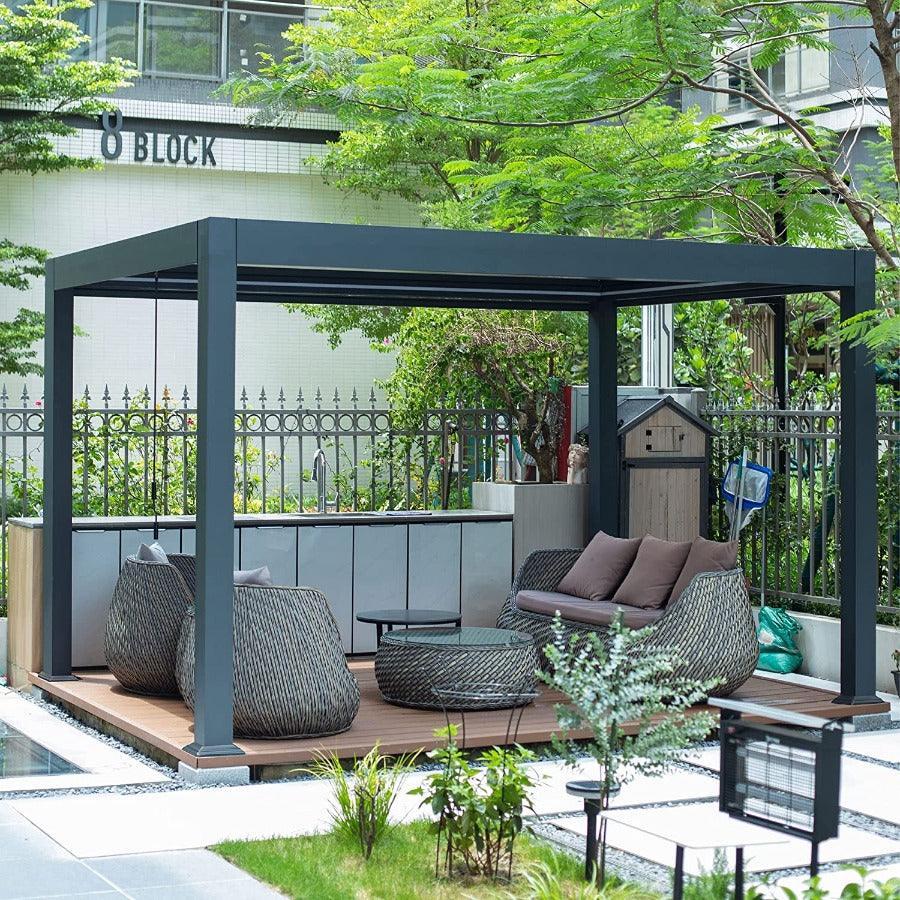
From $3,978
Aluminum | Manual louvers | 10×10 – 13×19 ft
Freestanding or wall-mounted
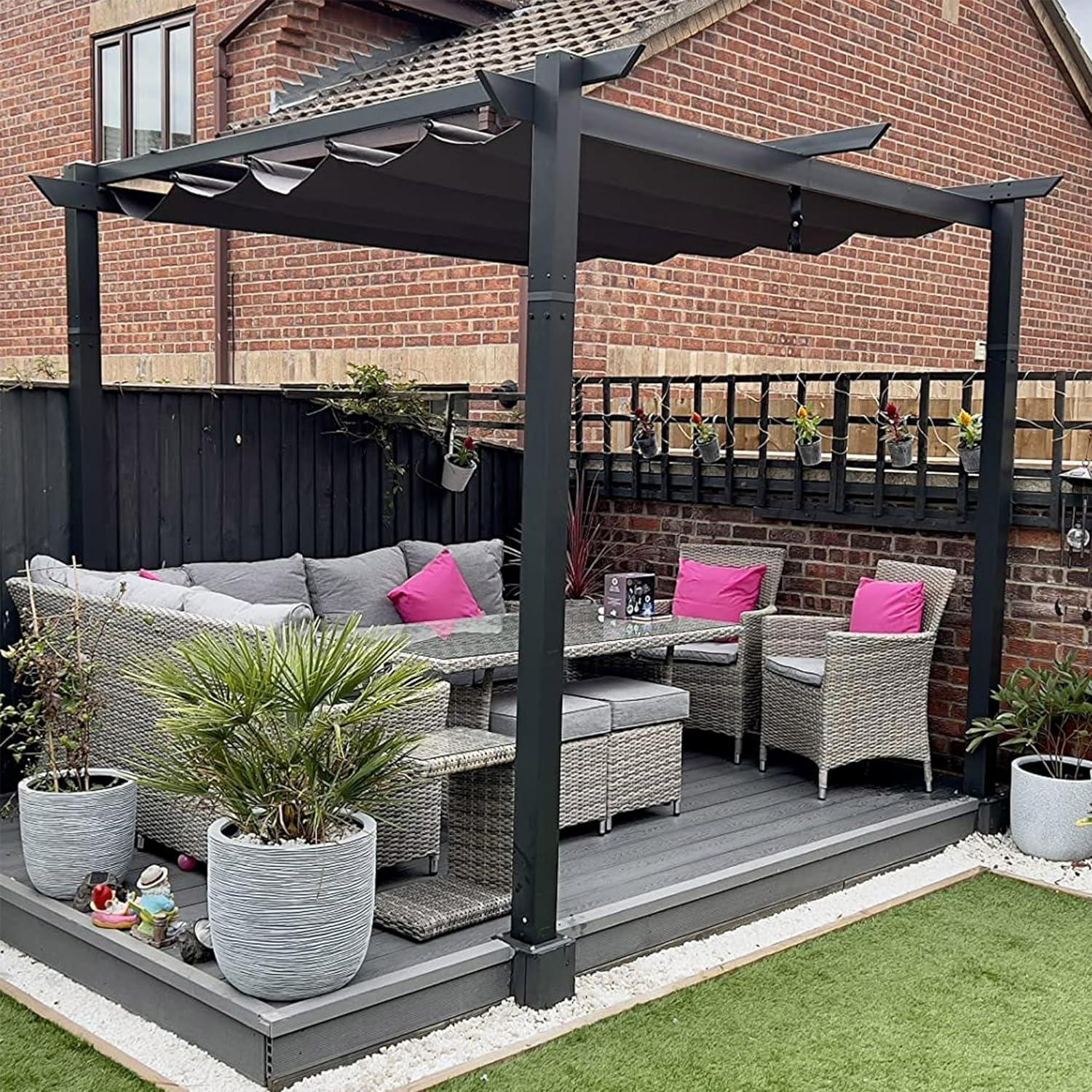
From $320
Aluminum | Manual retractable roof | 10×10 – 10×13 ft
Retracting roof
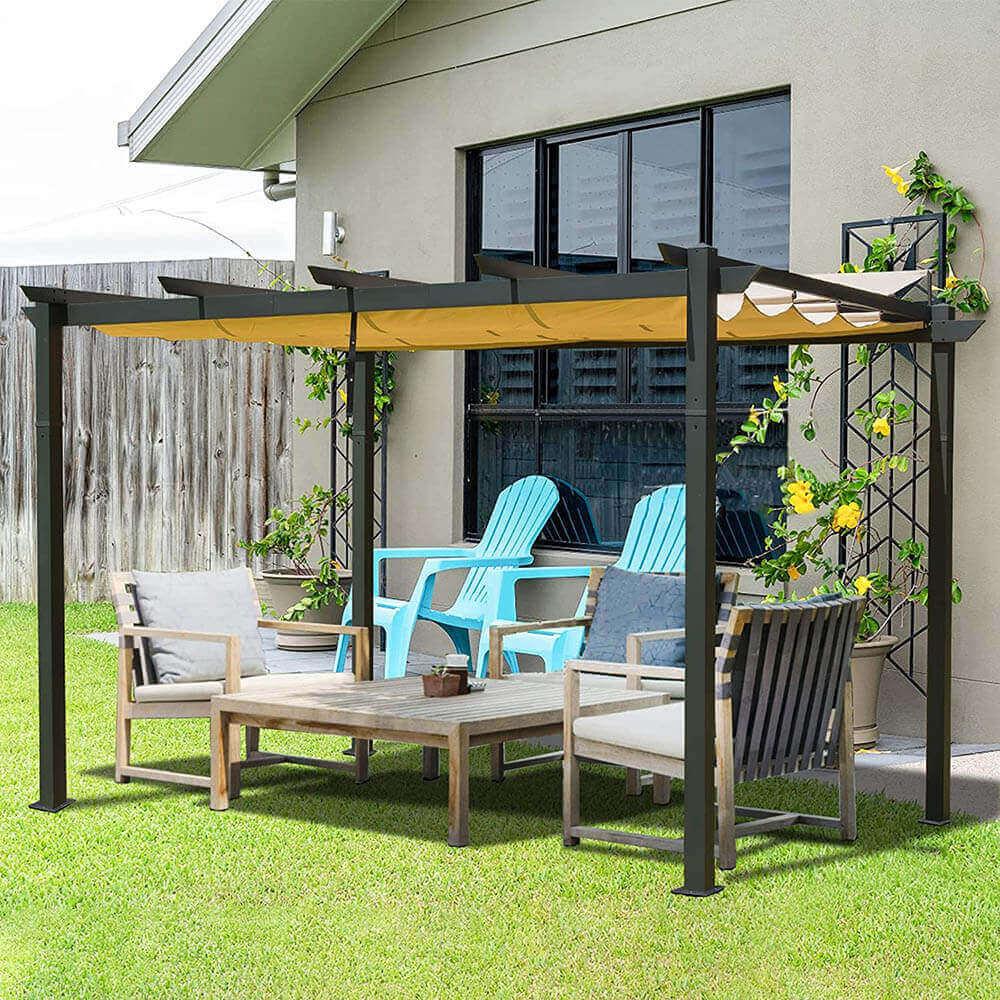
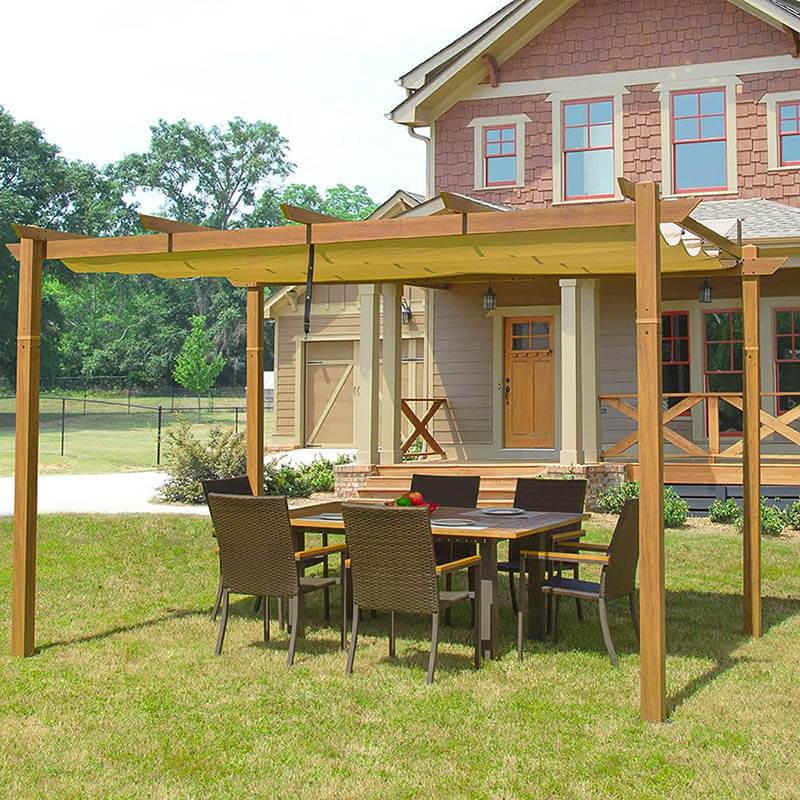
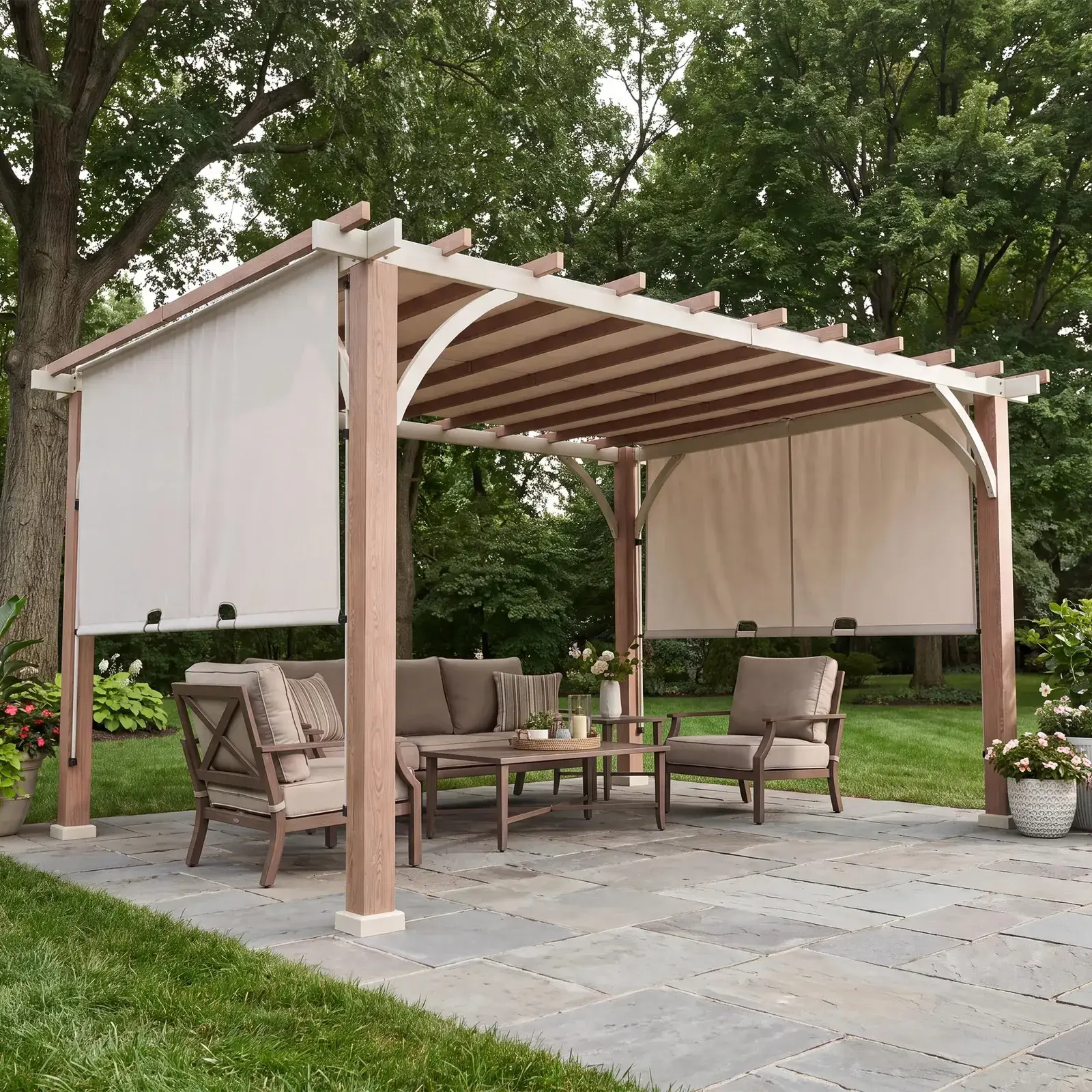
From $289.20
Steel | Manual retractable roof | 9×9 – 12×14 ft
Retracting roof
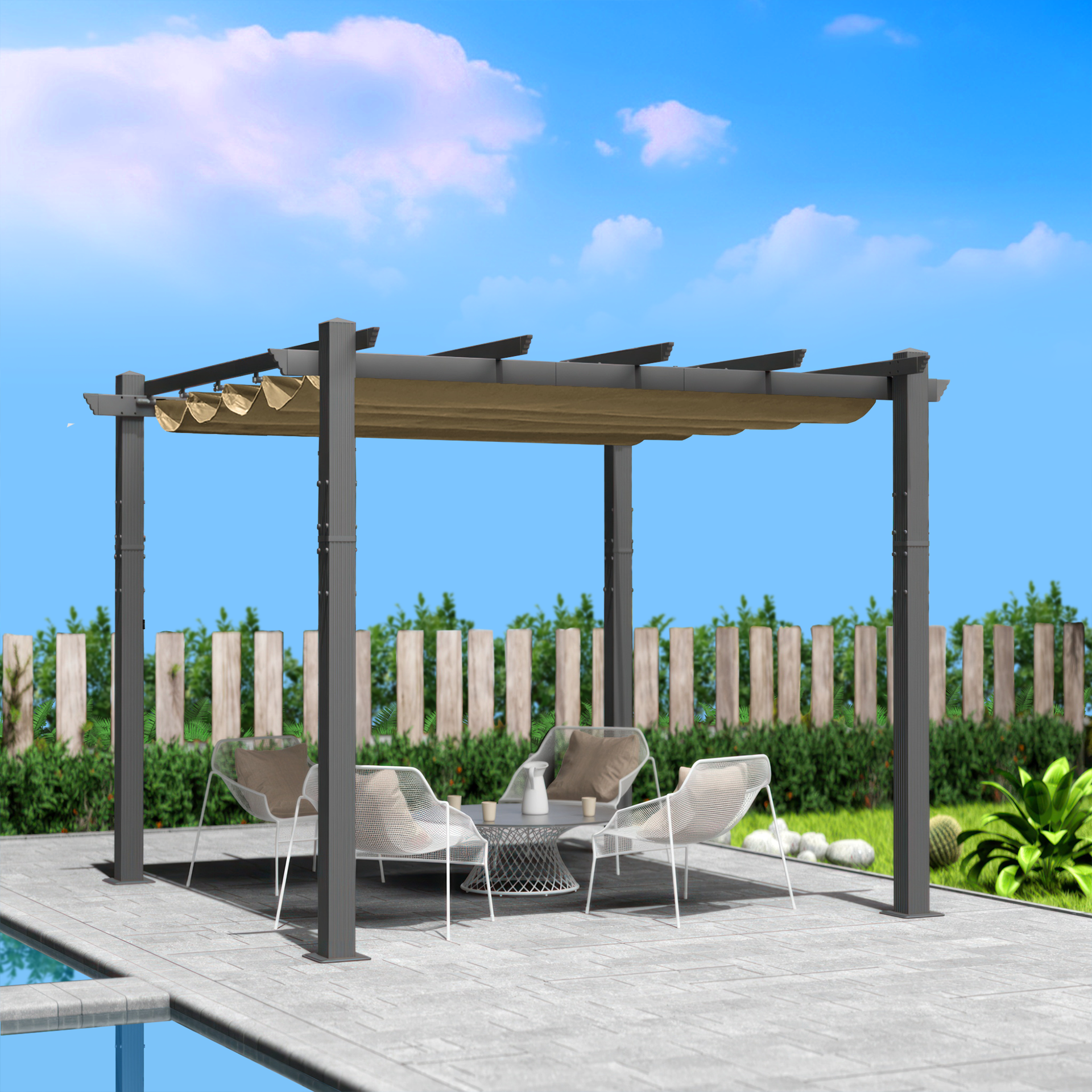
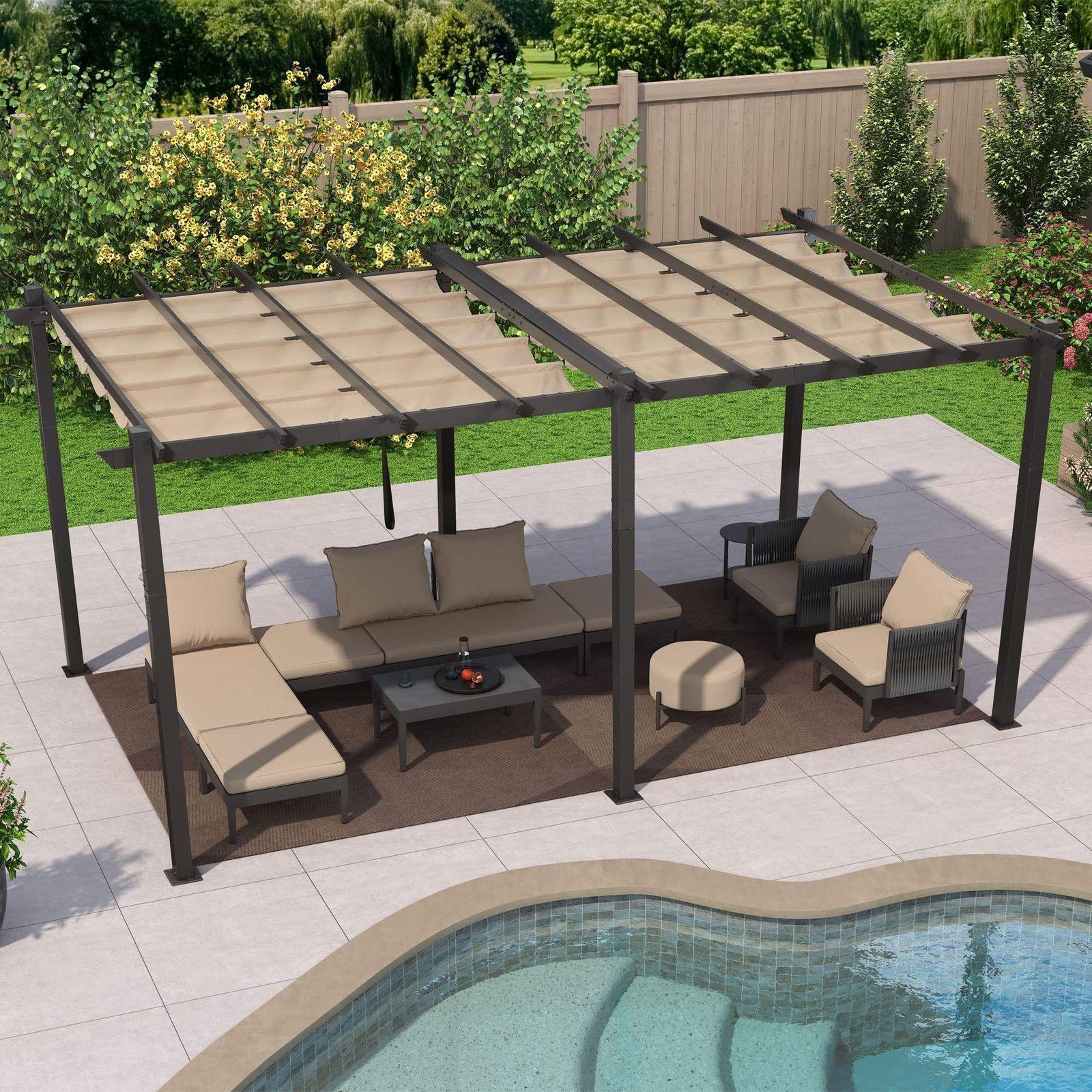
From $310
Aluminum | Manual retractable roof | 10×10 – 12×18 ft
Retracting roof
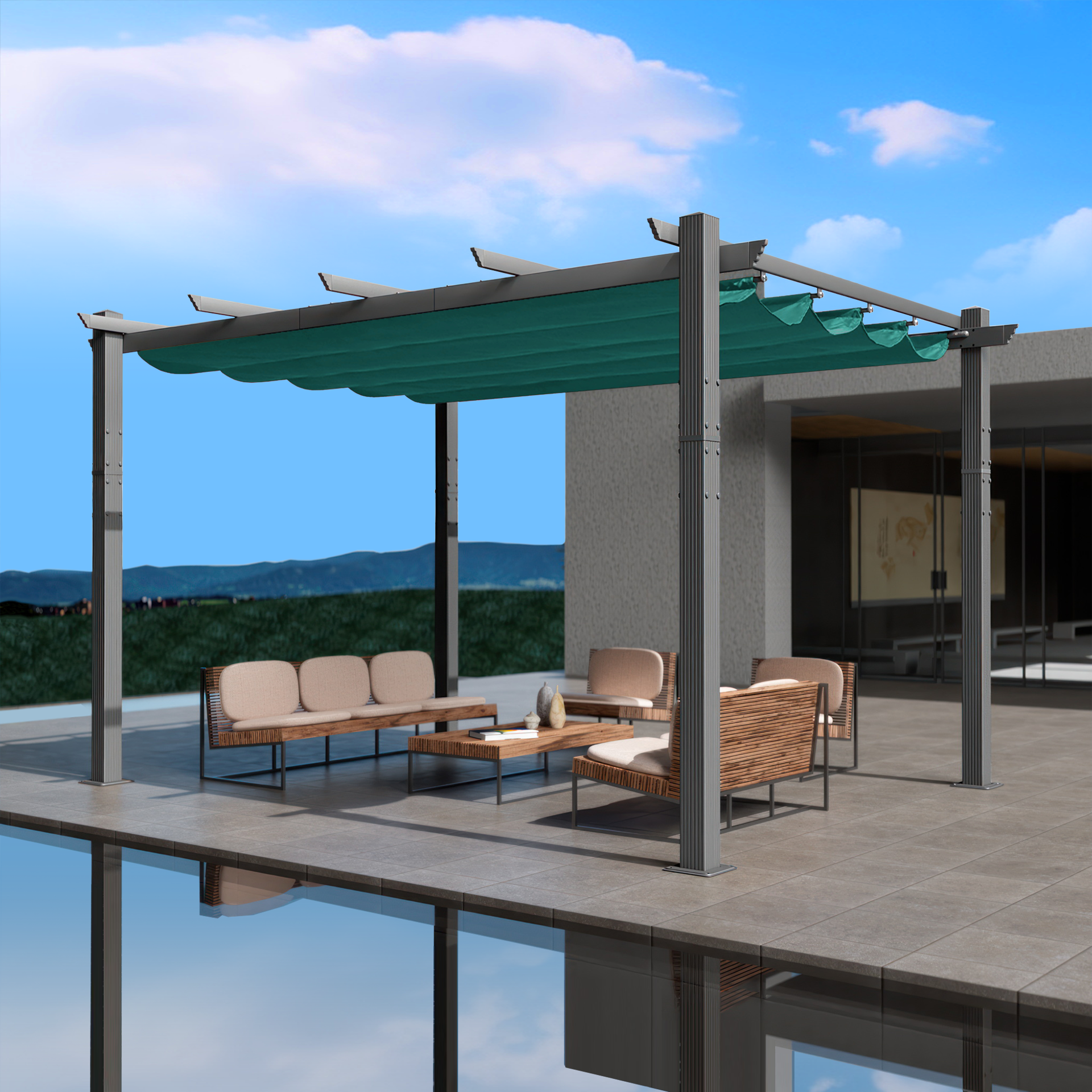
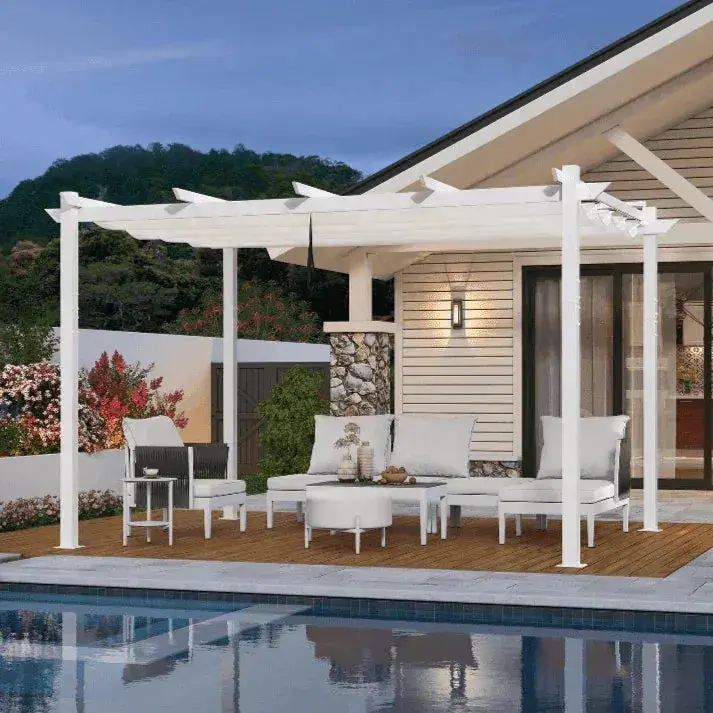
From $335
Aluminum | Manual retractable roof | 10×10 – 10×13 ft
Retracting roof
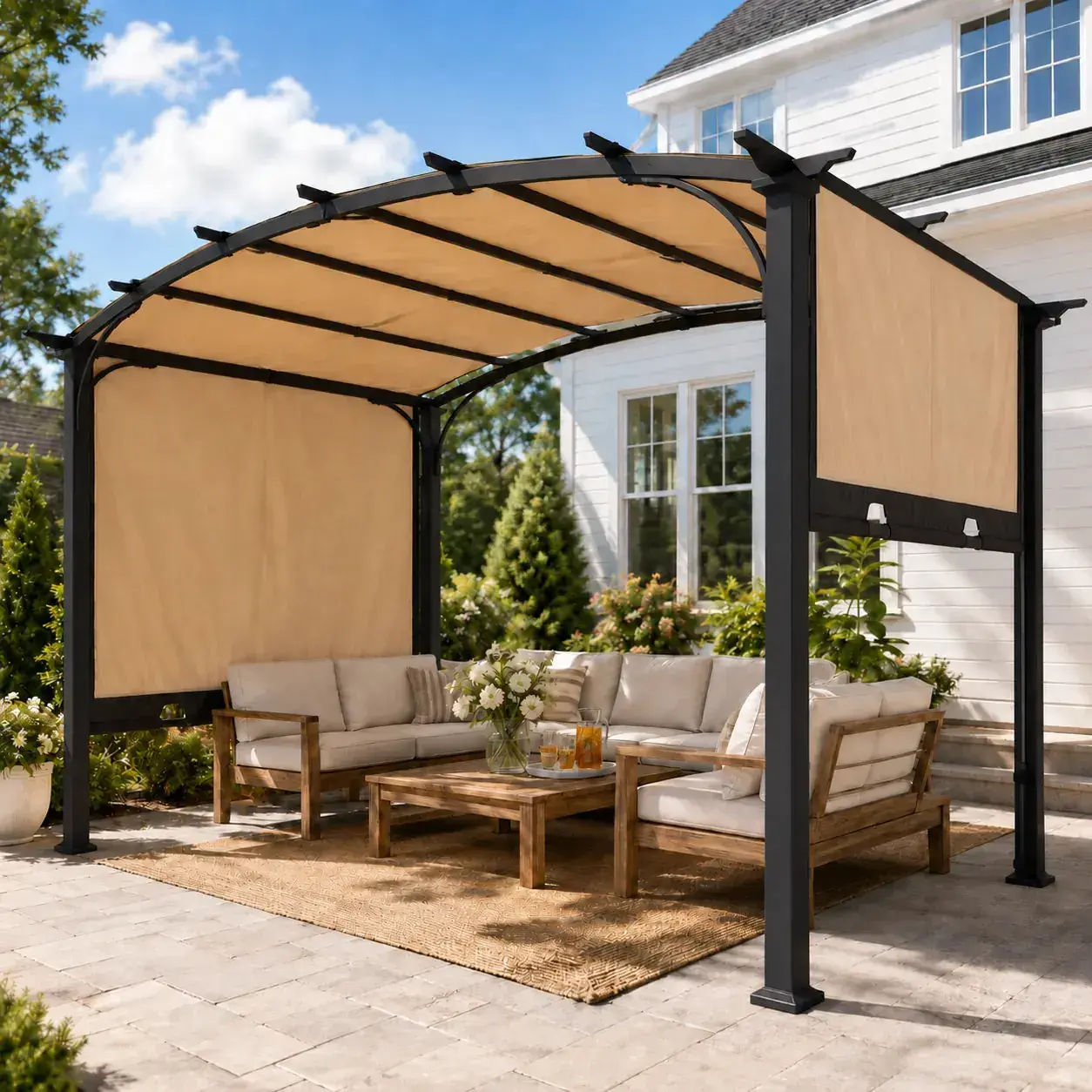
From $343.20
Steel | Manual retractable roof | 9×11 ft
Retracting roof
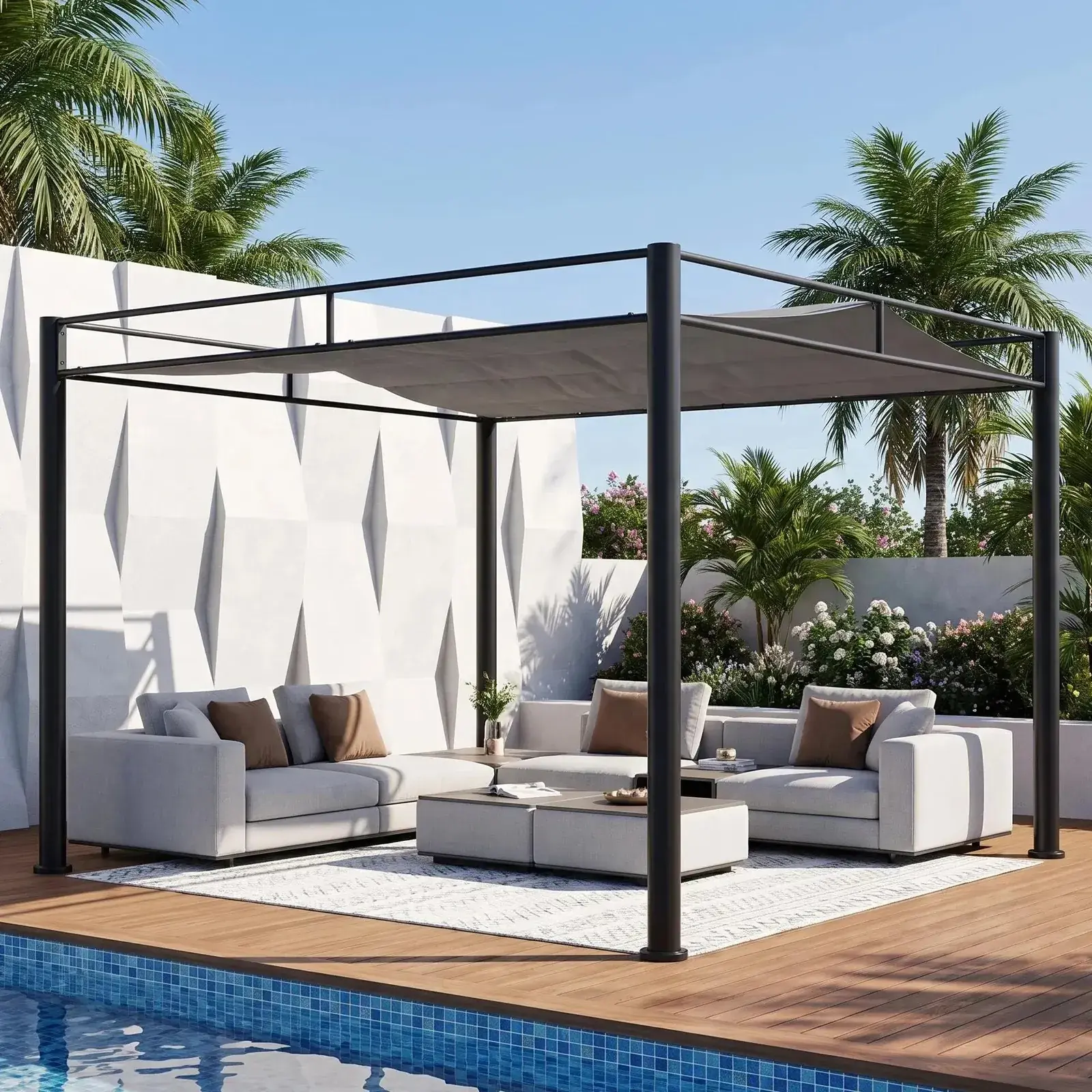
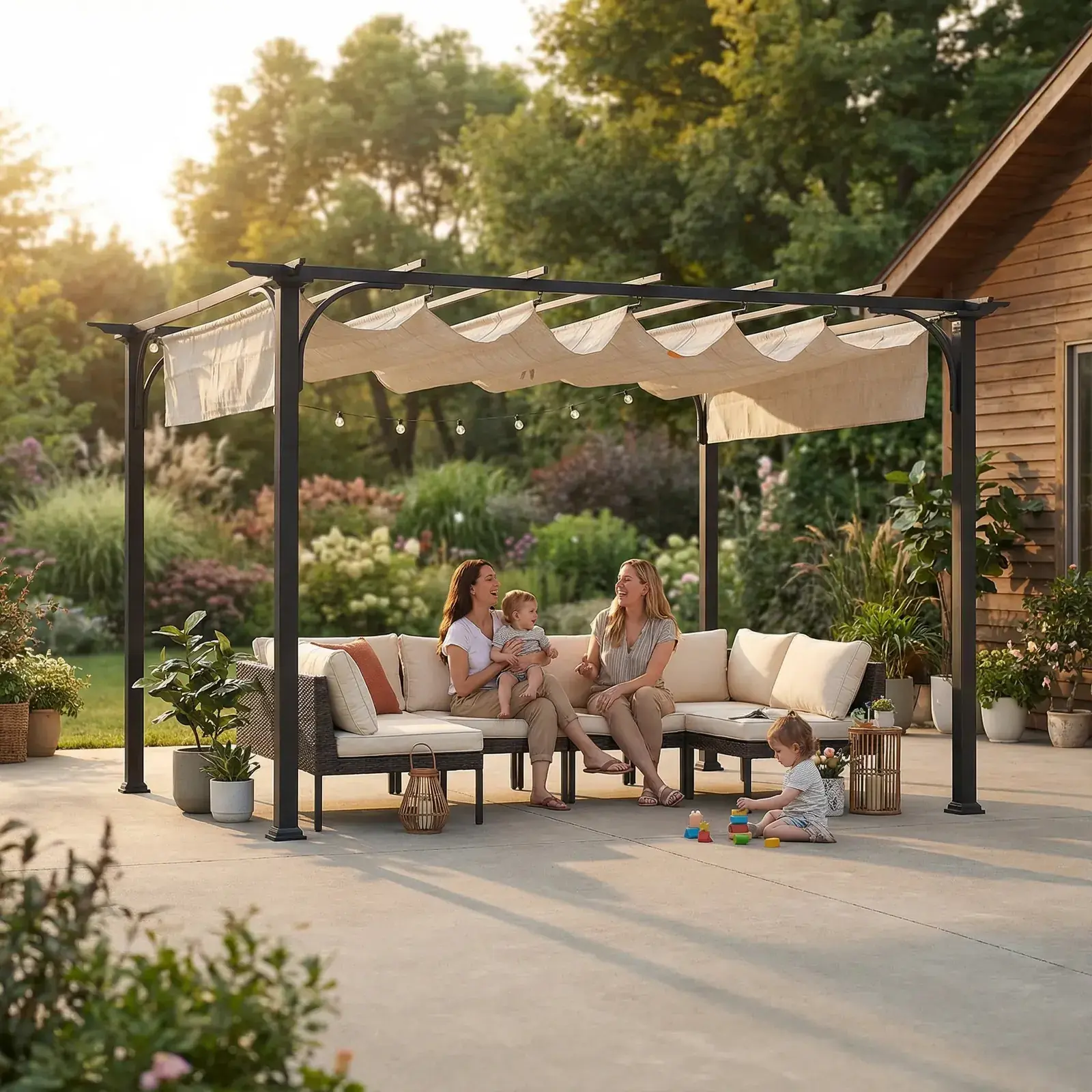
From $398.72
Steel | Manual retractable roof | 9×12 ft
Retracting roof
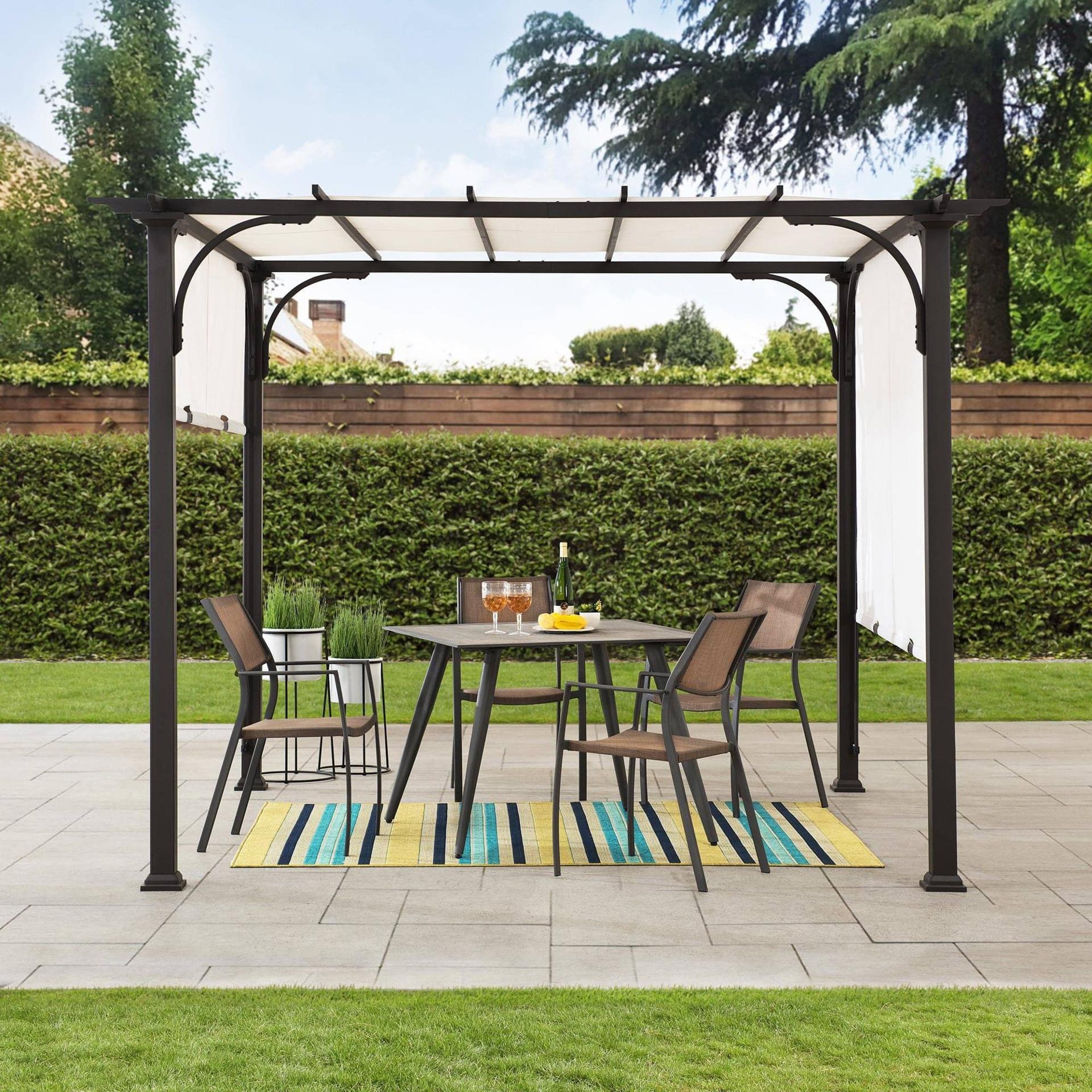
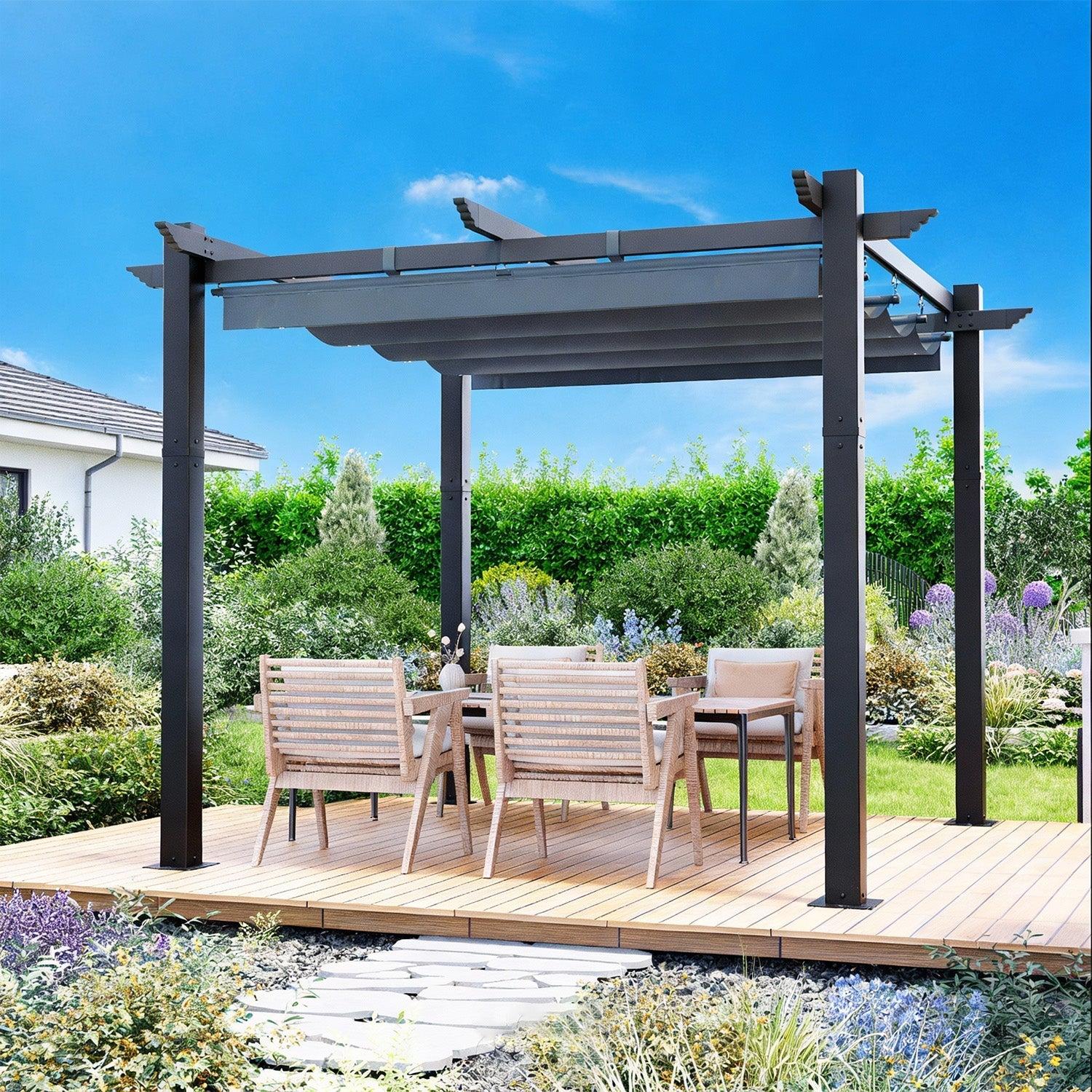
Last observed price $219.99
Steel + aluminum | Manual canopy | 10×10 – 10×12 ft
Out of stock
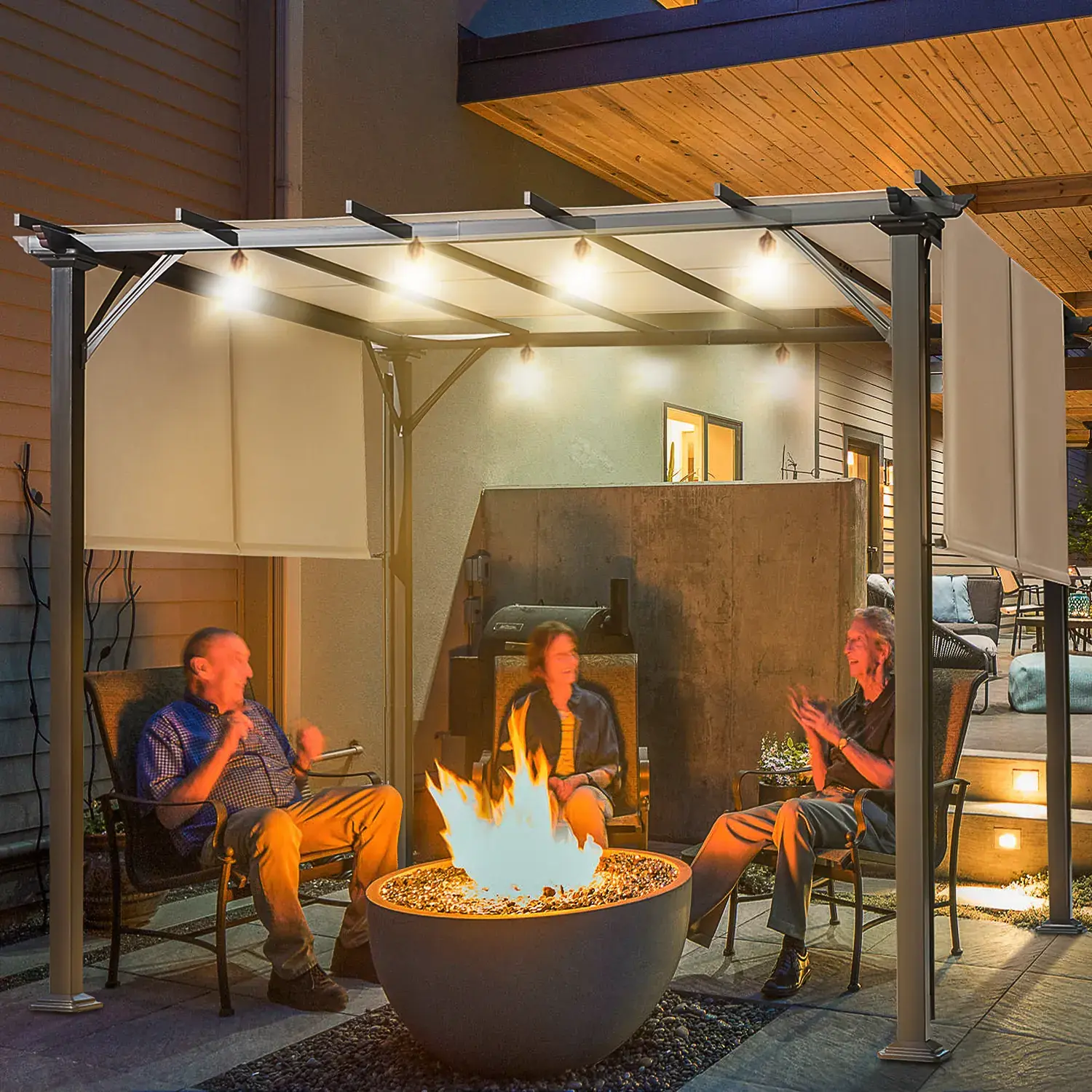
Last observed price $239.99
Aluminum | Manual retractable roof | 10×10 ft
Retracting roof
Out of stock
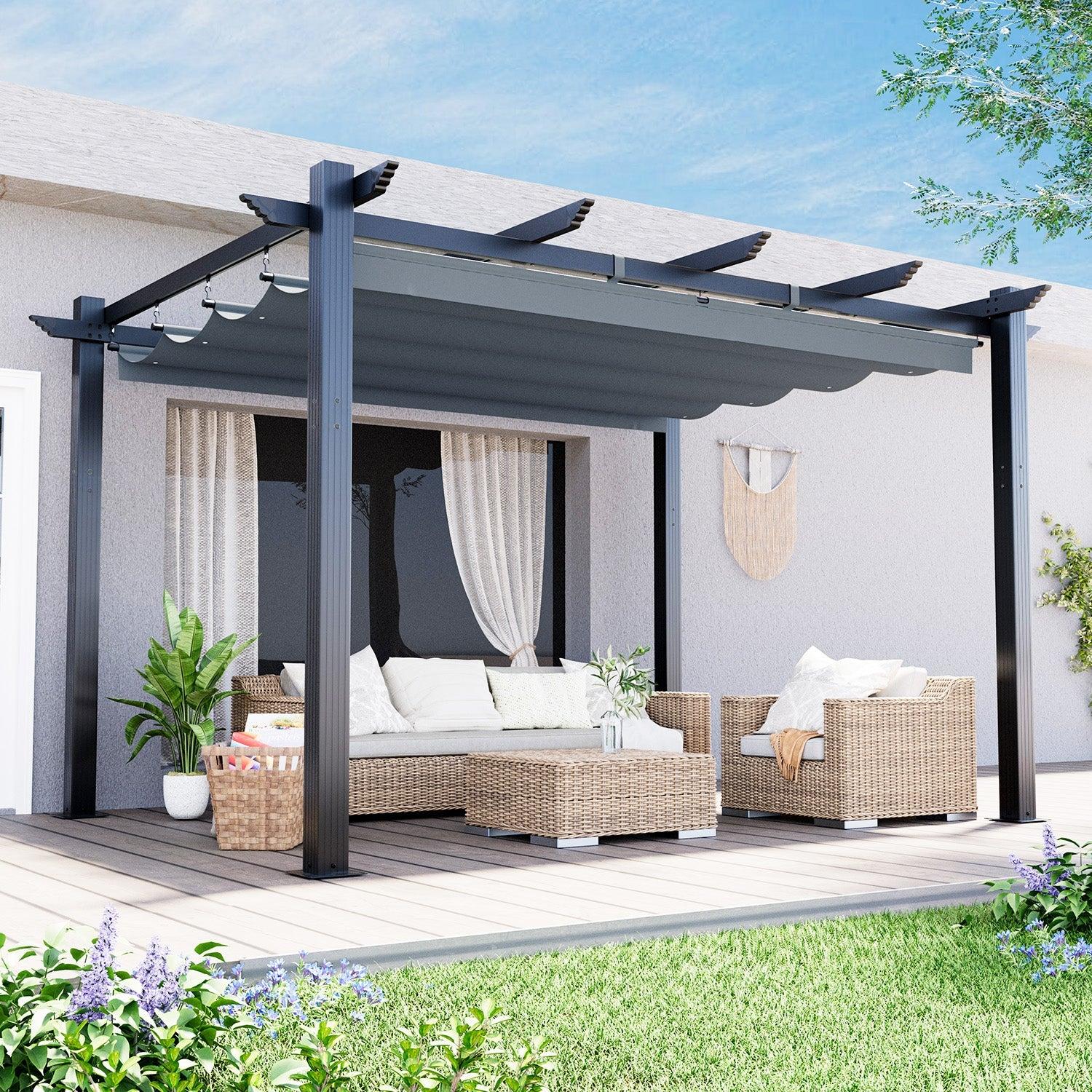
Last observed price $299.99
Aluminum | Manual retractable roof | 10×13 – 12×16 ft
Retracting roof
Out of stock
Louvered. Aluminum slats you tilt open for sun and close flat for rain, turned by a crank. It’s the roof most buyers want, and louvered pergola kits compares every brand at the same size.
Motorized. The same louvers on a motor, so you can close the roof from indoors when it rains. You pay a lot for the motor, so it’s worth it only if you’ll move the roof every day; see motorized pergolas.
Wood and cedar. Open slats and a natural look, with dappled shade rather than cover. Cedar needs restaining every few years; see wood pergolas and cedar pergolas.
Aluminum and steel. Metal frames that don’t rot or need staining, with open, louvered or canopy roofs. See aluminum pergolas and steel pergolas.
Vinyl. A white, low-upkeep frame that you wash rather than stain; see vinyl pergolas.
Canopy and retractable. A fabric roof you slide open or closed, the cheapest kind of shade. Fabric doesn’t last like a hard roof and usually comes down for winter; see retractable pergolas and every pergola with a roof.
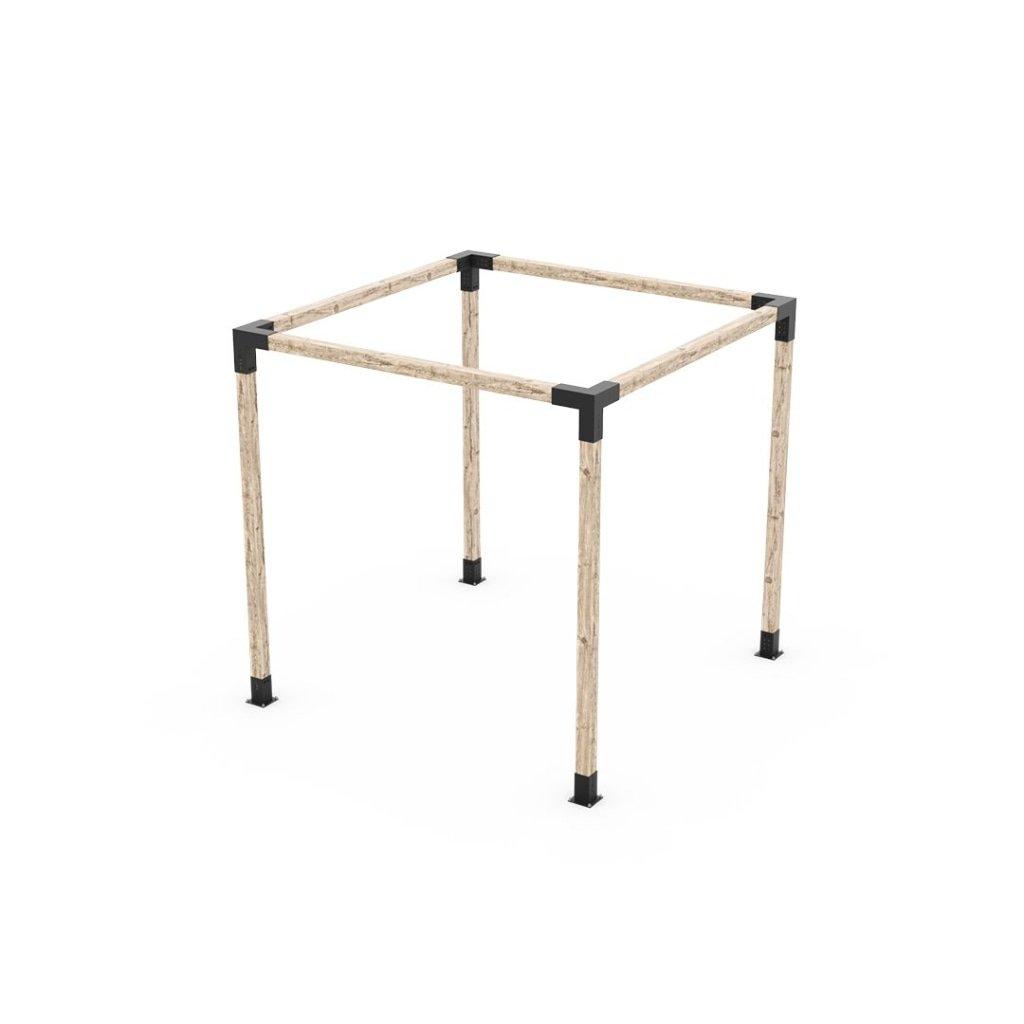
A bracket kit is only the steel corners and post bases; you buy the lumber yourself, usually 4×4 or 6×6 posts, and cut it to your size. That makes it the most flexible kit for an odd-shaped space, and the brackets cost a few hundred dollars, and about $3,700 for the biggest set in 6×6. But the lumber, stain and footings come on top, so check the whole bill before you assume it’s the cheaper route.
A whole kit arrives with every piece cut and drilled to one size, so there’s less to decide and less to get wrong. If you have a standard patio and want it built in a weekend, buy a whole kit. If you have a saw, a truck for lumber and a space no kit fits, brackets are the better buy.
Most patio kits run from 10×10 to 12×16. A 10×12 takes a table for four or a small sofa set, and a 12×16 fits a table for six with a seating area beside it. See every kit at 10×10, 10×12, 12×12, 12×14, 12×16 and 12×20; for under 100 square feet, see small pergolas.
The space you can use is smaller than the size in the name, because the posts stand inside the roof. The Amerlife Cedrix is sold as 12×16, but its posts are 14 feet 10 inches apart on the long side. Measure your furniture against the post spacing on the listing, and leave room to walk around it.
A freestanding kit stands on four posts anywhere in the yard, and it’s the easier one to get past a building department. An attached kit bolts to the wall on one side, so it needs only two posts and covers a patio right by the door, but it almost always needs a permit and a sound wall to fix to. Compare freestanding and attached kits.
On a deck, the posts have to land on the joists or on blocking added beneath them, not just on the boards. Check that before you order a kit with a heavy roof.
Most brands sell direct from their own website, which usually has every size and the full warranty terms. Home Depot carries Backyard Discovery cedar kits and several louvered brands, and Lowe’s sells Backyard Discovery too, which helps if you want to return a damaged box to a store. Costco sells a few louvered and wood kits with its own return policy, and our Costco pergola guide covers what it stocks.
Whichever store you use, the price can change from week to week, and the same kit is often cheaper at one store than another.
Anchoring comes first. Every kit has to be fixed down, to a concrete patio with anchor bolts or to footings dug into the ground, and owners often say that was the hardest part of the job. Drilling into concrete takes a hammer drill or an impact driver with a masonry bit. Without a slab, budget for footings or a new pad; pergola installation walks through both.
Then the build. Owners of cedar kits most often report three to six hours with two to four people, and up to two days for a large kit or a first-timer. You’ll need a second person at least to stand the posts up. Wood that you plan to stain is easier to finish before it goes up than after.
Check the permit. Many towns exempt a freestanding structure under 200 square feet, but an attached pergola usually needs a permit at any size. Our permit guide has the rules where you live.
The most common complaint about pergola kits isn’t the design, it’s what turns up: boards that are split, warped or drilled out of line, and bent louvers or dented beams on aluminum kits. Open every box and check every piece against the parts list before you pour concrete or book help, because a replacement part can take weeks, and it’s easier to send back a kit you haven’t started.
A kit is usually cheaper than paying a contractor to design and build one, because you supply the labor. Building from scratch with a bracket kit can cost less again if you already own the tools, but lumber, stain and footings come on top of the brackets.
Yes, for a standard patio size. Everything is cut and drilled to fit, most kits go up in a day with help, and the price is known before you start. They make less sense for an odd-shaped space, where a bracket kit or a custom build fits better.
At 10×12, typically about $400 for a fabric canopy kit, about $1,800 for a manual louvered kit and about $5,300 for a wood kit, before anchors, a base and installation. Pergola cost adds up the full bill.
A 10×12 fits a table for four or a small sofa set, and a 12×16 fits a table for six with seating beside it. Measure against the post spacing on the listing, which is smaller than the size in the name.
Yes, if you buy a kit made for it. Attached kits bolt to the wall and usually need a permit. On a deck, the posts must land on joists or added blocking, not just the deck boards.