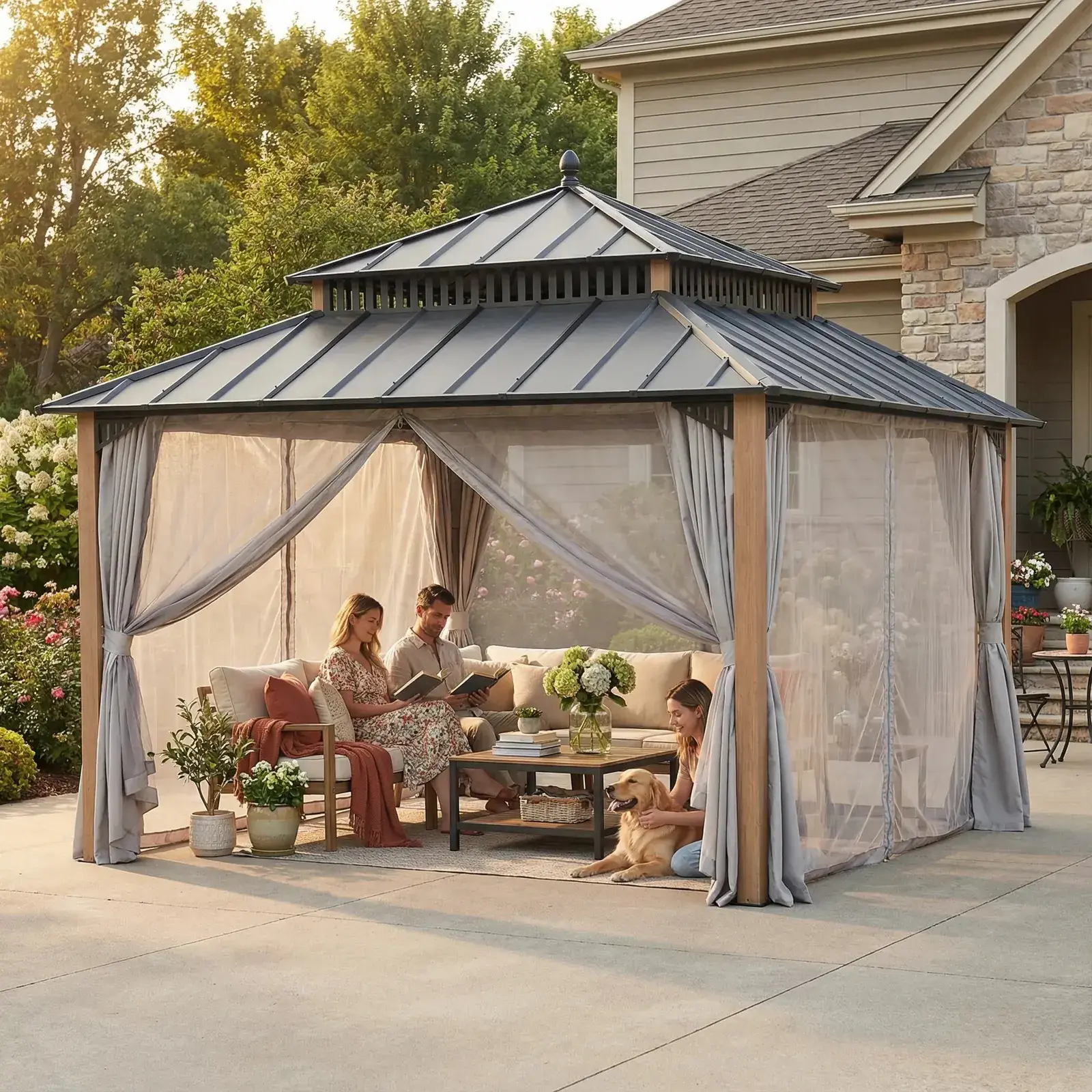
Hardtop gazebos
For most patios, buy a 10×12 hardtop with aluminum posts, like Sunjoy’s Kingston at about $1,100. If you get real snow or strong wind, spend about $2,000 on Backyard Discovery’s Barrington, which states a 30-inch snow load and a 100 mph wind rating and carries a 5-year warranty against Sunjoy’s one. Either way, anchoring matters more than the rating on the box.
A hardtop gazebo’s rating comes with a condition, and the hardware to meet it isn’t always in the box.
Updated Oct 20, 2026
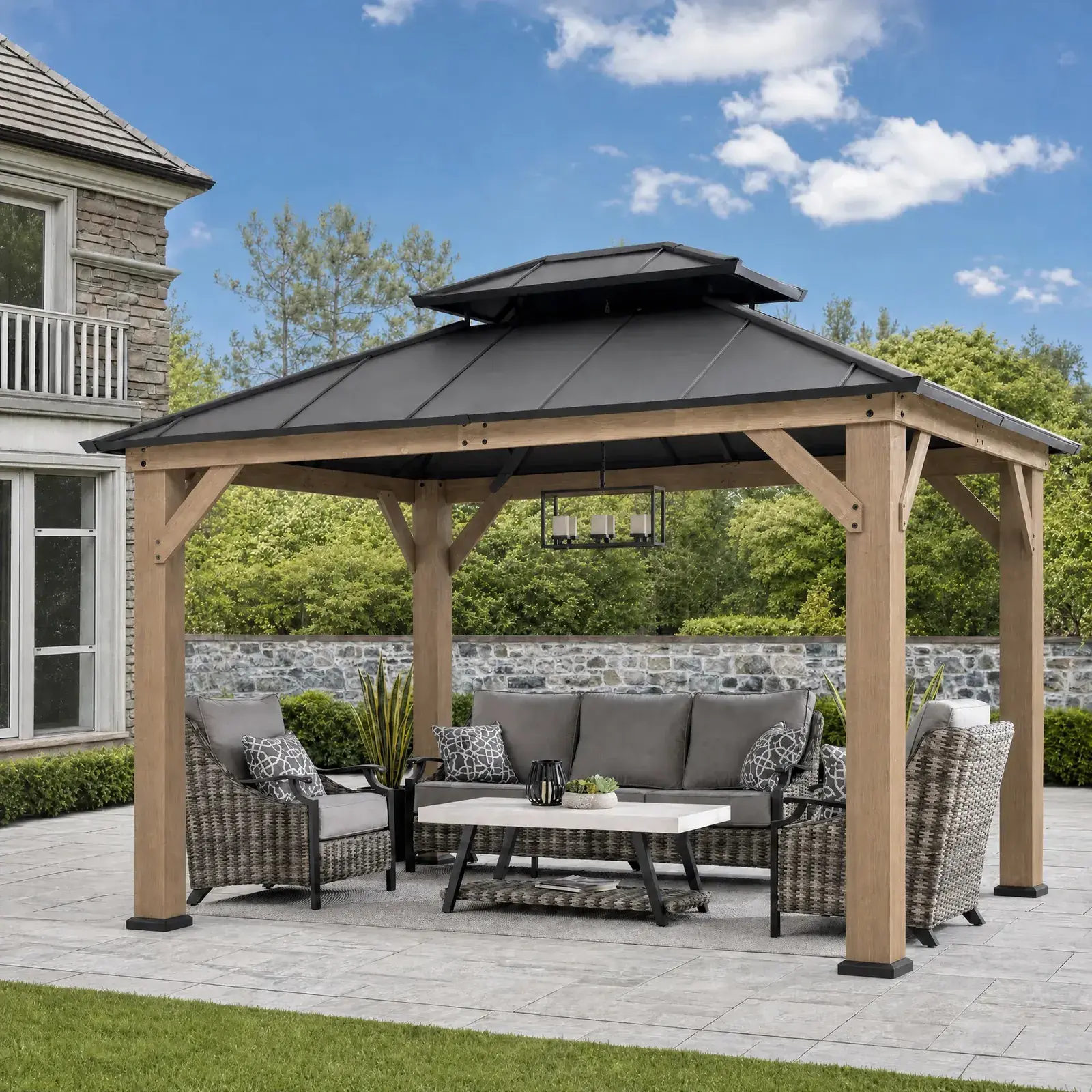
Showing 1–6 of 140 gazebos
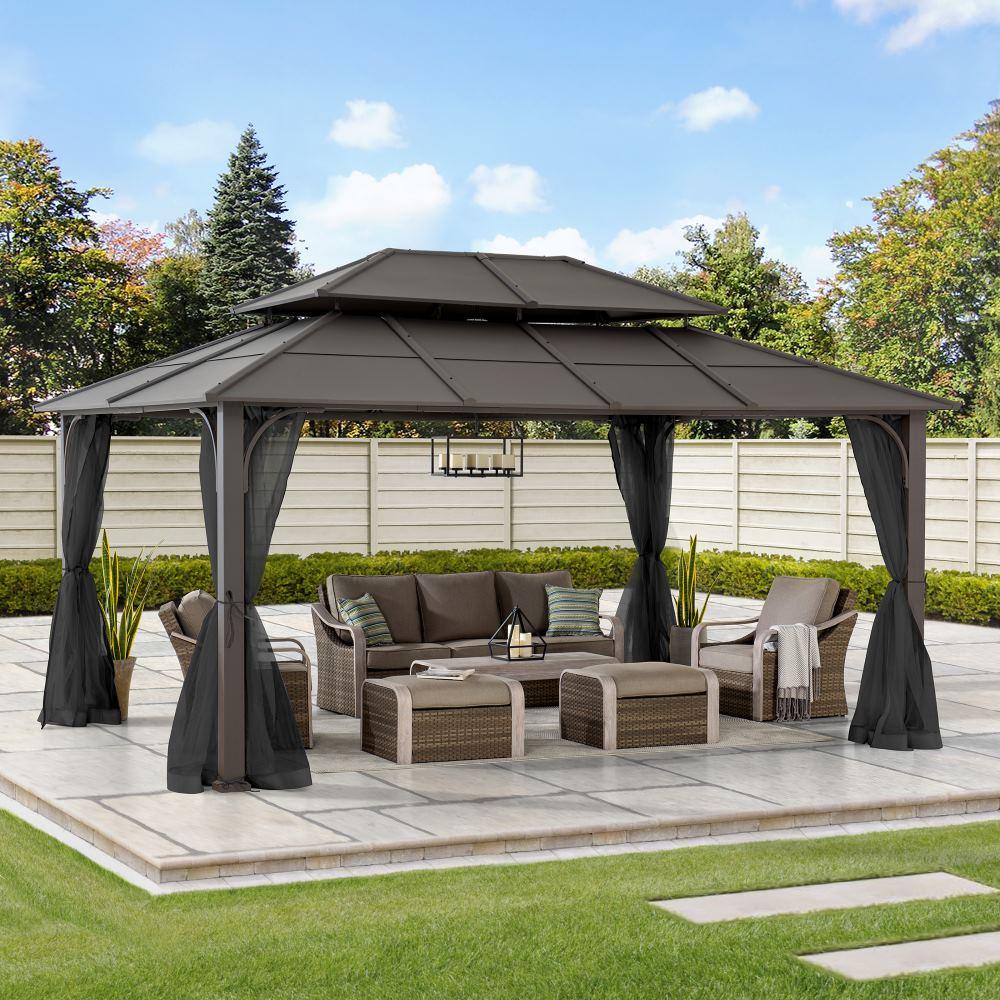
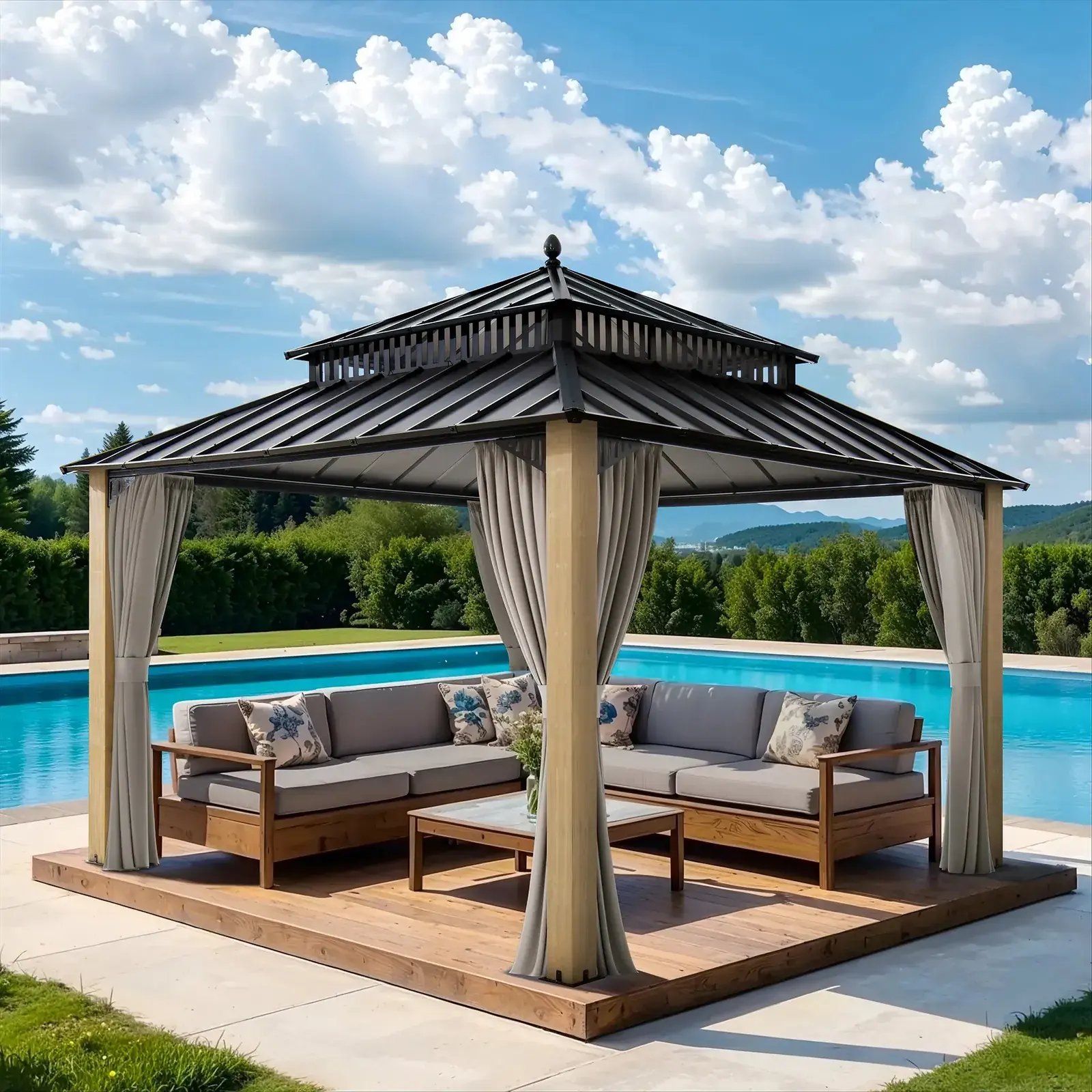
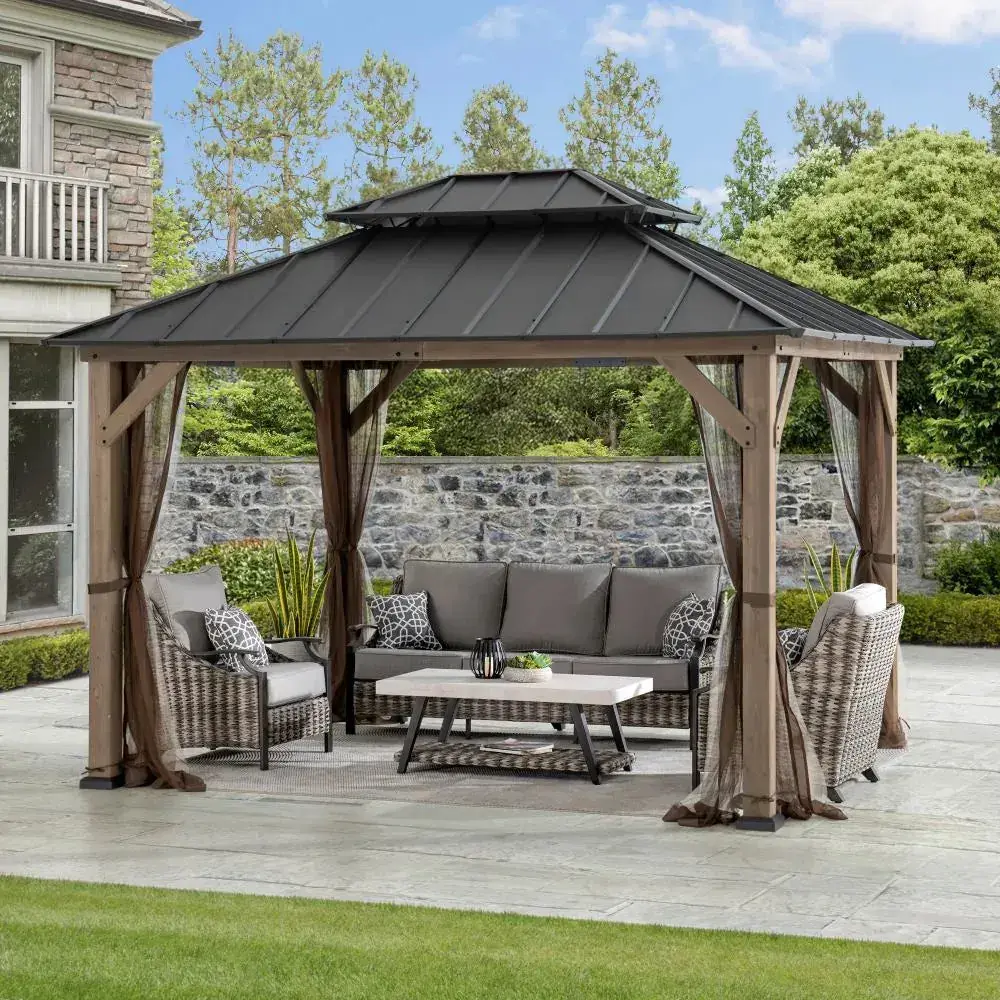
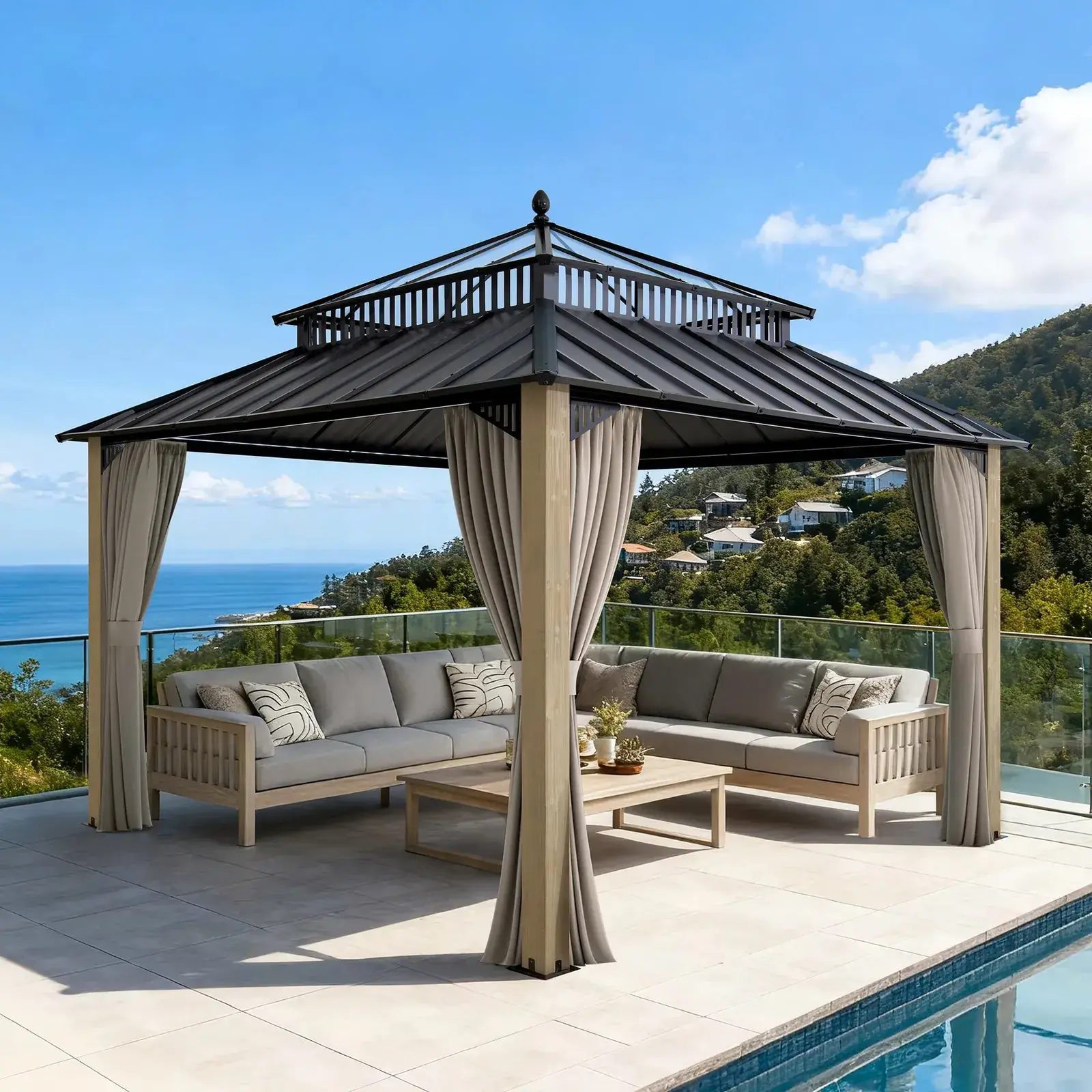
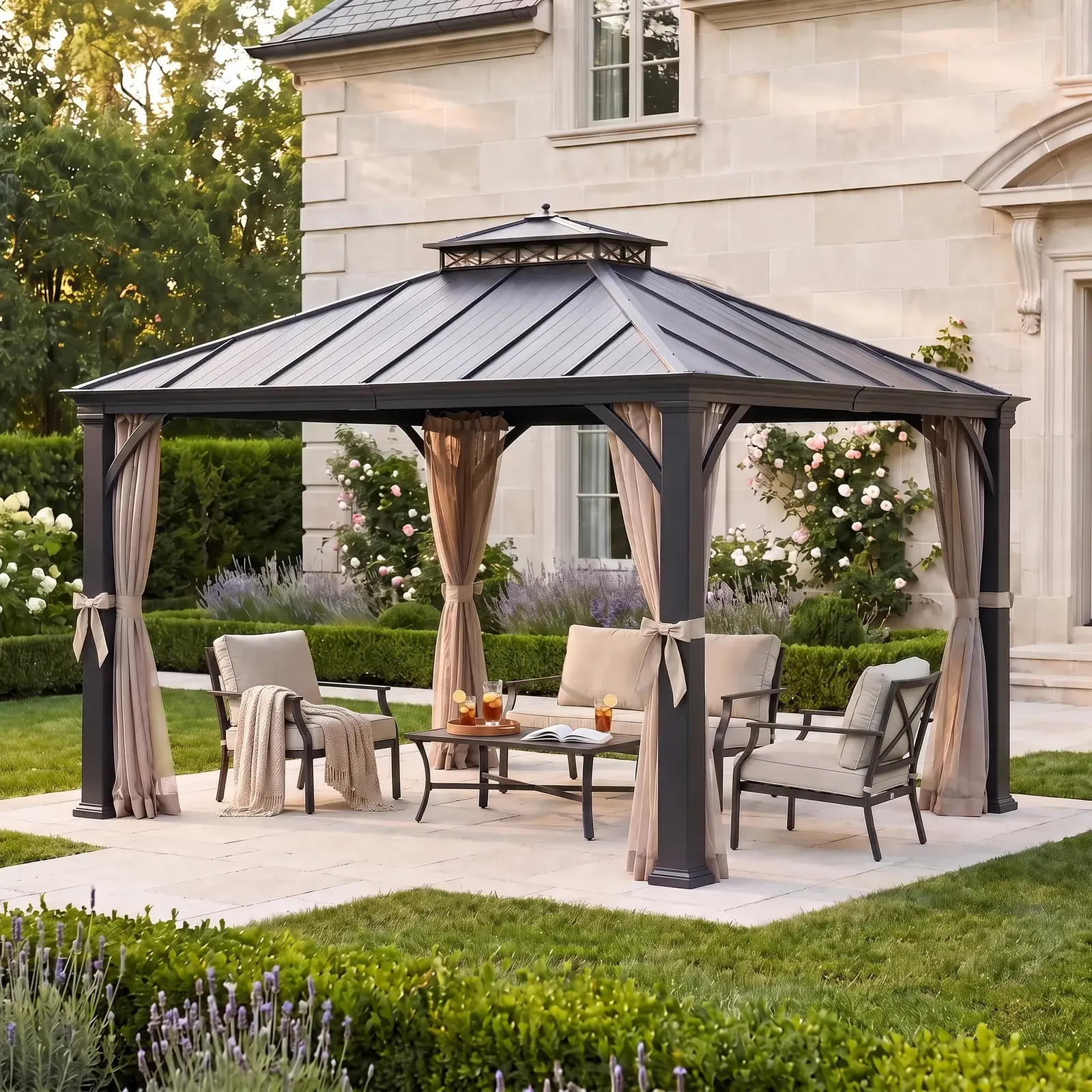
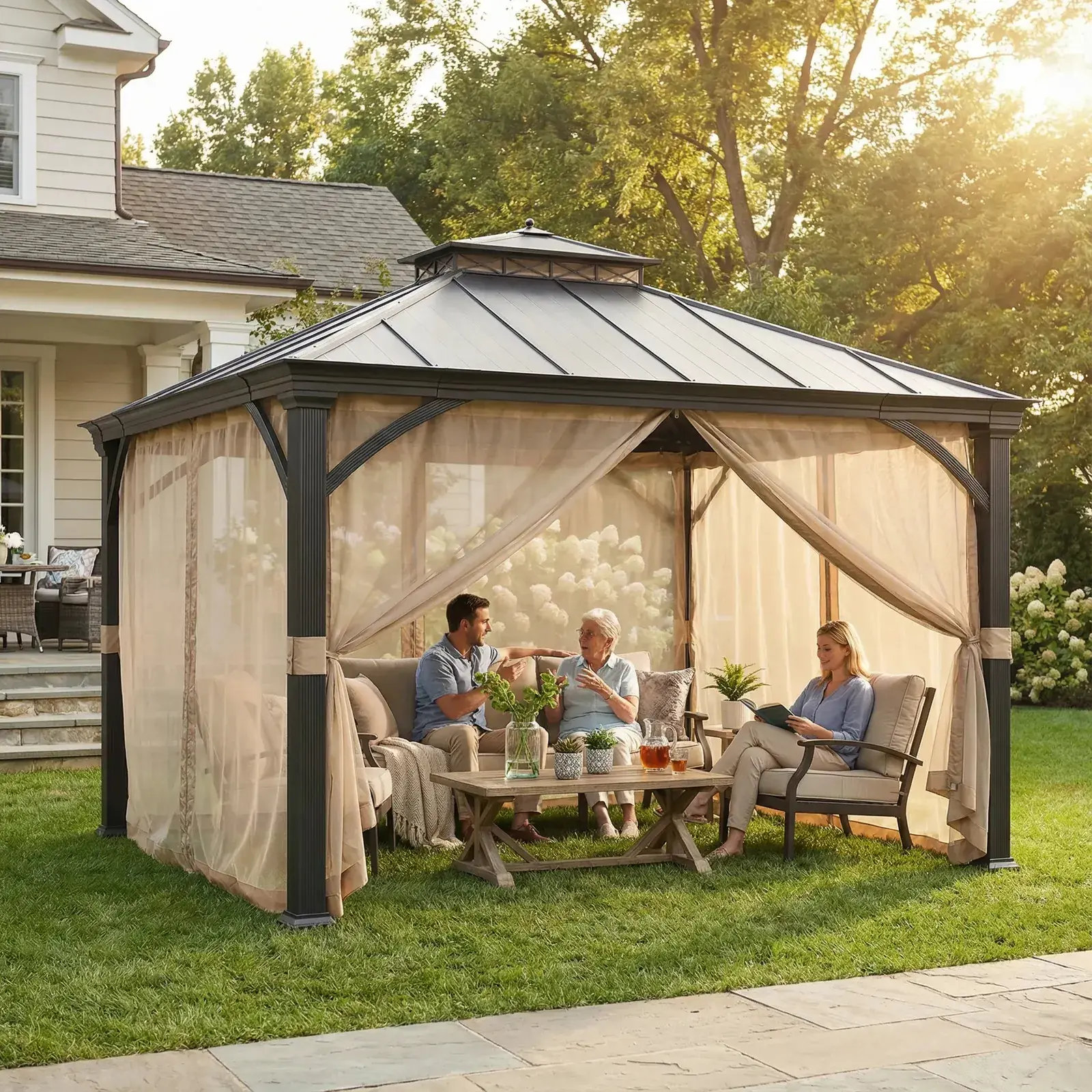
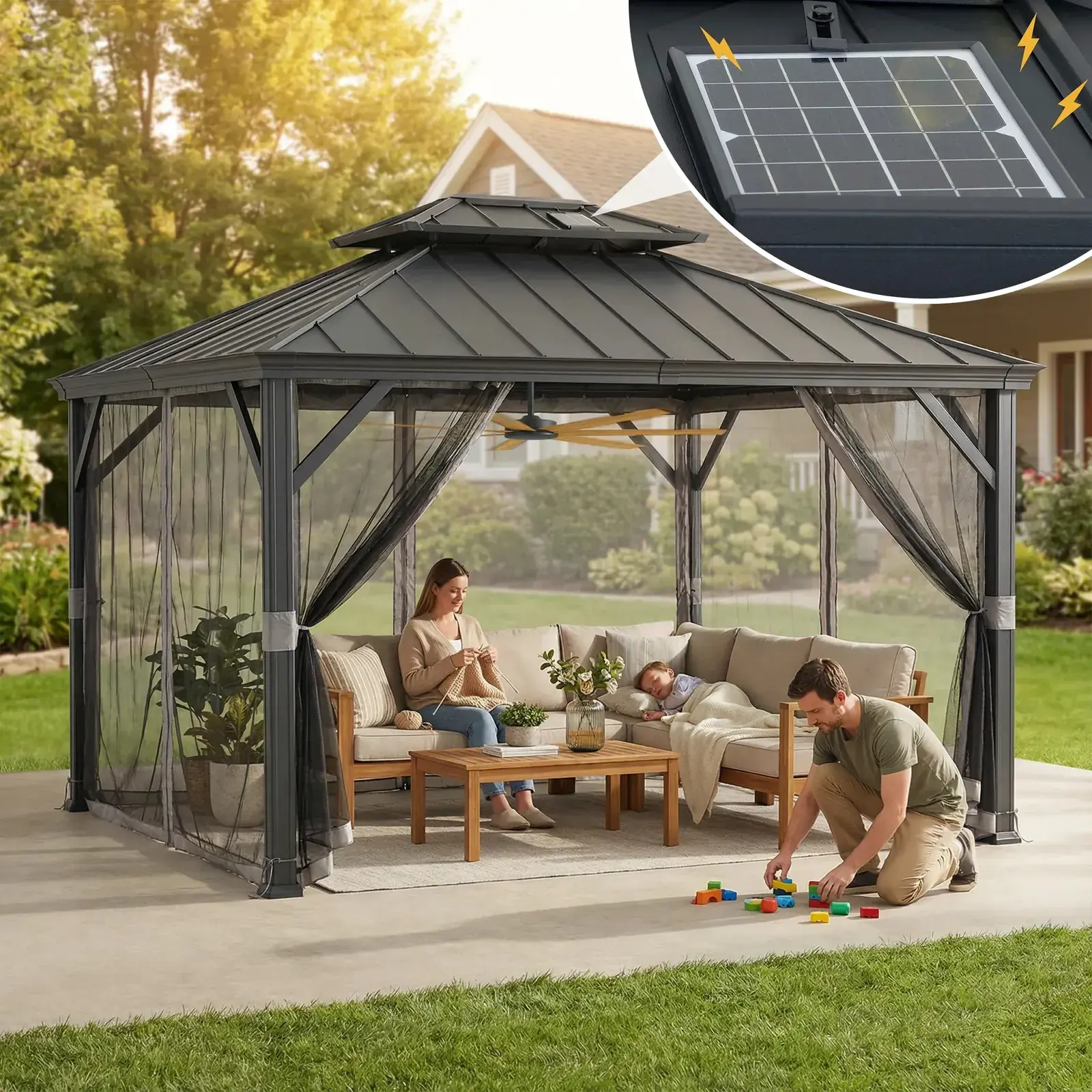
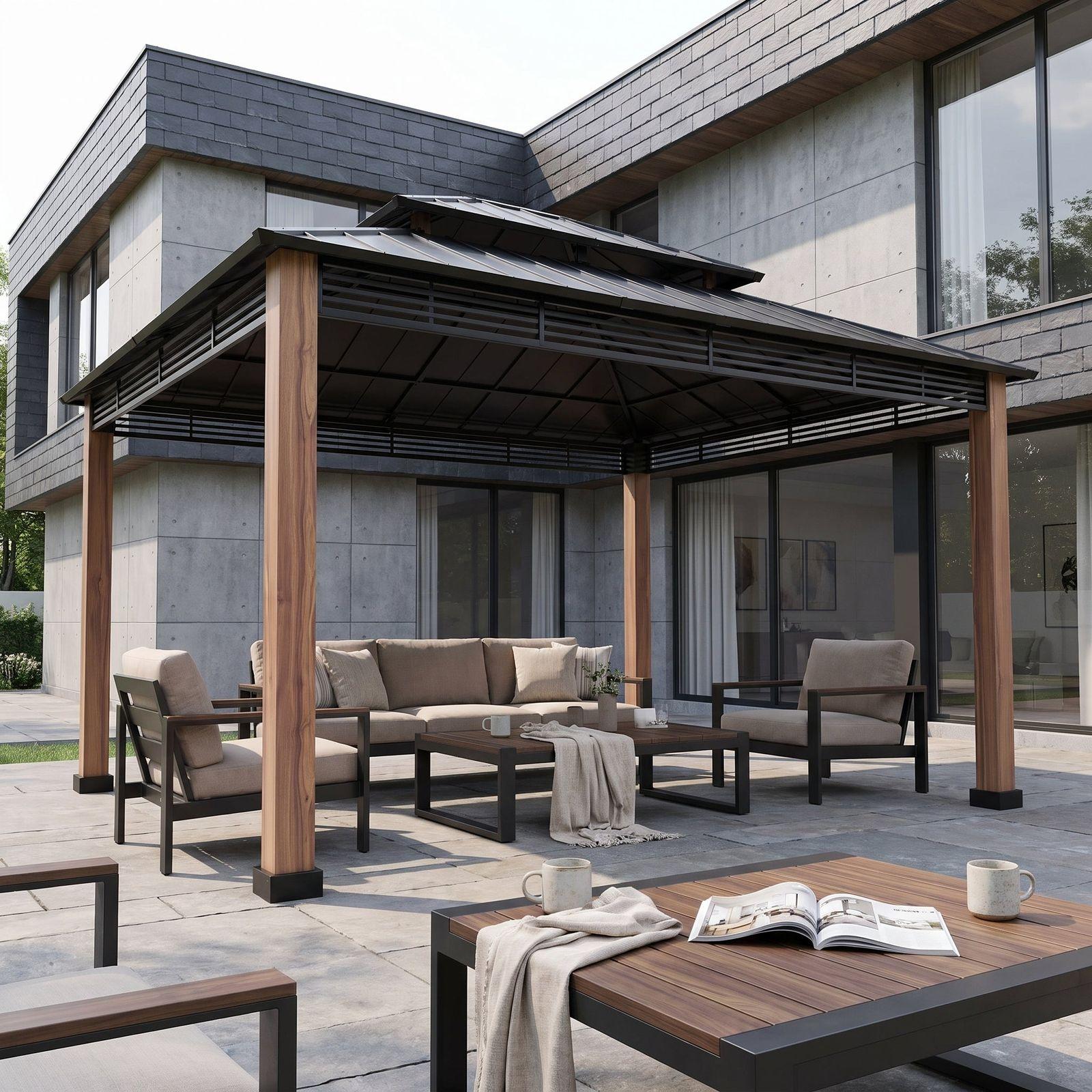
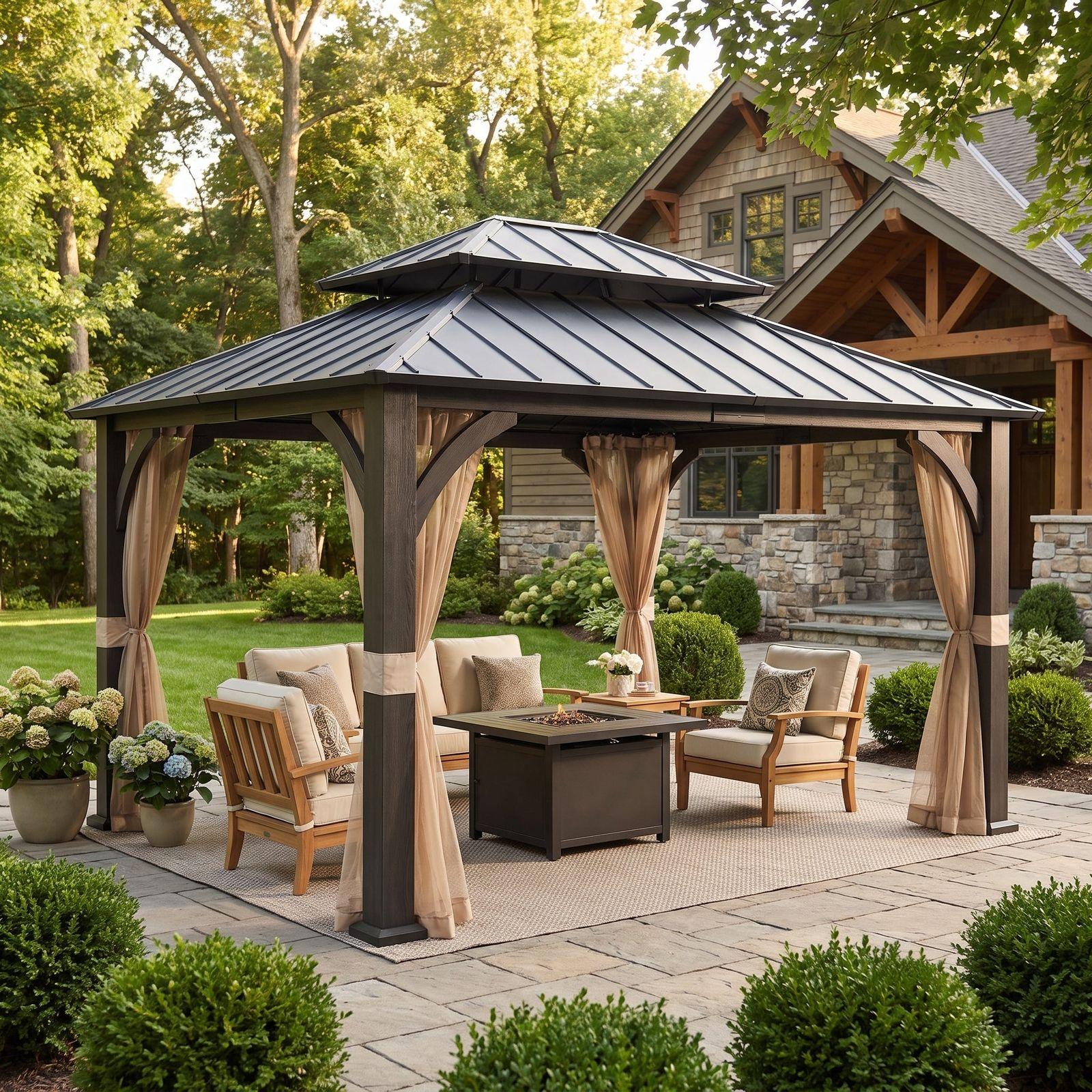
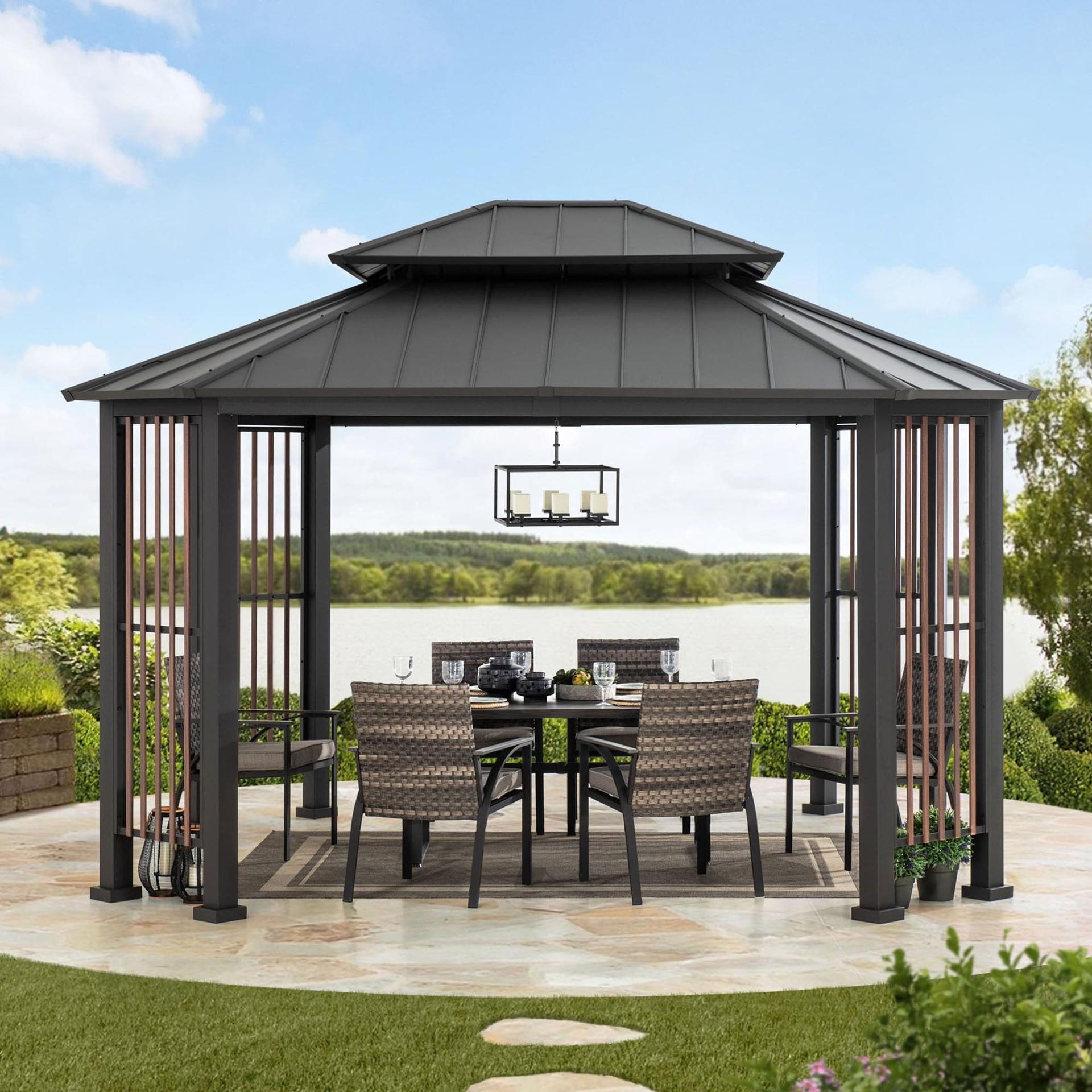
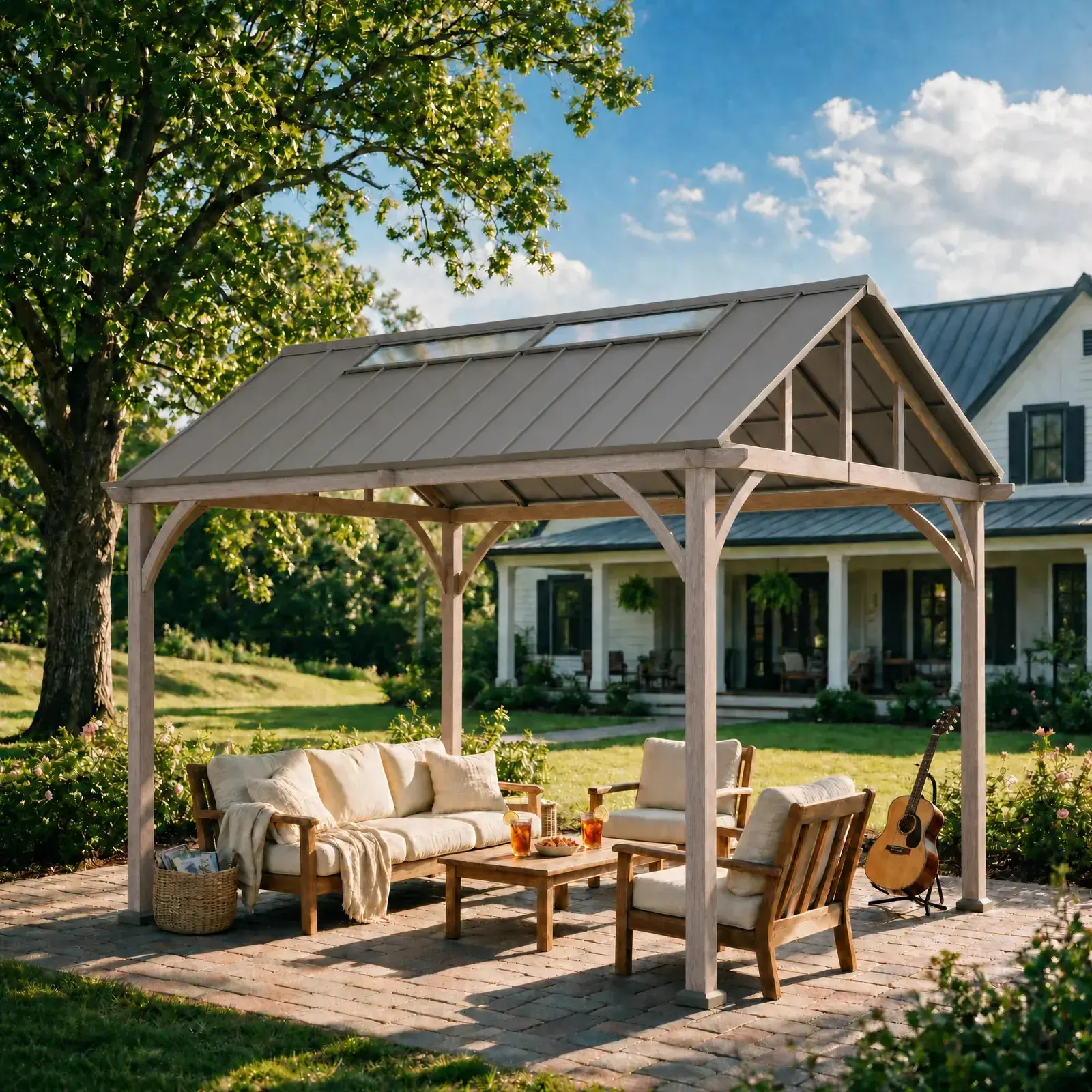
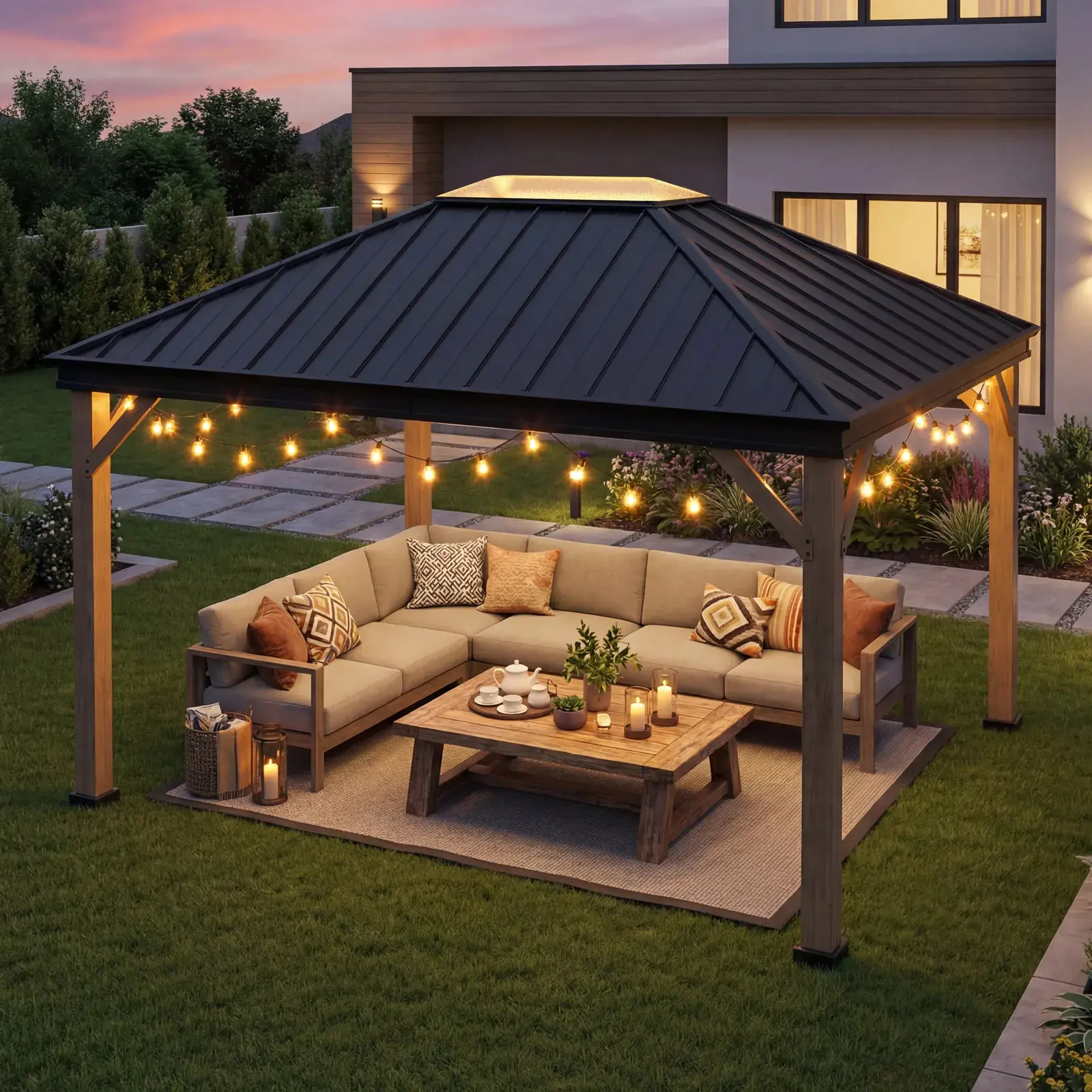
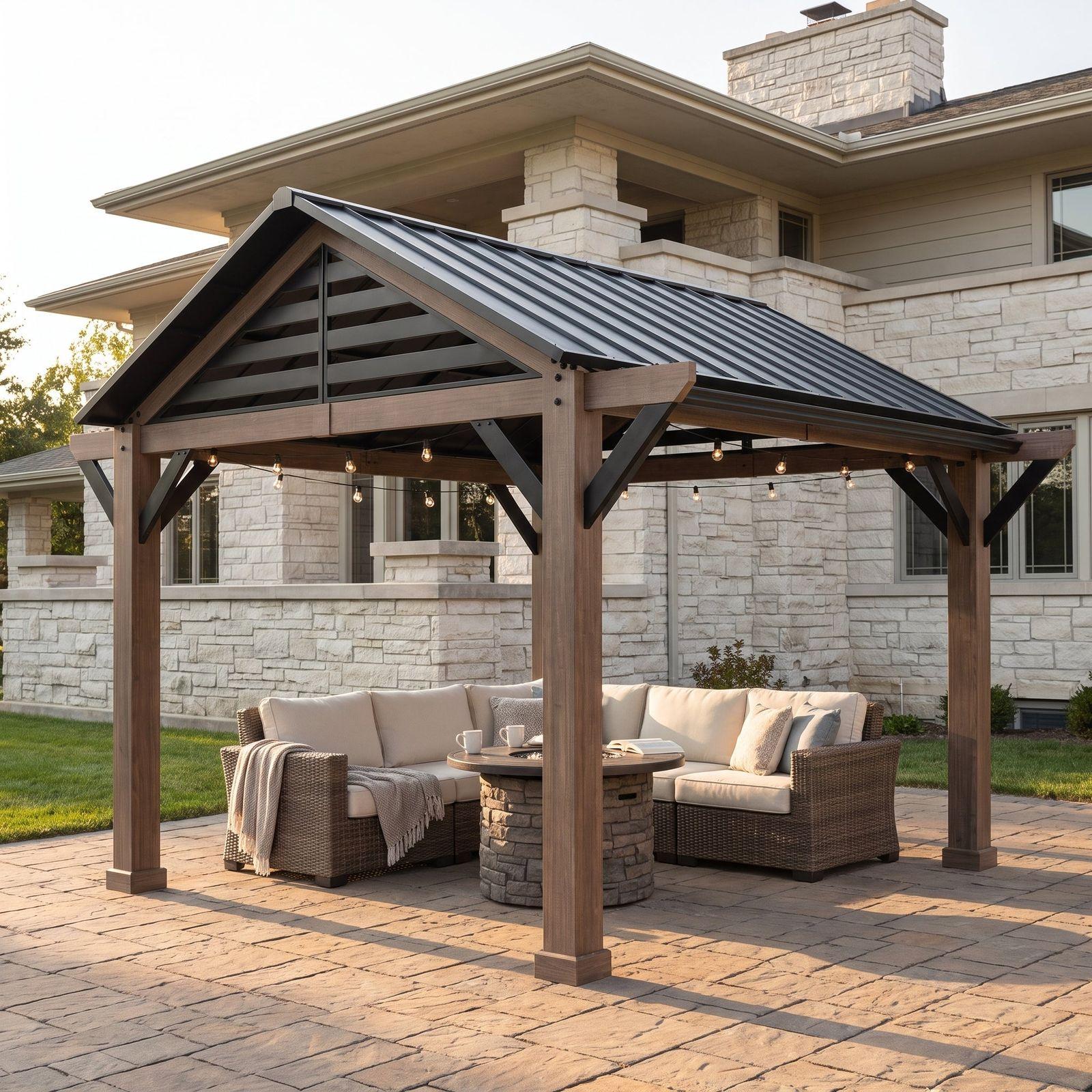
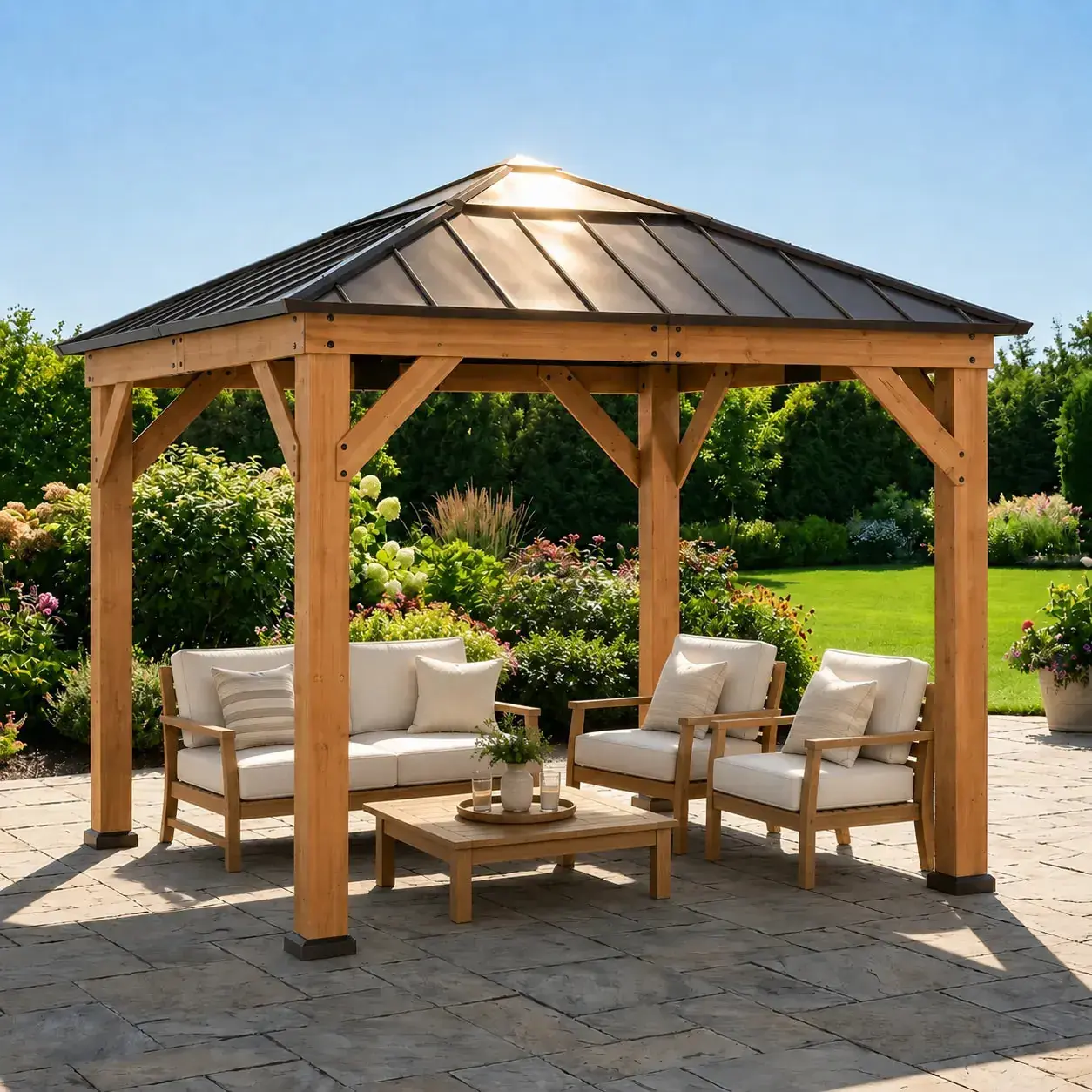
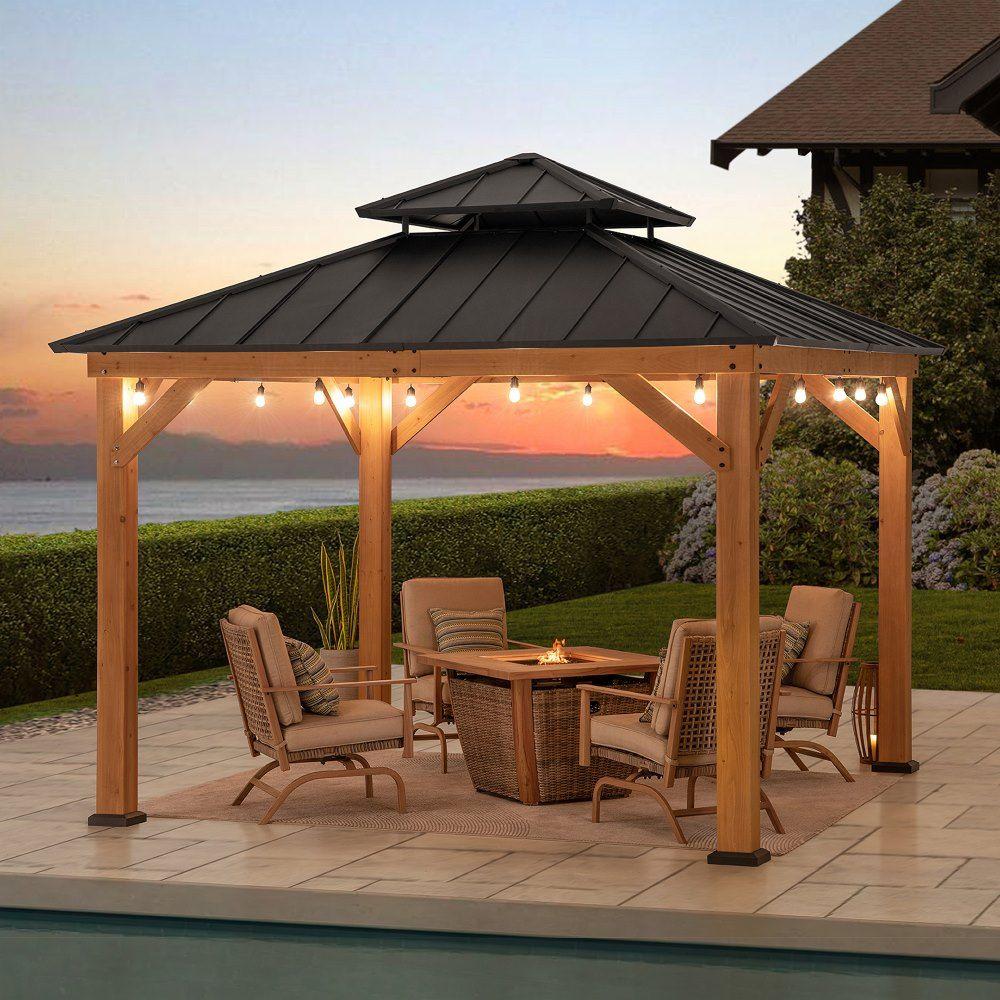
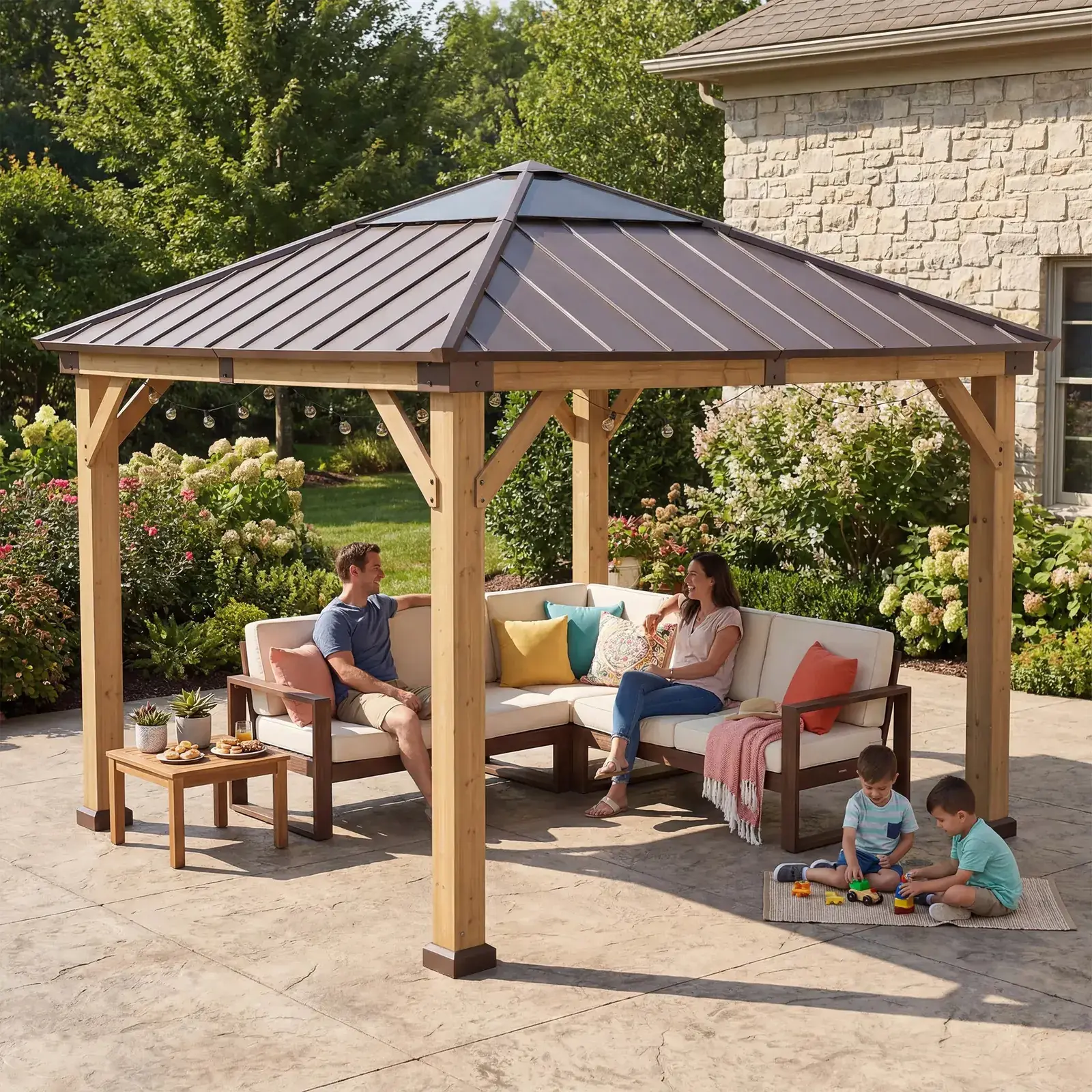
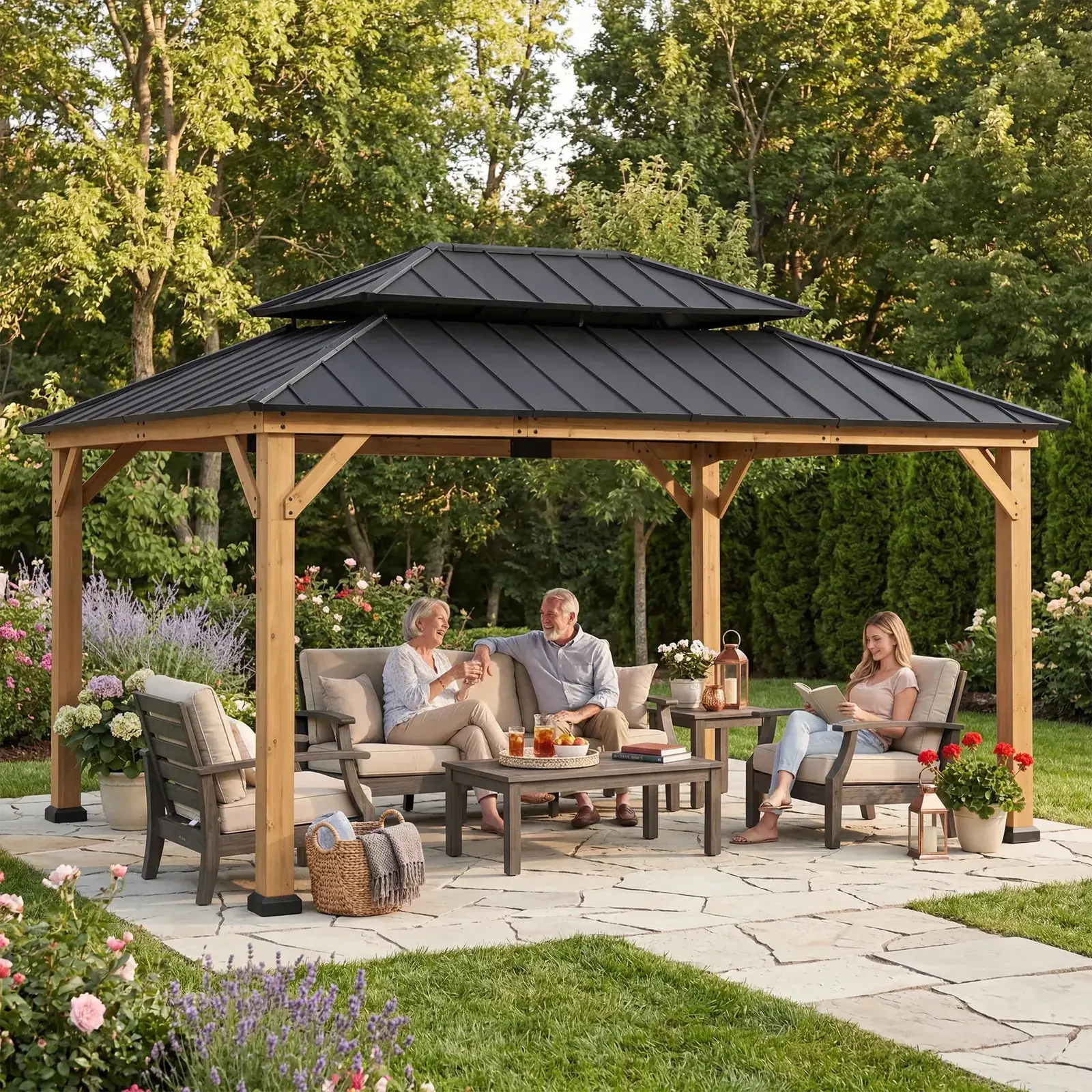
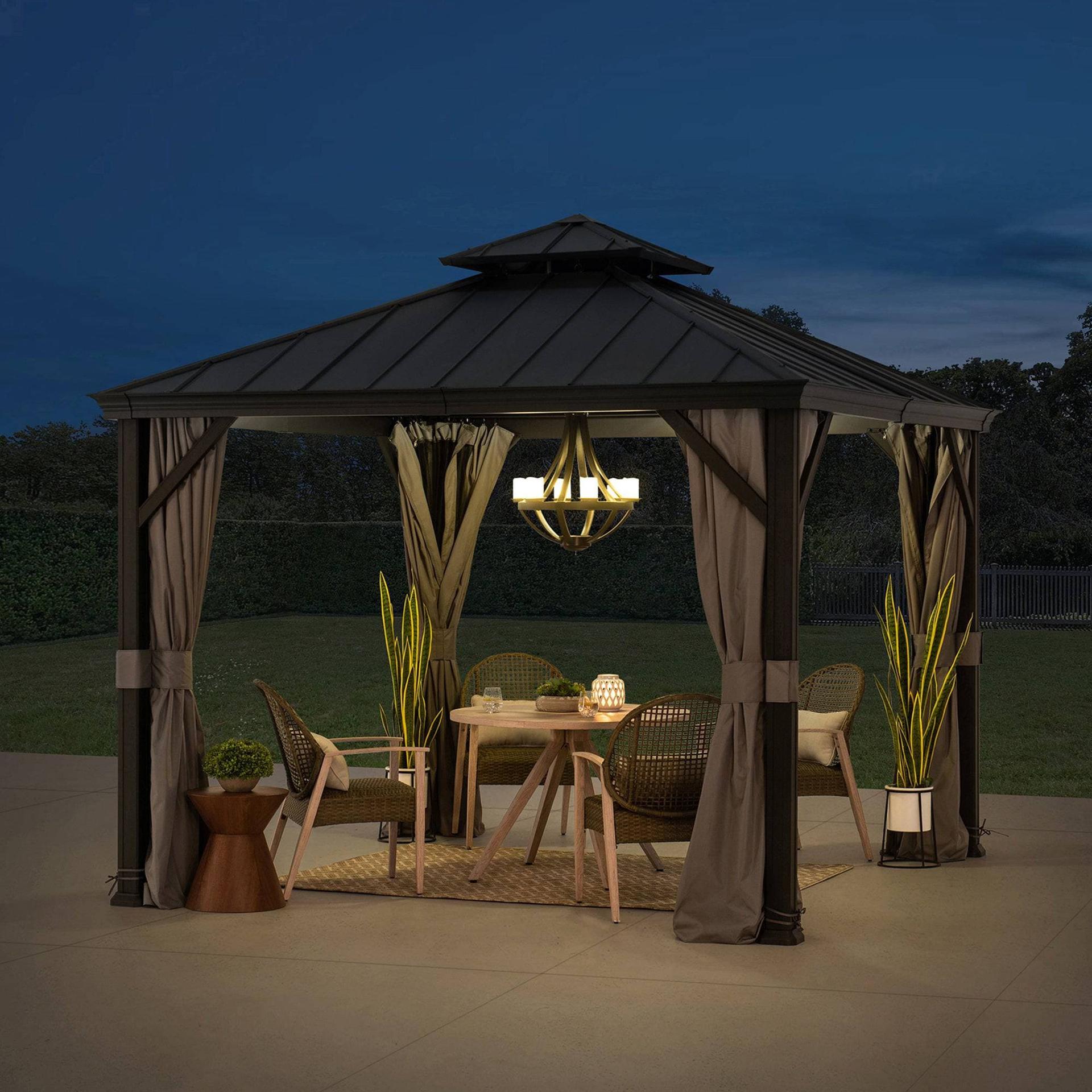
Summit Minimalist Aluminum Gazebo
Last observed price $1,123.65
Aluminum | Hardtop | 10×10 ft
Out of stock
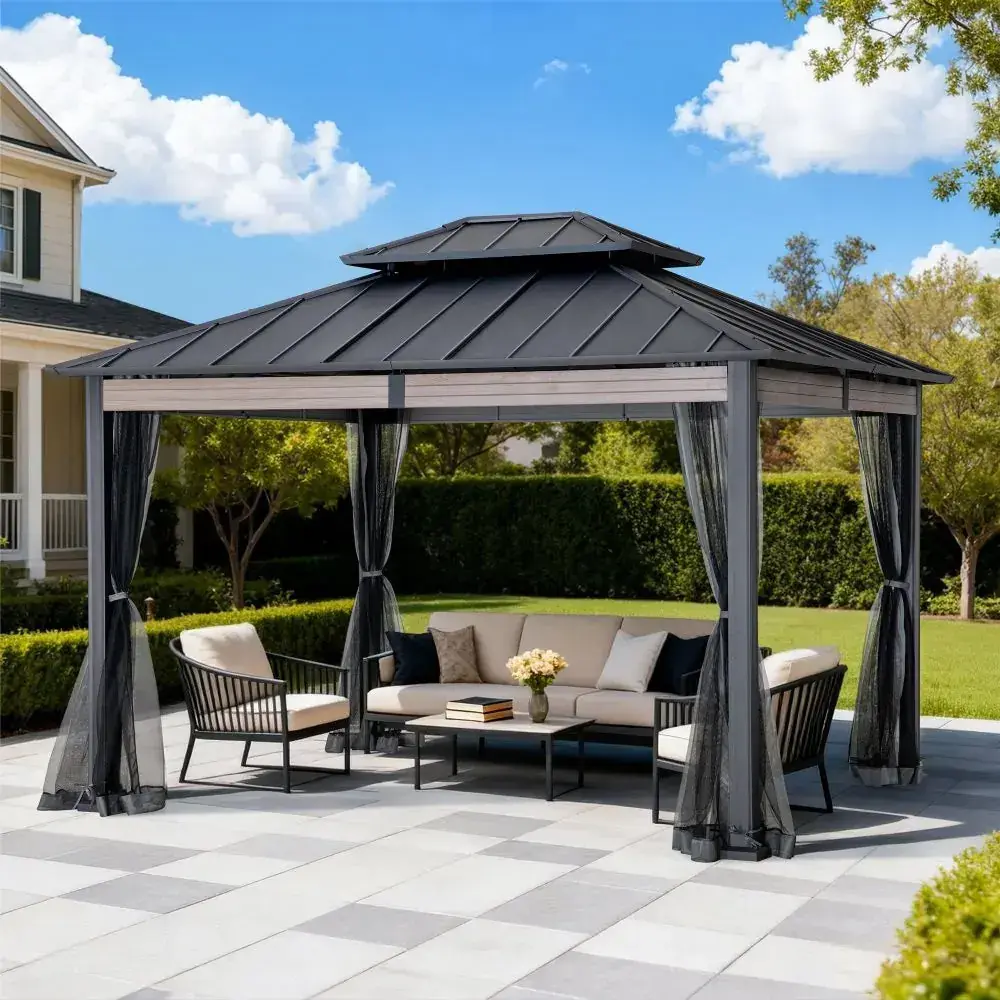
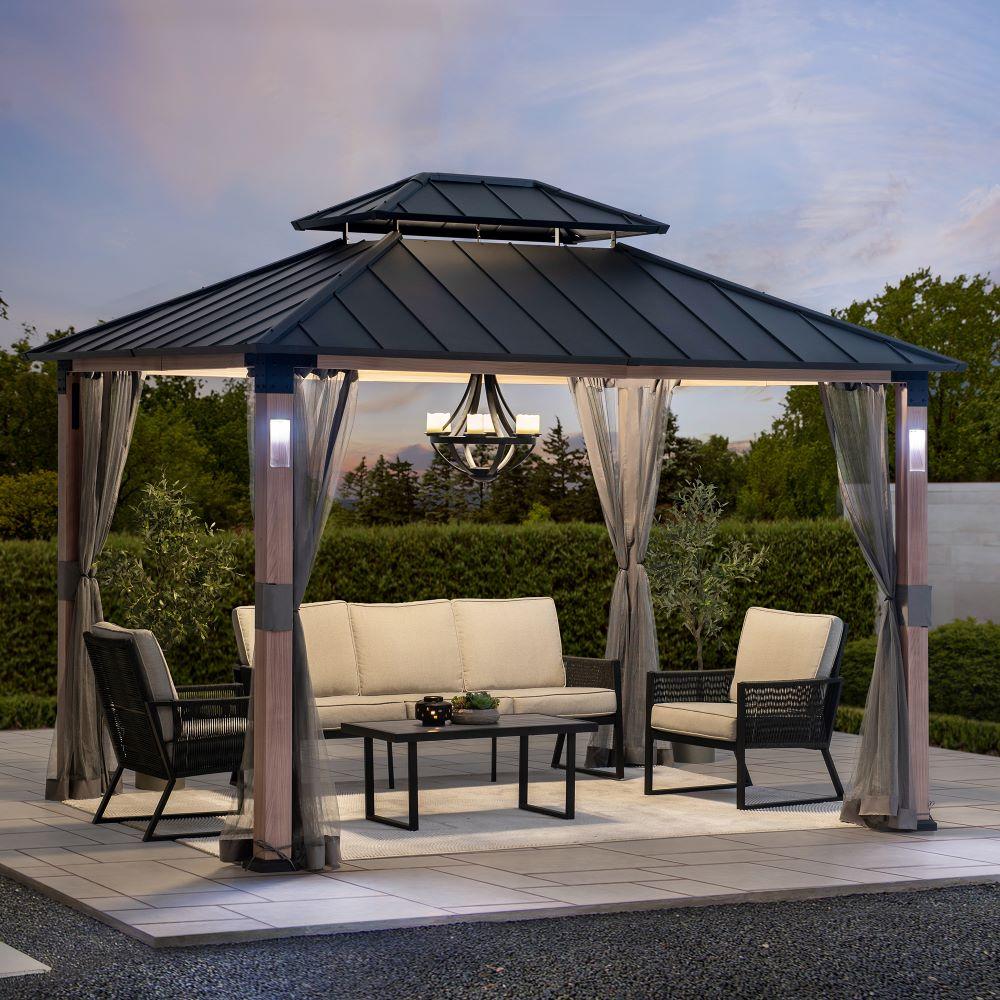
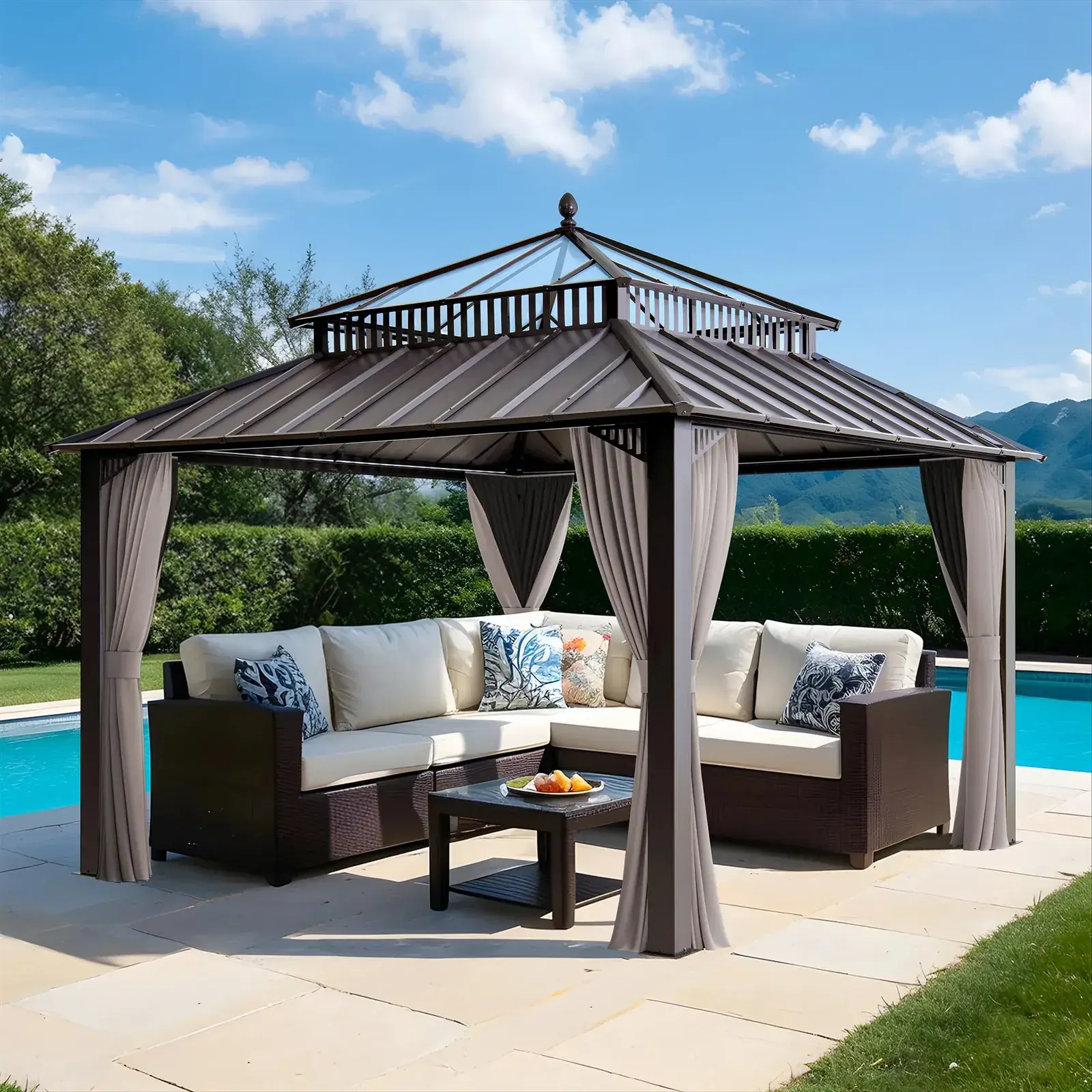
Kirkfield Integrated-LED Metal Gazebo
Last observed price $1,687
Steel | Hardtop | 10×12 ft
Out of stock
Which one to buy
Sunjoy Kingston with aluminum posts
Best for: a first hardtop on a normal patio. At about $1,100 for 12×10 it sits just under the market median for a 10×12 hardtop, curtains and netting are in the box, the aluminum posts don’t rust or need staining, and Sunjoy states 50 mph and 3,700 pounds of snow on the 12×12. The catch: the roof is steel, so a chip there can rust and Sunjoy’s one-year warranty doesn’t count that as a defect, and the bolts for a slab aren’t included. Who should buy something else: anyone with heavy snow or strong wind.
Backyard Discovery Barrington
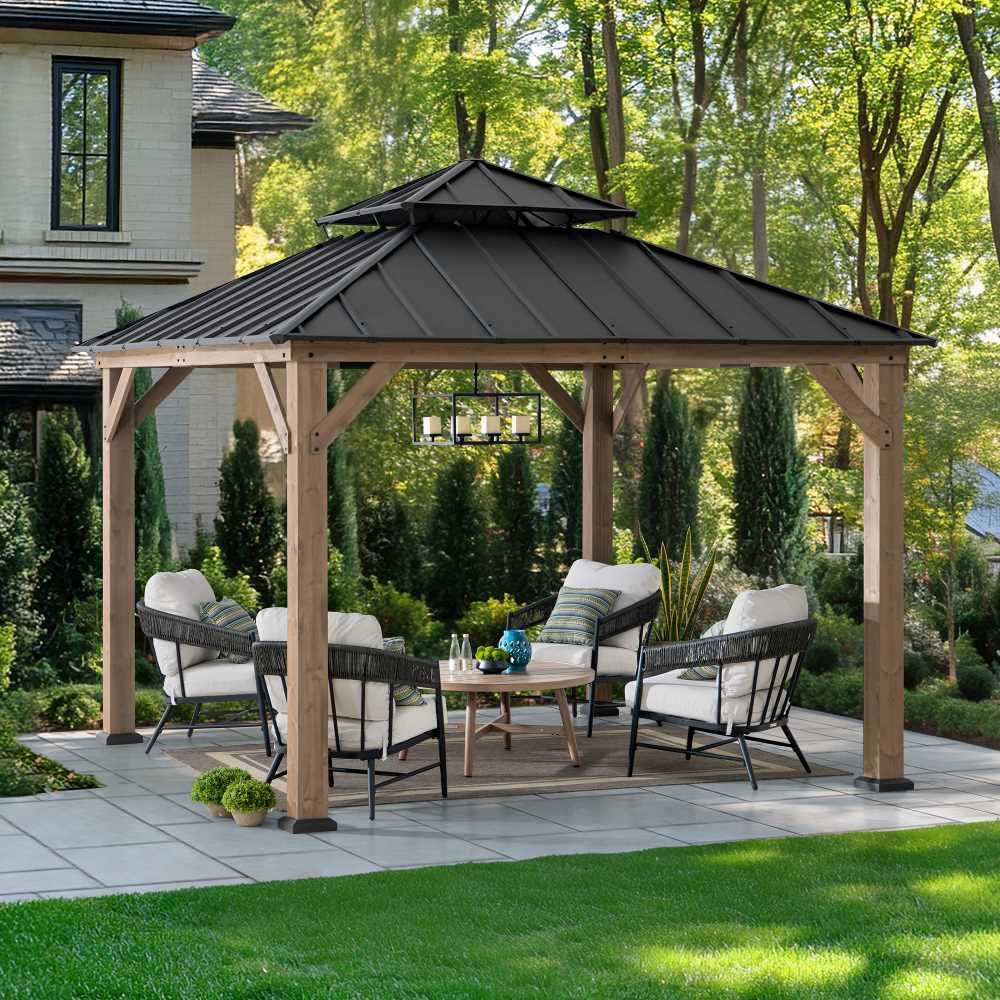
Best for: snow or wind country. It states 30 inches of snow and 100 mph when anchored, carries a five-year warranty and has outlets built in. The catch: at $1,999 it costs about $900 more than the Kingston for the same footprint, cedar weathers and needs restaining over time, and netting is a separate $499. Why it isn’t higher: on a sheltered patio you’d be paying for ratings you won’t use. Who should buy something else: if you want no staining at all, Backyard Discovery’s all-steel Stonebridge is $2,199 at 12×9.5.
What a hardtop gazebo costs
| Product | Size | Roof | Price |
|---|---|---|---|
| Sunjoy Crown Lattice Hardtop Patio GazeboSteel posts, lattice band | 10×12 ft | Hardtop | $1,067 |
| Sunjoy Kingston Aluminum GazeboAluminum posts, curtains and netting | 12×10 ft | Hardtop | $1,028.30 |
| Sunjoy Cedar Wood Gazebo with Galvanized Steel RoofTimber posts | 10×12 ft | Hardtop | $1,138.80 |
| Sunjoy Kingston Horizon PC-Vent GazeboAluminum posts, clear vent top | 12×10 ft | Hardtop | $1,170.40 |
| Sunjoy Double-Tier Cedar GazeboTimber posts | 10×12 ft | Hardtop | $1,337 |
| Sunjoy Solaria Eco-Solar Aluminum GazeboAluminum posts, solar panel in the roof | 10×12 ft | Hardtop | $1,482.40 |
Brand list prices, before tax, delivery and installation. Brands often run promotions, so check the live price before you order.
| Model | Size | Sale price | List price | Frame |
|---|---|---|---|---|
| Barrington | 12×10 | $1,999 | $2,499 | Cedar, steel hip roof |
| Norwood | 12×10 | $1,999 | $2,499 | Cedar, steel peak roof |
| Stonebridge | 12×9.5 | $2,199 | $2,699 | All steel |
Backyard Discovery’s own prices with shipping included, read 13 October 2026. It lists truck transit of 7 to 17 days depending on region, and sells assembly as an add-on booked for a separate day.
At the common 10×12 size, the middle of the market is about $1,170, and the middle half of prices runs from $930 to $1,500. Sunjoy’s Kingston with aluminum posts sits just under that at about $1,100 in the 12×10 size, one of the gazebos with curtains and netting in the box.
Backyard Discovery’s 12×10 Barrington costs $1,999 on sale against a $2,499 list price, about $900 more than the Kingston. The roof is steel on both, so what the extra money buys is a five-year warranty instead of one, a snow rating stated in inches, and outlets and USB ports built into a post. Netting is extra, $499 for the Barrington. For every kit at this size and the space between the posts, see 10×12 gazebos. See the range on Backyard Discovery’s site.
What the snow and wind ratings are worth
Each maker prints its own figures, and neither names a test standard. Sunjoy rates the Kingston for 50 mph winds and 3,700 pounds of snow on its 12×12, a total for the whole roof. Backyard Discovery states 6,500 pounds, or 30 inches of snow, and 100 mph for the 12×10 Barrington: more load on a smaller roof, and a depth that’s easier to picture than pounds.
The wind figure holds only when the gazebo is anchored. Backyard Discovery’s 100 mph carries a footnote saying the gazebo must be anchored as its instruction manual specifies. Wind is the most common complaint in the low-star Home Depot reviews of Sunjoy’s 10×12 Atasha: roof panels bent or blown off, and one gazebo flipped. In the same listing, Sunjoy’s own answer to a buyer cites 2,900 pounds of snow but advises clearing it promptly to prevent a collapse. So if you get heavy snow, clear the roof with a roof rake after big storms rather than leaving the rating to do the work.
How to anchor one on a slab, a deck or grass
Check what the box holds before you order. Backyard Discovery says its gazebos include four 2-inch concrete screws. Sunjoy’s Kingston comes with pre-drilled ground plates and stakes for soft ground, but the expansion bolts for concrete are not included, so buy them with the gazebo.
One Southern California assembler’s guide sets out the usual fix for each surface: wedge bolts into a concrete slab, lag bolts into the joists on a wood deck, drill-through anchors or weighted bases on pavers, and concrete footings or post anchors set in concrete on grass or dirt. Owners who have dealt with wind say much the same: go heavier than small screws, because a roof this size catches the wind like a sail.
Building one
Plan on a day with two or three people, and a weekend if you take it slowly. Reviewers of Sunjoy’s 10×12 Atasha report about five to six hours with two or three people, and some couples took a day or two. The assembler’s guide above puts a DIY build at 8 to 16 hours, against 3 to 6 hours for a crew, and quotes $600 to $800 for a 10×12, assembly only. Owners single out the roof panels as the hardest part, and a few report missing parts, so check the box against the parts list the day it arrives. Backyard Discovery and Sunjoy both sell assembly as an add-on.
Can it stay up all winter, and how long does it last?
Yes, if it’s anchored and rated for the snow you get; staying up through winter is the point of a rigid roof. Some owners report steel-roof gazebos coming through several cold winters, and the most common complaint as they age is rust where the coating is scratched. Neither maker gives a lifespan.
The warranty is the clearer difference. Sunjoy’s runs one year, excludes damage from acts of nature and doesn’t treat surface rust at a scratched coating as a defect, so a storm or a chipped roof panel is on you; keep a touch-up pen handy. Backyard Discovery lists five years; read its terms for what weather damage covers before you rely on it.
Leaks and heat
A few Home Depot reviewers of the same Atasha report leaks at the seams and from screws that were too short, so check the fasteners as you build and after the first few storms. Some find the space warm under a metal roof on a sunny afternoon, and the gap between the tiers of a two-tier roof, which most Sunjoy hardtops have, lets the hot air out. Neither is a reason to skip a hardtop.
Questions
Do I need a permit for a hardtop gazebo?
Maybe not, but ask your building department before you order. The model building code exempts detached one-story structures up to 200 square feet, but each town adopts it differently, and some draw the line at 120 or 100, which a 10×12 reaches. A roof attached to the house usually needs one. The pergola cost guide covers the permit rules.
Is a hardtop gazebo better than a soft top?
If it stays up all year, yes: a steel roof takes rain and snow that a fabric canopy won’t. A soft top costs a fraction as much and suits summer-only use, then comes down before winter.
Is it cheaper to wait for a sale?
Sometimes, so check before you pay list: Backyard Discovery’s 12×10 Barrington was $1,999 against a $2,499 list price in mid-October. An easier saving is the finish. At 12×10, Sunjoy’s Kingston varies by about $100 between colors.
What size hardtop gazebo should I buy?
A 10×12 for most patios: it’s the size with the most kits, so it has the most choice. The roof is bigger than the room underneath (gazebo sizes shows how much), because the posts stand inside the roof edge, so measure your furniture against the post-to-post space. The 10×10 page shows how much smaller the room is than the roof.