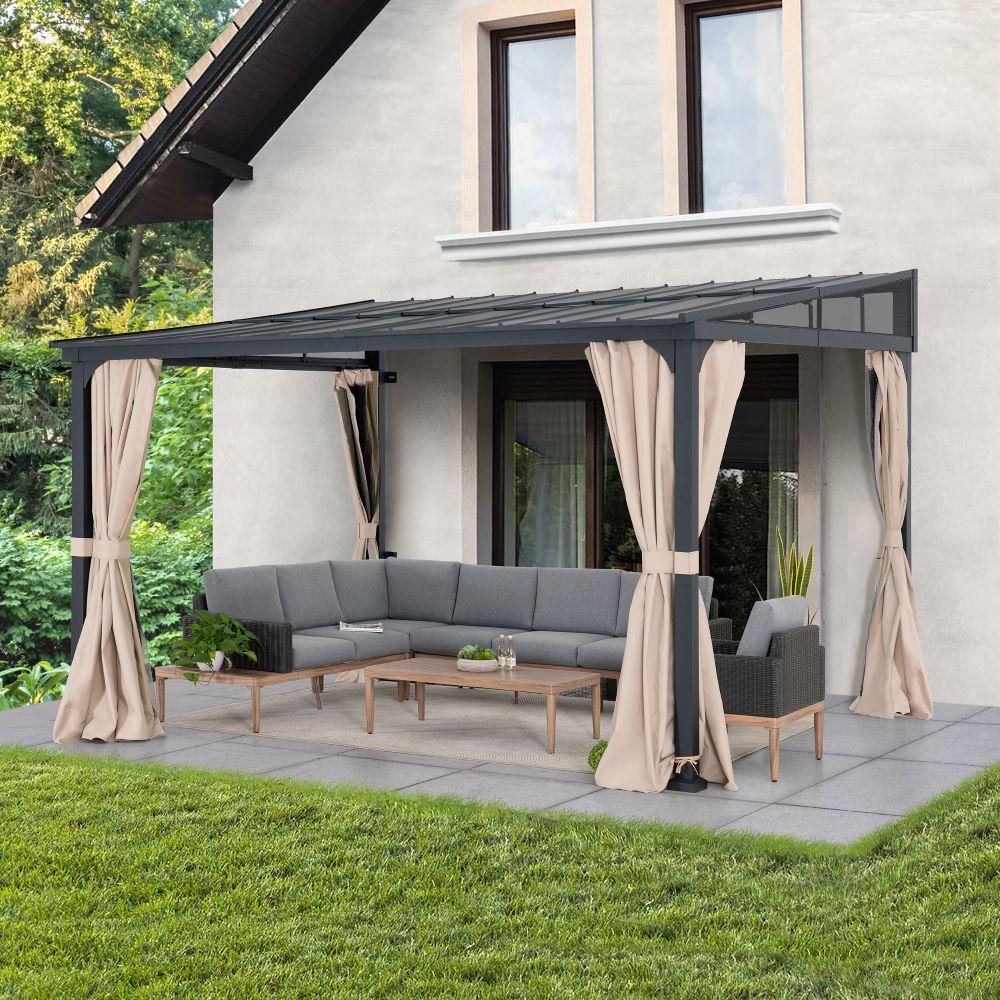
Vista Hardtop Wall-Mounted Gazebo
From $975.10
Aluminum + steel | Hardtop | 10×12 – 12×14 ft
Wall-mounted
For most people, a wall-mounted gazebo should be a Sunjoy Vista: it comes with wall plates, curtains and netting, and Sunjoy says it also stands on its own, so a bad wall isn’t the end of the plan. Choose Domi for gutters built into the roof and a longer warranty on the frame. Most of the trouble comes later, at the line where the roof meets your wall, and it’s one you can plan for.
A wall-mounted gazebo is a hardtop with a sloping roof that sits against the house on one side, which puts shade right at the door.
Updated Oct 20, 2026
Gazebo kits sold to mount against a house wall, whether or not they can also stand alone. Pergolas that fix to a wall have their own page, and freestanding gazebos are listed by size, roof and material.
Showing 1–6 of 9 gazebos
From $975.10
Aluminum + steel | Hardtop | 10×12 – 12×14 ft
Wall-mounted
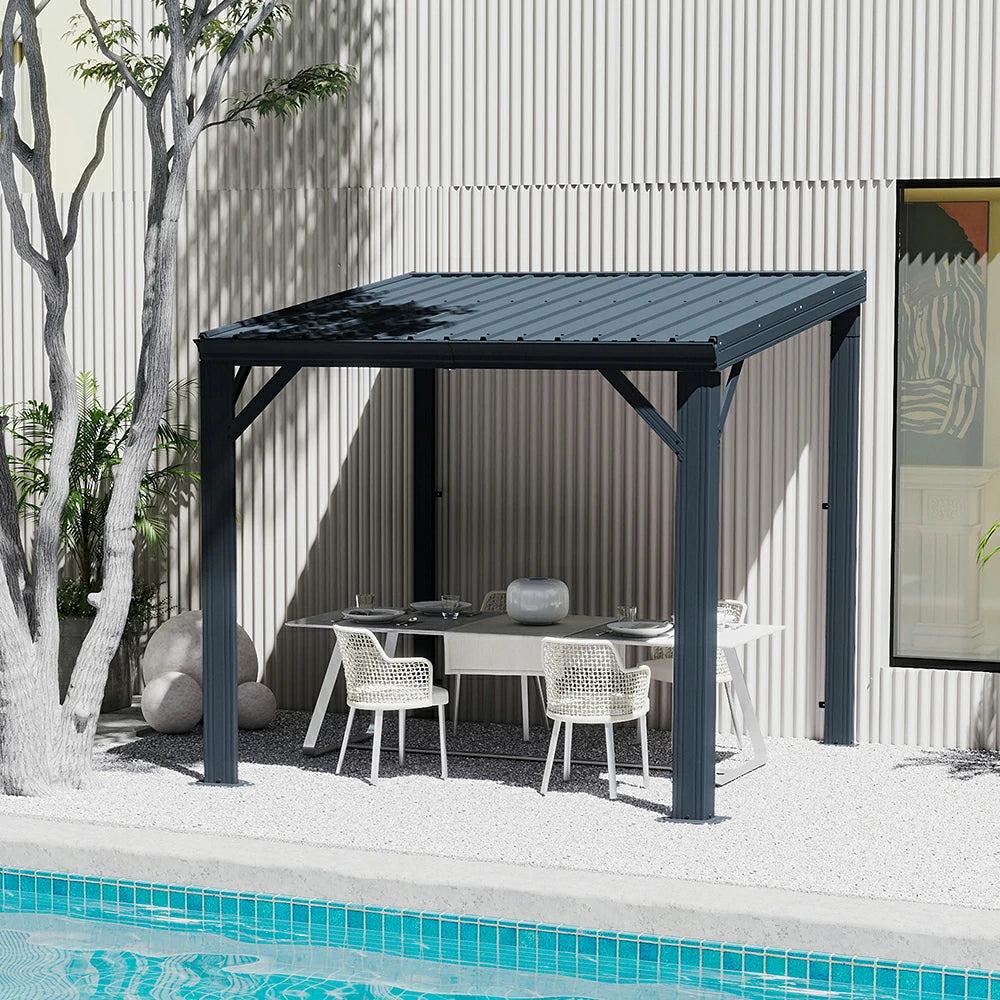
From $399.99
Aluminum + steel | Hardtop | 8×5 – 12×20 ft
Wall-mounted
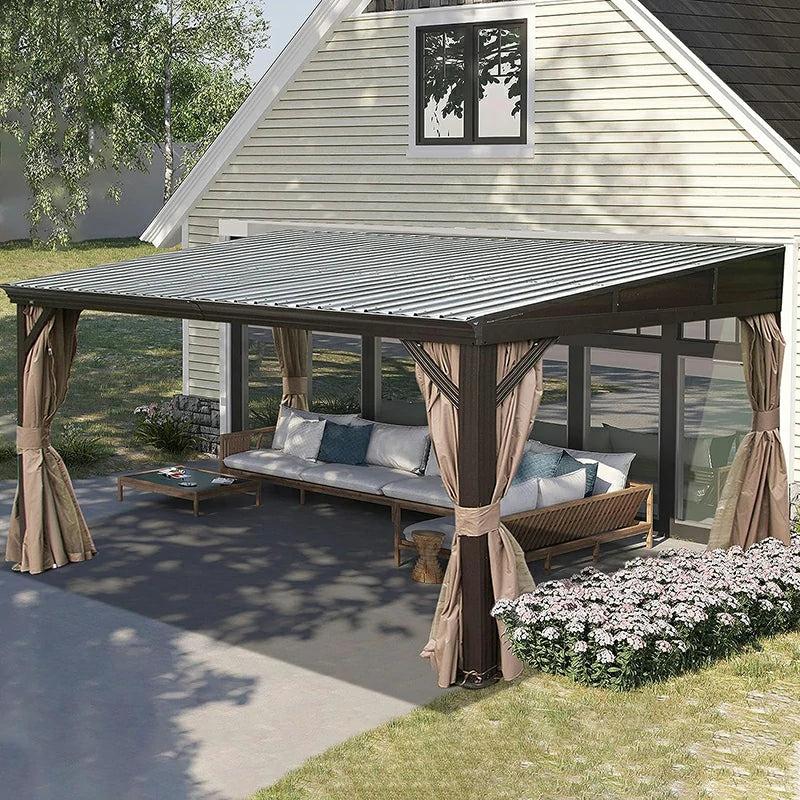
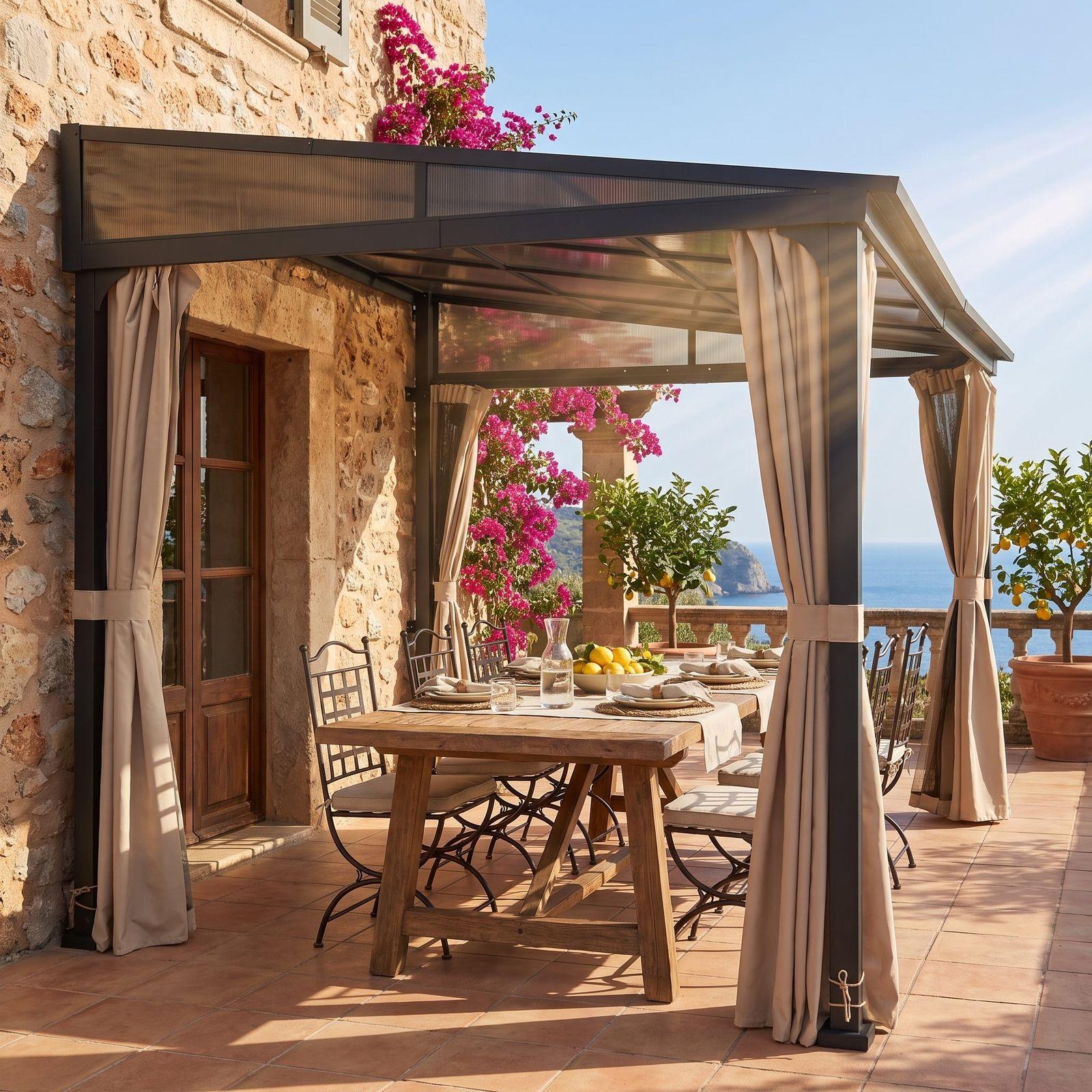
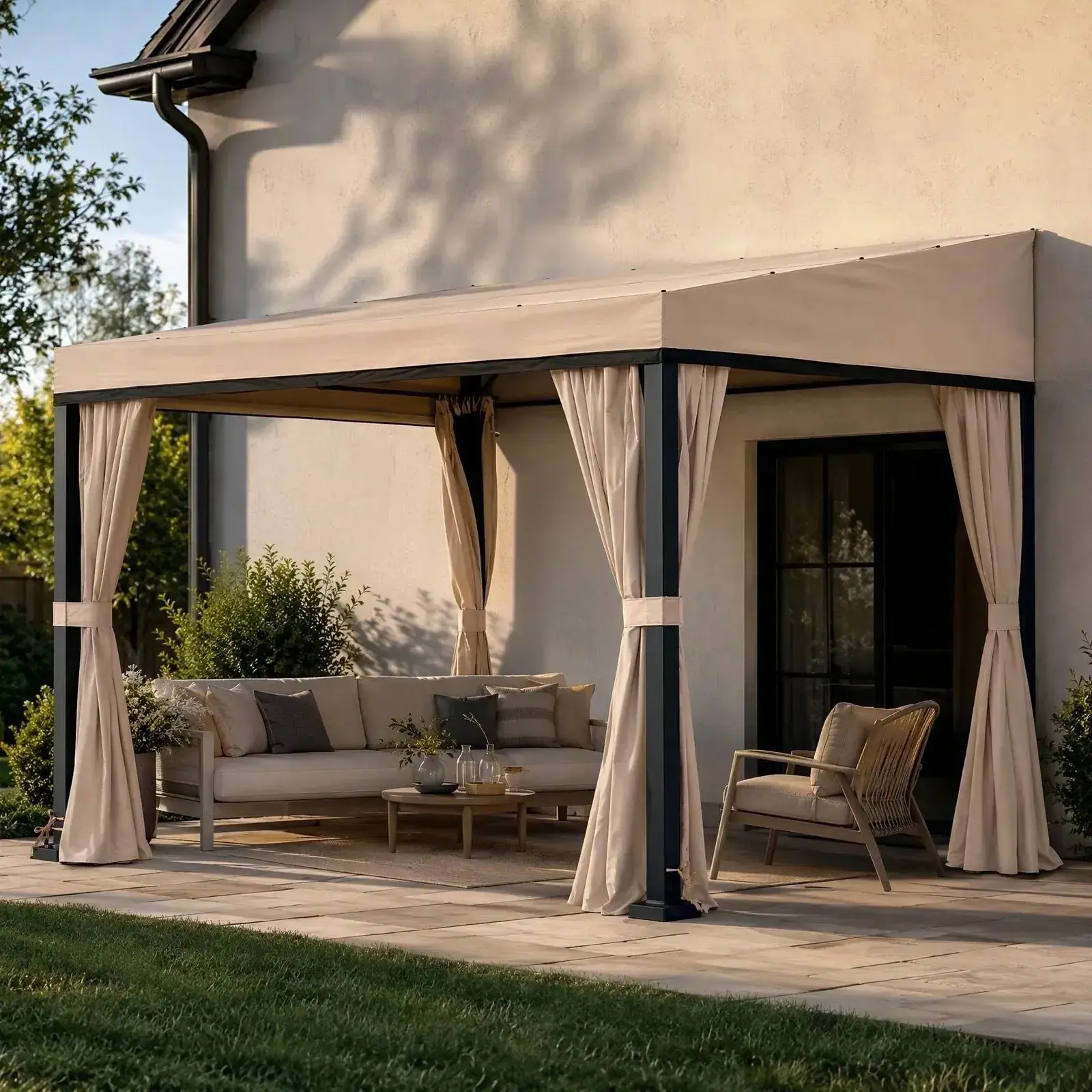
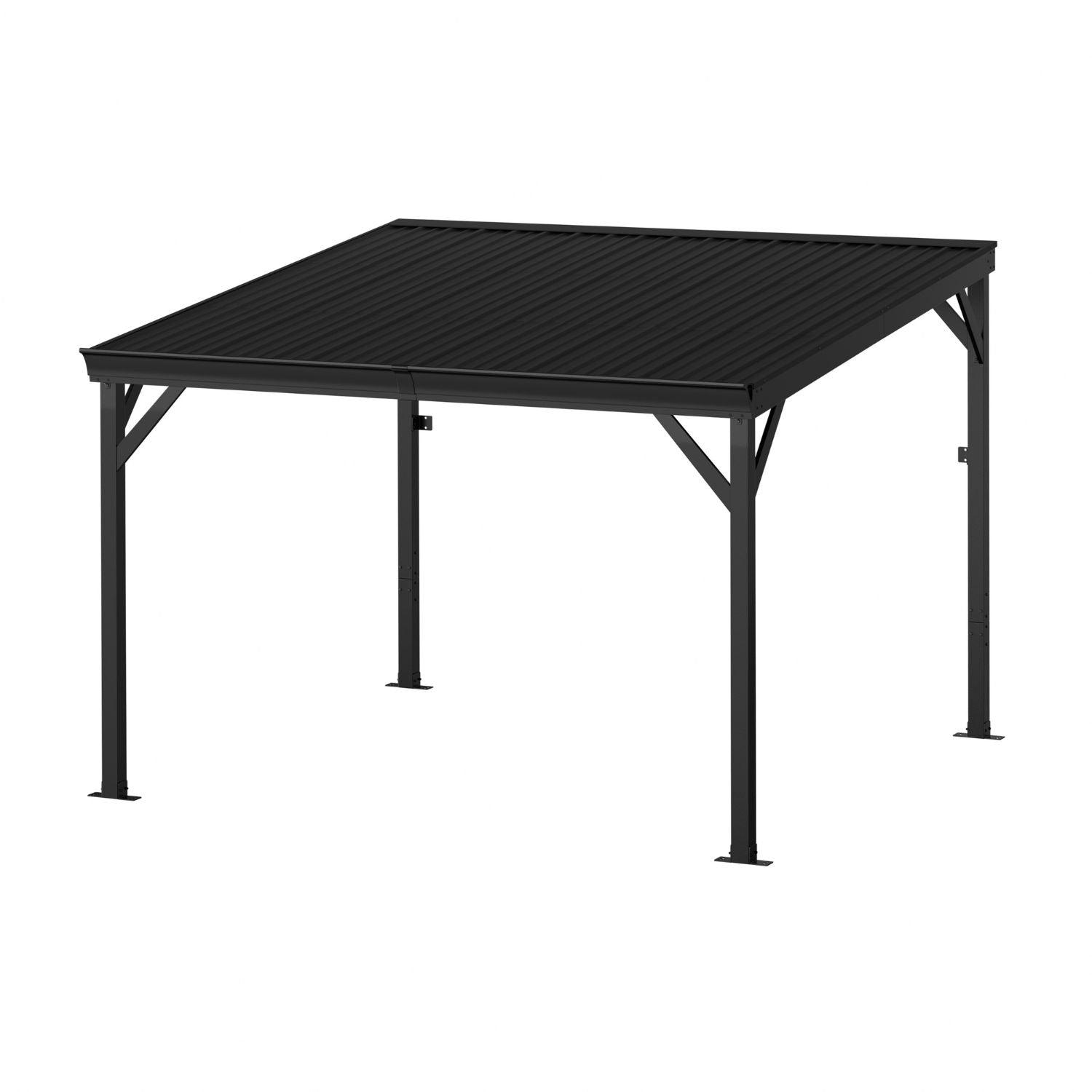
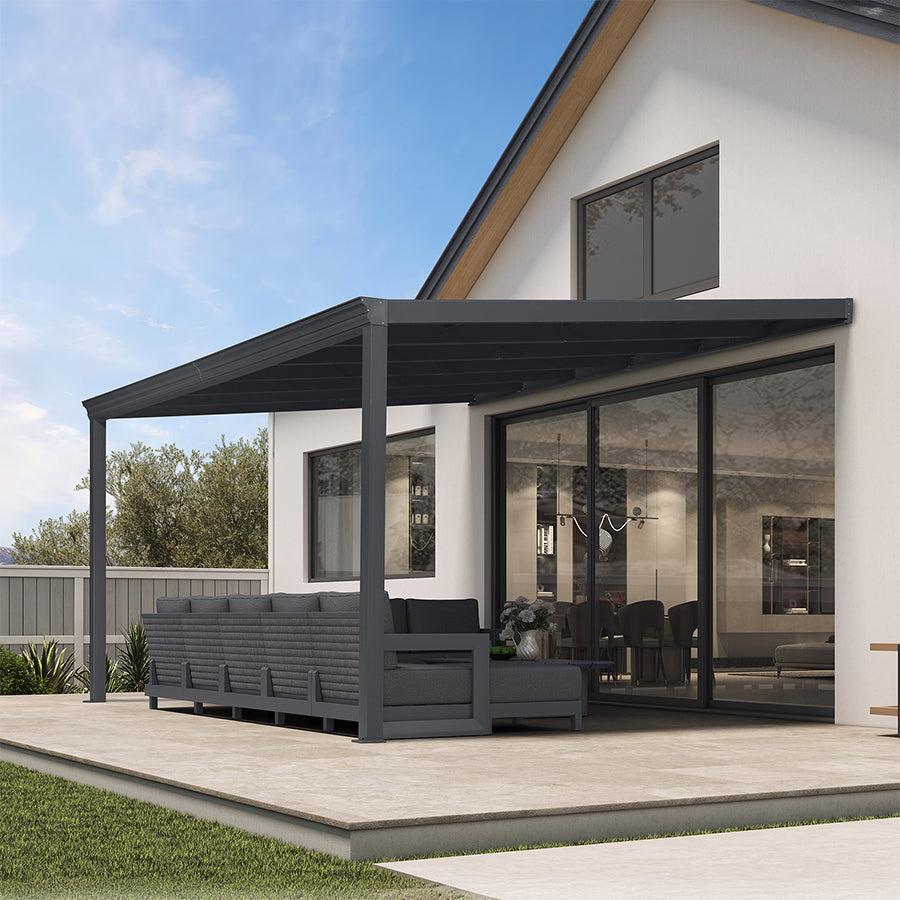
Best for: a first gazebo against a patio door, with the option to move it if the wall doesn’t work out. The 10×12 is about $975 with wall plates, curtains and netting in the box, and Sunjoy says you can set it up freestanding instead. It lists a 1,900-pound snow load and 50 mph winds and stands about 8 feet at the high side. The catch: the warranty runs one year and excludes weather damage, and the page doesn’t say what the wall must be made of or list a gutter, so you’ll want the manual before you order. Who should buy something else: anyone who wants gutters on the roof, or a longer warranty on the frame.
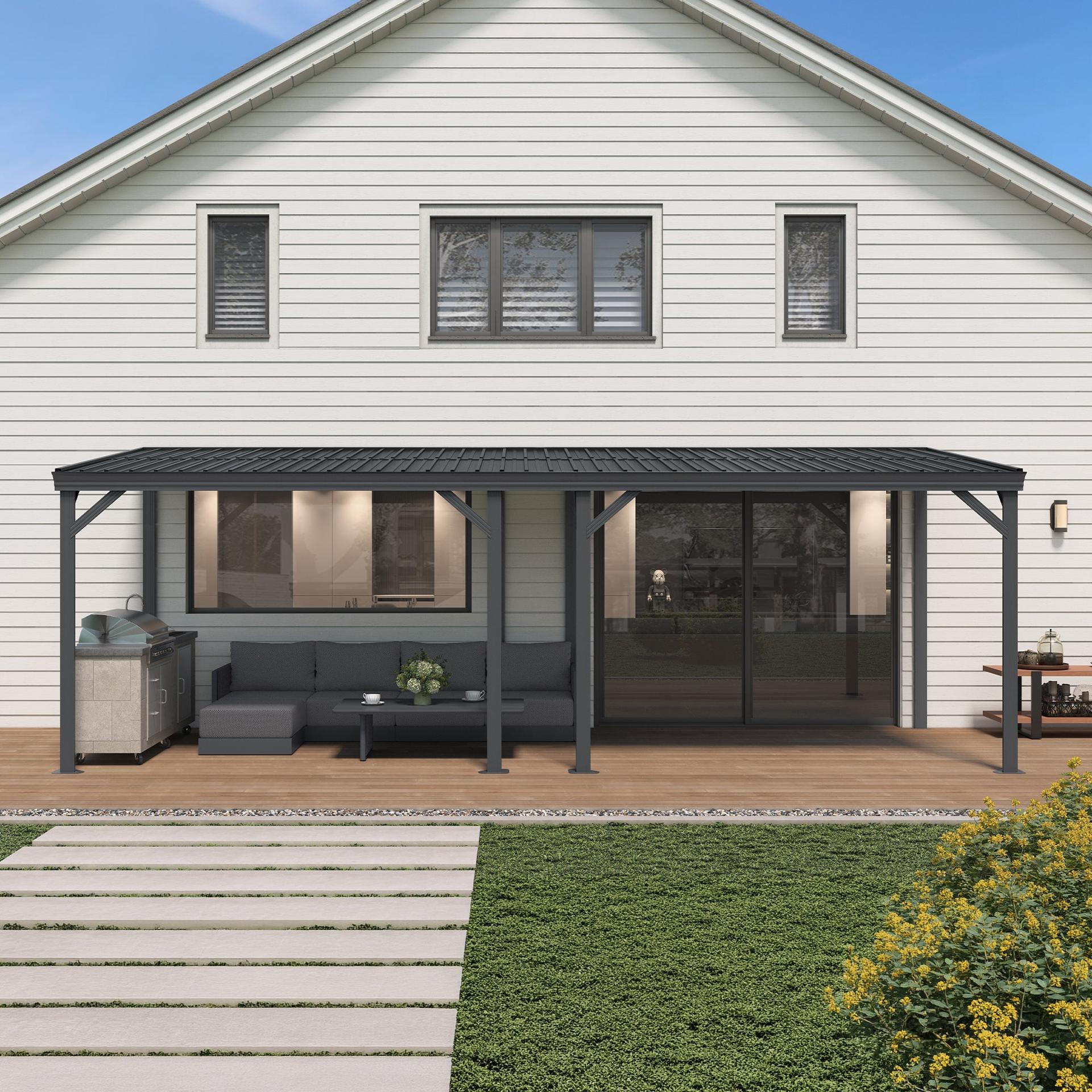
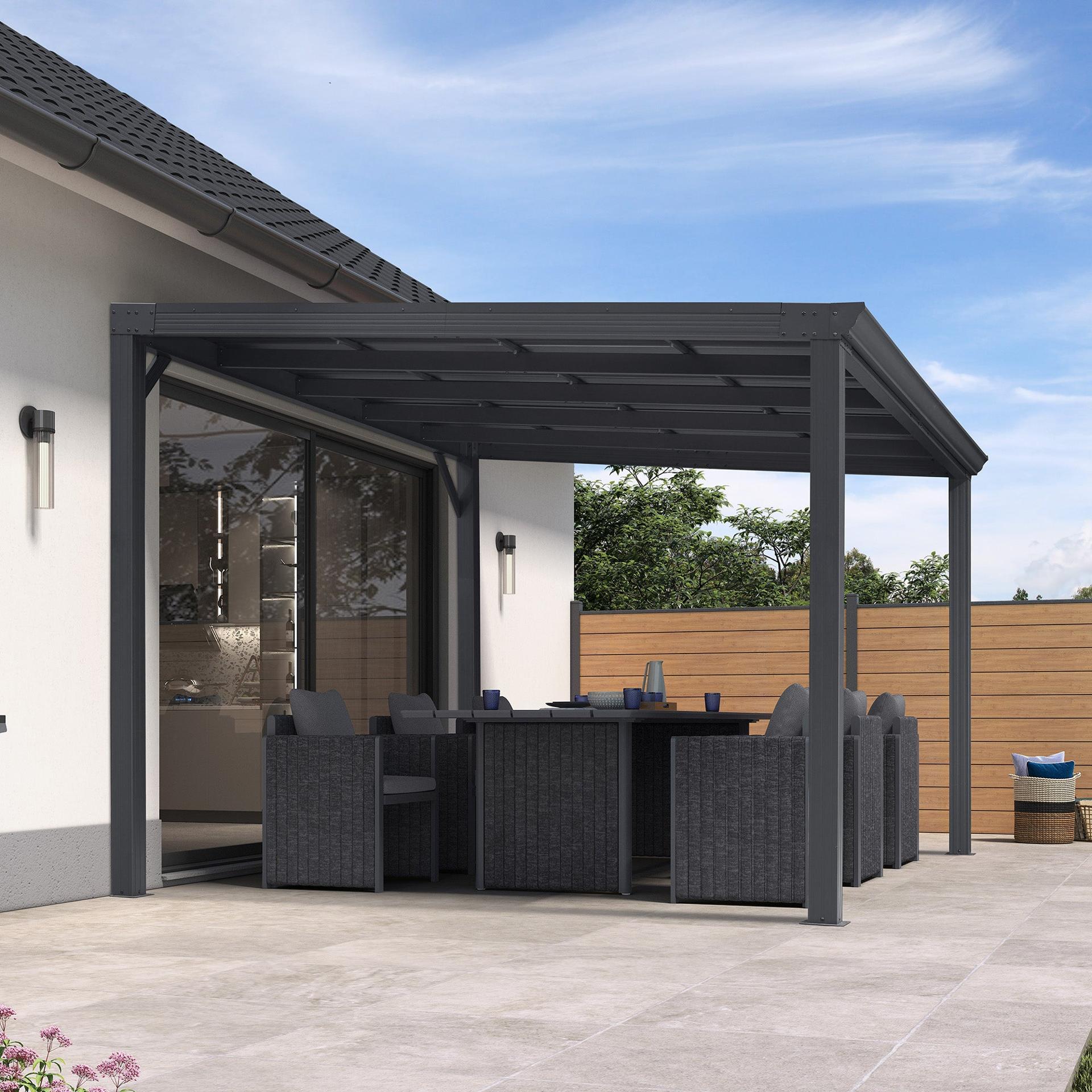
Best for: a lower price and rain you can direct. The galvanized 10×12 is about $650, and Domi says gutters at the front of the roof collect rainwater and run it down the posts, so the water ends up where you can plan for it. The roof and frame carry five years, with one year on the curtains and netting. The catch: Domi’s pages describe fixing it to the wall and say nothing about standing it alone, and it advises anchoring it as soon as it’s up. Why it isn’t higher: with no stated way to use it away from the house, you’re committed to the wall before you’ve checked it. Spend about $450 more for the aluminum version, which adds polycarbonate side panels and ships two support poles to fit when it snows. Who should buy something else: anyone whose wall is uncertain should take the Sunjoy.
| Product | Size | Roof | Price |
|---|---|---|---|
| Sunjoy Vista Fabric-Roof Wall-Mounted GazeboFabric roof, curtains and netting | 10×12 ft | Canopy | $384 |
| Domi Outdoor Living Galvanized Wall-Mounted Hardtop GazeboGalvanized steel roof with gutters | 10×12 ft | Hardtop | $649.99 |
| Sunjoy Vista PC-Roof Wall-Mounted GazeboPolycarbonate roof, curtains and netting | 10×12 ft | Hardtop | $822.25 |
| Purple Leaf Lean-To Gazebo, Metal Roof | 10×12 ft | Hardtop | $919 |
| Sunjoy Vista Hardtop Wall-Mounted GazeboSteel roof, curtains and netting | 10×12 ft | Hardtop | $975.10 |
| Domi Outdoor Living Wall-Mounted Hardtop GazeboSteel roof with gutters, polycarbonate side panels | 10×12 ft | Hardtop | $1,099.99 |
| Purple Leaf Premium Lean-To Gazebo | 10×12 ft | Hardtop | $1,549 |
| Purple Leaf Wall Mounted Gazebo, Polycarbonate Roof | 10×12 ft | Hardtop | $2,049 |
Brand list prices, before tax, delivery and installation. Brands often run promotions, so check the live price before you order.
| Product | Size | Roof | Price |
|---|---|---|---|
| Domi Outdoor Living Galvanized Wall-Mounted Hardtop GazeboGalvanized steel roof with gutters | 10×14 ft | Hardtop | $679.99 |
| Veikous Lean-to GazeboSloping roof, wall screws included | 10×14 ft | Hardtop | $789.99 |
| Domi Outdoor Living Wall-Mounted Hardtop GazeboSteel roof with gutters, polycarbonate side panels | 10×14 ft | Hardtop | $1,149.99 |
Brand list prices, before tax, delivery and installation. Brands often run promotions, so check the live price before you order. Sunjoy’s Vista steps from 10×12 to 12×14, about $1,830 for the steel roof. Domi goes up to 12×20 and Veikous to 12×20.
The cheapest is the fabric-roofed Sunjoy, and the steel-roof Sunjoy sits in the middle at about $975. Price the wall work before you compare: flashing, sealant and any bracing behind the siding are yours to buy, and none of these kits lists them. Paid assembly is offered through Sunjoy and, for Domi, a third-party installer.
Only some can, and it’s worth knowing before you buy, because a kit that needs the wall can’t be moved to a spot that has none. Sunjoy says each of its Vista roofs can be set up on its own, so the same box works against a house or out in the yard. Domi’s two pages only describe fixing it to a wall. Veikous says outright that its kit must be attached to the wall to ensure its stability.
A roof that can only stand against a wall is closer to a patio cover than a gazebo, and that changes what you’re buying: you’re adding a structure to the house, not a piece of garden furniture. Our patio cover and pergola guide covers what that means for warranties and permits. If you want a solid roof on a wall you can’t fix to, a freestanding hardtop gazebo is the safer route.
Where the roof hangs on the wall, the wall carries part of its weight, plus the snow and wind pulling on it. So what matters is what’s behind the siding, and three words cover most of it.
The ledger. That’s the board or bar fixed to the house that the roof rests on, and it needs to go into the house’s frame, the studs or the beam under the floor edge, never into siding, brick veneer or trim alone. Veikous says for vinyl siding to make sure there’s solid wood behind it. Sunjoy and Domi supply wall plates or pre-drilled holes, but neither page says what the wall has to be, so ask for the manual before you order and have a builder look at your wall.
Flashing. This is a strip of metal or membrane above the attachment, tucked under the siding and lapped over the roof edge, so rain runs out over the roof instead of behind the wall. Skipping it is a common cause of rot behind an attached roof, and none of these kits lists it in the box. Don’t hang any part of the roof from the house’s own gutter or fascia board; neither is built to carry one.
Height. Measure the wall first. A Sunjoy 10×12 stands about 8 feet at its high side, and a Veikous 10×14 about 93 inches, so the roof has to meet the wall below your eaves, windows and door tops.
Two things go wrong with water. The first is the seam where the new roof meets the wall: if that gap isn’t flashed and sealed, rain and melting snow find their way behind the siding. The second is where the new roof sends its water, and where your house’s own roof sends its water onto it. If the wall sits under your eaves or a house gutter, the new roof will catch everything that comes off the old one.
Domi builds gutters into the front edge of the roof and runs the water down the posts, which puts a downspout or a drain at your feet to plan for. Sunjoy’s page lists no gutter, and Veikous describes only a drainage channel in the roof, so think about where the rain lands; a patio that slopes toward the house makes it worse. A roofer or gutter installer can tell you in a visit whether the seam and the drainage need more than the kit gives you.
Usually, yes. Many towns let you skip a permit for a small detached structure, but fix a roof to the house and almost every place treats it as an addition that needs one at any size. Only Portland and San Diego exempt small attached covers in our permit guide, and your HOA is a separate yes. If you want to avoid the question, a freestanding kit set a few feet off the wall is the simpler choice. Sunjoy’s Vista lets you do that. Domi’s and Veikous’s don’t.
The ratings don’t line up. Sunjoy gives a total roof load, 1,900 pounds of snow and 50 mph for the steel-roof Vista. Domi gives 22 pounds per square foot and 60 mph, and says to fit its support poles when it snows, so in snow country count on that job each winter. Veikous publishes no rating.
Domi calls for two or three people and a ladder, and Veikous suggests four for four to six hours. Owners of Sunjoy hardtops, the closest comparison, report about ten hours for two people and instructions that could be clearer, so plan a weekend and check every part before you start.
Yes, if the kit is made for it. A wall-mounted gazebo ships with wall plates or pre-drilled holes, and the roof must be fixed to the house’s frame, not just the siding. Expect a permit, and ask a builder to check the wall.
Only some can. Sunjoy says its Vista kits can be set up freestanding. Domi’s pages describe wall fixing only, and Veikous says its gazebo must be attached to the wall.
About $400 to $2,000 at 10×12. A steel-roof Sunjoy Vista is about $975 with curtains and netting, and Domi’s galvanized one is about $650. Flashing, sealant and paid assembly come on top.
Mostly. Both have a single sloping roof that rests against a wall. A lean-to that stands on its own counts as a gazebo, and one that needs the wall is closer to a patio cover.
You need a plan for the water, whether that’s gutters or a drain at the low edge. Domi’s roofs have gutters built in. The Sunjoy and Veikous kits list none, so add your own if the runoff would reach the house or a walkway.